Home Page | Blog | Interior Design in Bahrain: Trends and How Dubai Studios Serve the Market
Interior Design in Bahrain: Trends and How Dubai Studios Serve the Market
8/4/2026
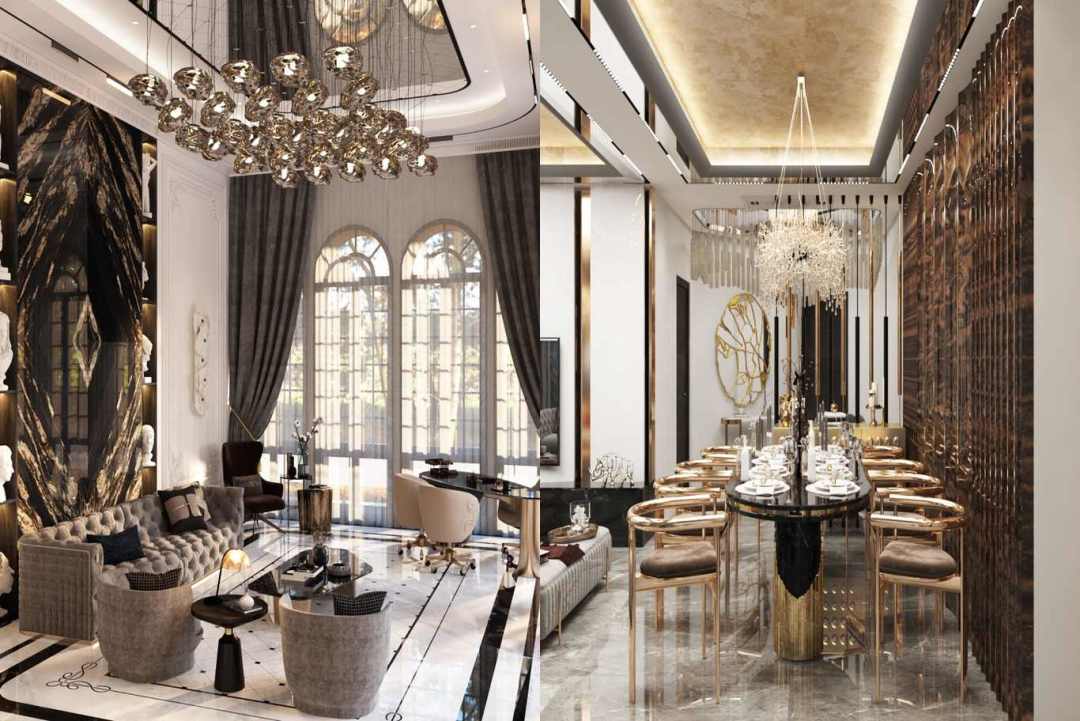
Bahrain rewards the patient eye. The Kingdom builds quietly — a beachfront villa on Durrat Al Bahrain here, a full-floor apartment above Bahrain Bay there — and its owners commission with a discretion that Dubai, for all its brilliance, rarely practices. We have designed for both temperaments. When our studio conceptualized a villa interior in Bahrain built around a U-shaped marble dining table on a rose-gold base, the brief said everything about the market: grandeur, yes — but grandeur that behaves itself at a family lunch.
That balance is the whole story of interior design in Bahrain right now. The island holds one of the Gulf's oldest merchant cultures, a pearl-trading history older than oil, and a residential landscape that runs from century-old Muharraq courtyard houses to glass towers in Seef. Owners here inherit taste rather than acquire it, and their homes are expected to prove it. What follows is our reading of the trends shaping the Kingdom's finest residences — and an honest account of why so many Bahraini clients now bring their projects to Dubai studios like ours.
The Bahraini client, properly understood
Start with how the island lives. A Bahraini villa hosts. The majlis remains the ceremonial heart of the home — frequently doubled, one for men and one for women, each with its own entrance so guests arrive without crossing the family's private quarters. Extended families share compounds in Saar, Budaiya and Janabiyah; weekends fill the house; hospitality is a standing obligation rather than an occasion.
The design consequences are precise. Reception rooms carry the richest material investment — book-matched marble, gypsum relief ceilings, chandeliers scaled to double-height volumes — while family wings turn softer and more contemporary.
Circulation is choreographed for privacy: service corridors that let staff move unseen, guest bathrooms positioned before the family zone begins, kitchens split into a show kitchen and a working one. Our designers plan these routes before a single finish is chosen, because in a Gulf home the plan is the etiquette.
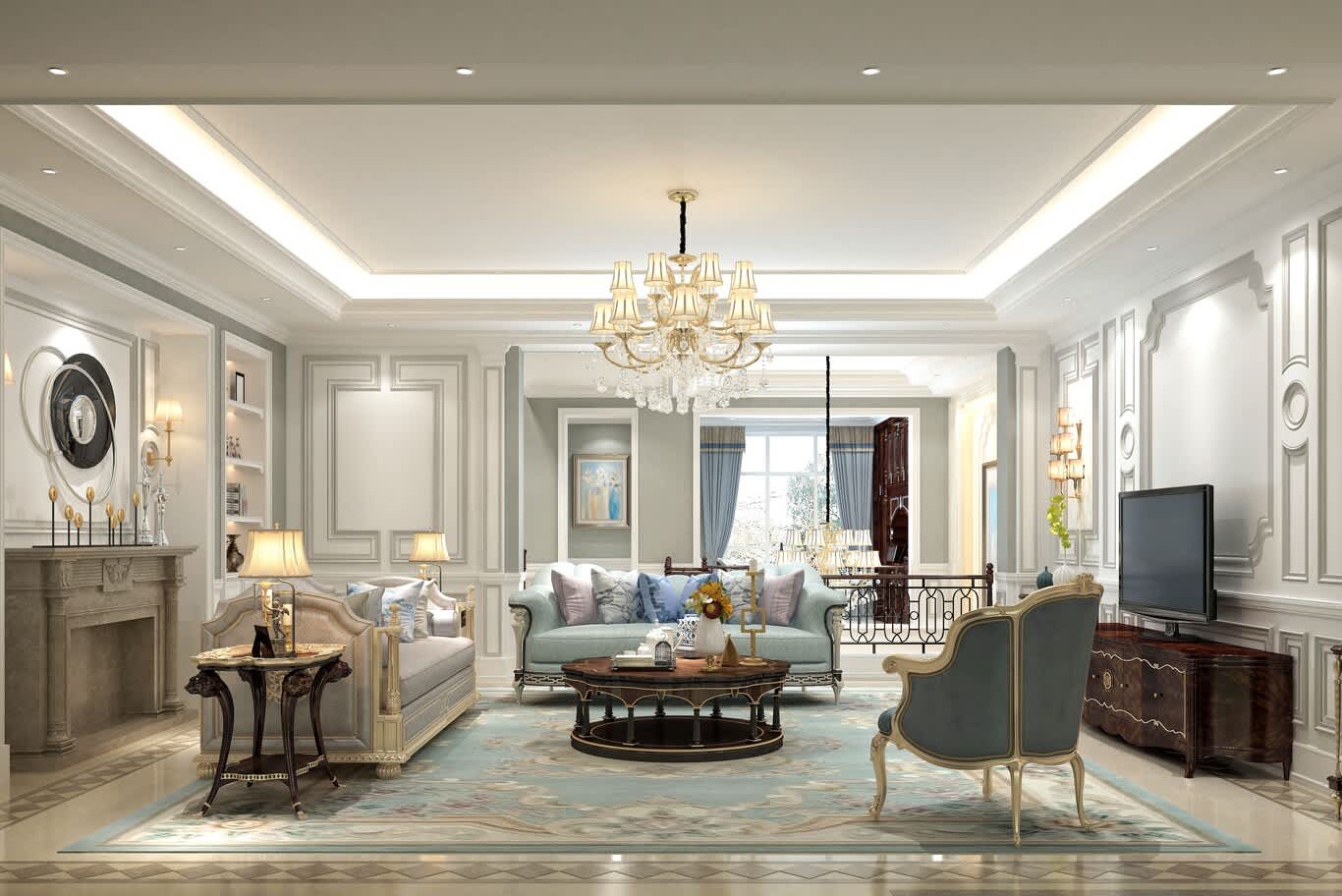
Trend one: heritage returns as a material language
The strongest current running through the Kingdom's interiors is a renewed pride in Bahraini and wider Gulf heritage — expressed through craft rather than pastiche. Muharraq's restoration along the UNESCO-listed Pearling Path has reminded the island what its own architecture looks like: coral-stone texture, carved teak doors, mashrabiya screens filtering hard light into lace, wind-tower geometry.
In new villas, that vocabulary reappears in refined form. We specify laser-cut brass and walnut screens as room dividers between majlis and dining hall — privacy without a closed door. Gypsum carving, a craft the Gulf has practiced for generations, moves onto feature walls and cornices with cleaner, more architectural profiles. Mother-of-pearl inlay, the most Bahraini of gestures, arrives on console fronts and powder-room vanities as a quiet nod to the pearl banks that built Manama's first fortunes. The palette warms accordingly: sand, bone, oxidized bronze, date-palm green.
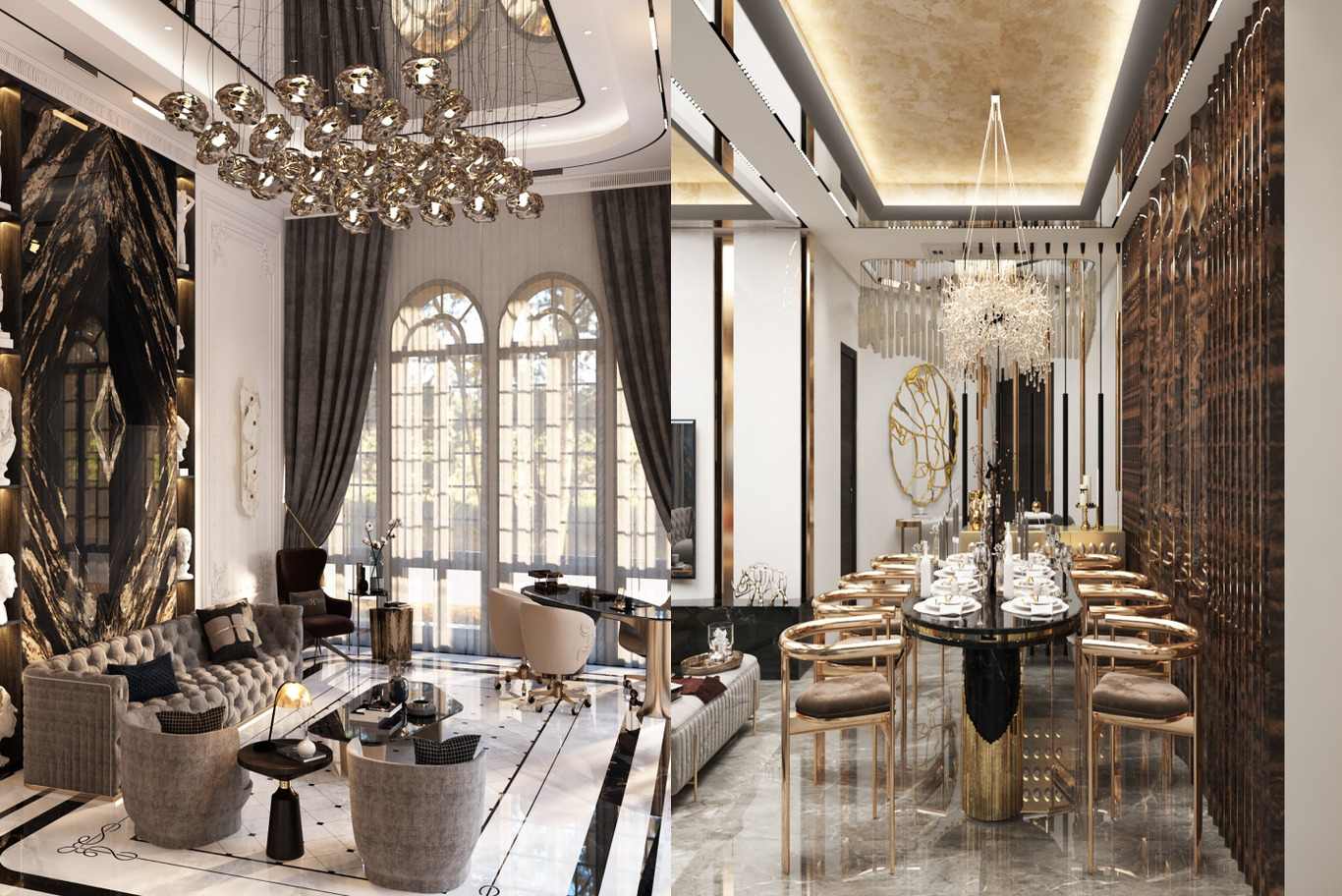
Trend two: quiet luxury with a Gulf accent
Global taste has shifted from display toward depth, and Bahrain adopted the shift early — the island's old families never much cared for gloss anyway. The prevailing register in the Kingdom's finest homes is warm minimalism: generous volumes, restrained lines, and a material bill that does the talking. Travertine and honed Crema Marfil underfoot rather than high-polish slabs. Canaletto walnut joinery. Bouclé, raw silk and linen in layered neutrals. Statement stone concentrated on a single gesture — a monolithic kitchen island in Calacatta Viola, a fluted marble fireplace wall — instead of spread thin across every surface.
Curves lead the furniture plan. Sculptural sofas, rounded plaster arches and softened corners suit both the contemporary mood and the Arab preference for conversation seating arranged in the round. Lighting turns architectural: coves washing gypsum ceilings, 2700-kelvin warmth in the evening zones, a single Murano or hand-blown glass piece above the dining table as the room's jewel.
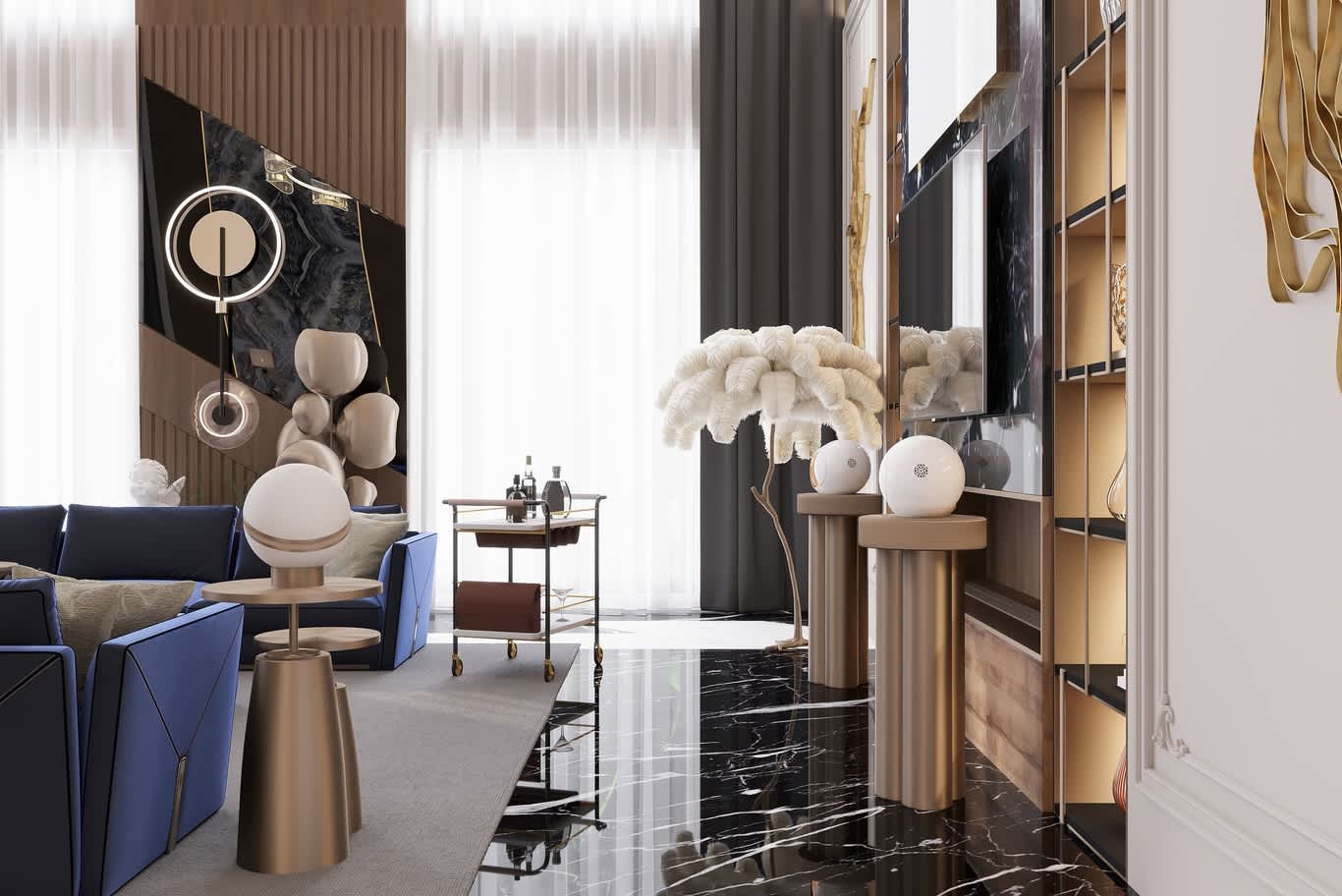
Trend three: the sea comes indoors
Bahrain is an archipelago, and its prime addresses increasingly say so. Reef Island, Amwaj Islands, Dilmunia and Durrat Al Bahrain have made waterfront living the Kingdom's defining luxury, and interiors have followed the view. Full-height glazing faces the water; palettes pick up the exact blue-green of the shallows; terraces are furnished as true outdoor salons with pergolas, summer kitchens and shaded lounges engineered for eight usable months a year.
The technical side matters as much as the poetry. Coastal humidity and salt air punish poor specification, so we detail marine-grade stainless fixings, teak and iroko for exterior joinery, solution-dyed acrylic upholstery outdoors, and ventilation strategies that keep glazing condensation-free through August. A sea view is a privilege; keeping it pristine is a discipline.
Trend four: wellness and the intelligent villa
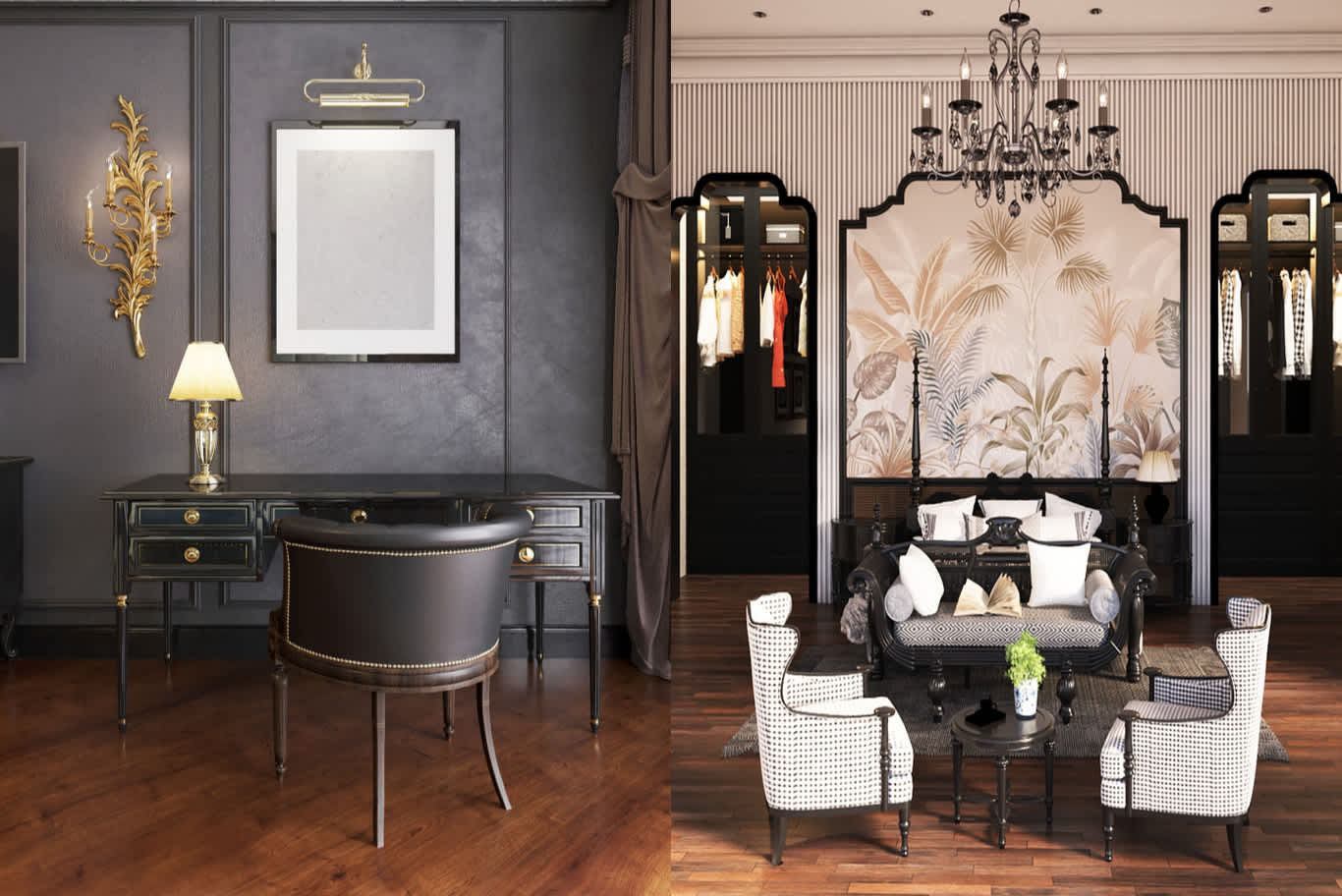
The Kingdom's newest commissions read like private resorts. Home spas with hammam, sauna and treatment room; indoor pools under skylights; gyms with dedicated ventilation; prayer rooms designed with the same care as any reception space, oriented and lit for stillness. Post-pandemic living made the home the destination, and Bahraini families — already home-centered by culture — invested accordingly.
Technology threads through it invisibly. Lighting scenes, shading, climate zoning and security run from a single interface; acoustic treatment tames the echo of stone floors under high ceilings; cinema rooms are calibrated rather than merely furnished. The measure of success is absence — a villa that anticipates its owners without ever showing its wiring.
Trend five: the penthouse market matures
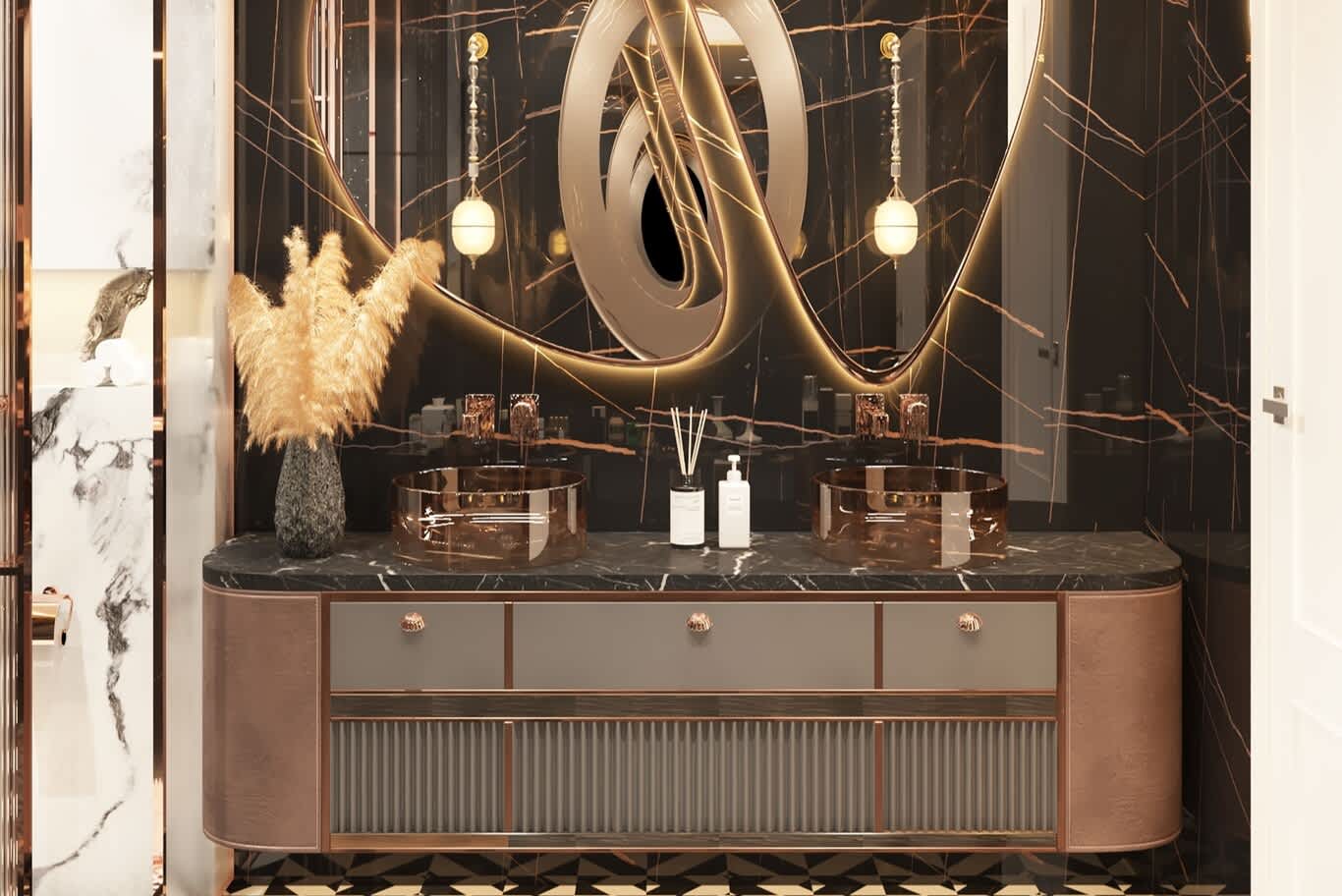
Manama's skyline has grown a genuine tower culture — Bahrain Bay, Seef and the Marassi Al Bahrain shoreline in Diyar Al Muharraq now offer branded and full-floor residences that compete with anything on the Gulf coast. Their owners want urban polish: open plans reorganized around the view, back-lit onyx bars, dressing rooms fitted like boutiques, smart glass turning a bedroom wall opaque at a touch. It is a different client from the villa patriarch in Riffa — younger, often internationally based, furnishing for entertaining and for lock-and-leave ease — and it has given the island a second, distinctly metropolitan design market.
Why Bahraini clients commission Dubai studios
Now to the second half of our title, and the part most articles are too polite to address. Bahrain has capable local practices, yet a significant share of the Kingdom's most ambitious residential work is designed out of Dubai. The reasons are structural.
Depth of specialized talent. Dubai's design economy is the largest in the region by a wide margin, which lets a studio keep lighting designers, joinery specialists, 3D visualization teams and FF&E procurement under one roof. A fifty-person practice can put six senior specialists on a single palace; that bench simply exists at greater depth in Dubai.
Portfolio breadth as proof. Gulf clients commission on evidence. A Dubai studio arrives with delivered villas, penthouses and palaces across the UAE, Qatar, Saudi Arabia and beyond — a body of work a client can walk through, at scales matching their own ambition. Our own interior design services in Bahrain are an extension of that same regional practice rather than a satellite experiment.
Procurement reach. The finishes that define this tier — Italian stone, Austrian crystal, bespoke joinery, German kitchens — flow through Dubai's showrooms and free-zone logistics. A Dubai studio buys at better terms, inspects before shipping, and consolidates freight across the causeway-short hop to the island. Bahrain International Airport is fifty minutes from DXB; a design director can attend a Manama site meeting and be back at her desk by mid-afternoon.
Render-first process. The region's clients now expect photorealistic visualization of every principal room before contracts are signed, and Dubai studios industrialized that workflow years ago. For a Bahraini family commissioning from across the water, the render is the reassurance: they approve the exact villa they will receive.
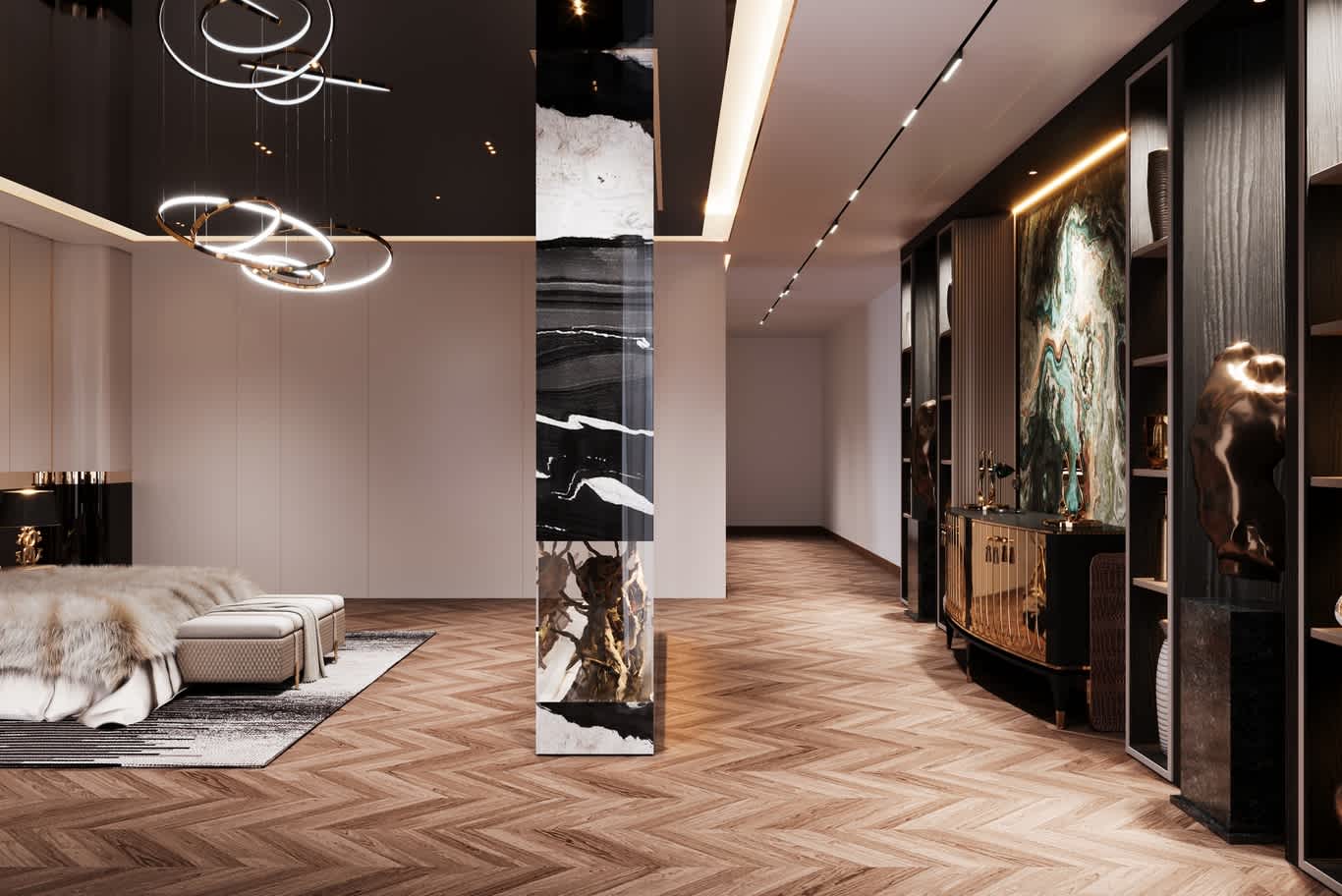
The working model is well established. Concept, space planning and visualization run from Dubai; local engineering partners handle municipal approvals and site supervision in the Kingdom; the design studio directs execution through scheduled visits and daily photographic reporting. Bahrain's regulatory environment is straightforward by Gulf standards, and the shared language of GCC construction — the same contractors, the same suppliers, often the same families — makes the border nearly notional. The thinking we bring to a Bahraini villa draws on the same wells as our writing on how expanding villa communities are shaping owner expectations across the island, from resort-level amenities to automation planned at drawing stage.
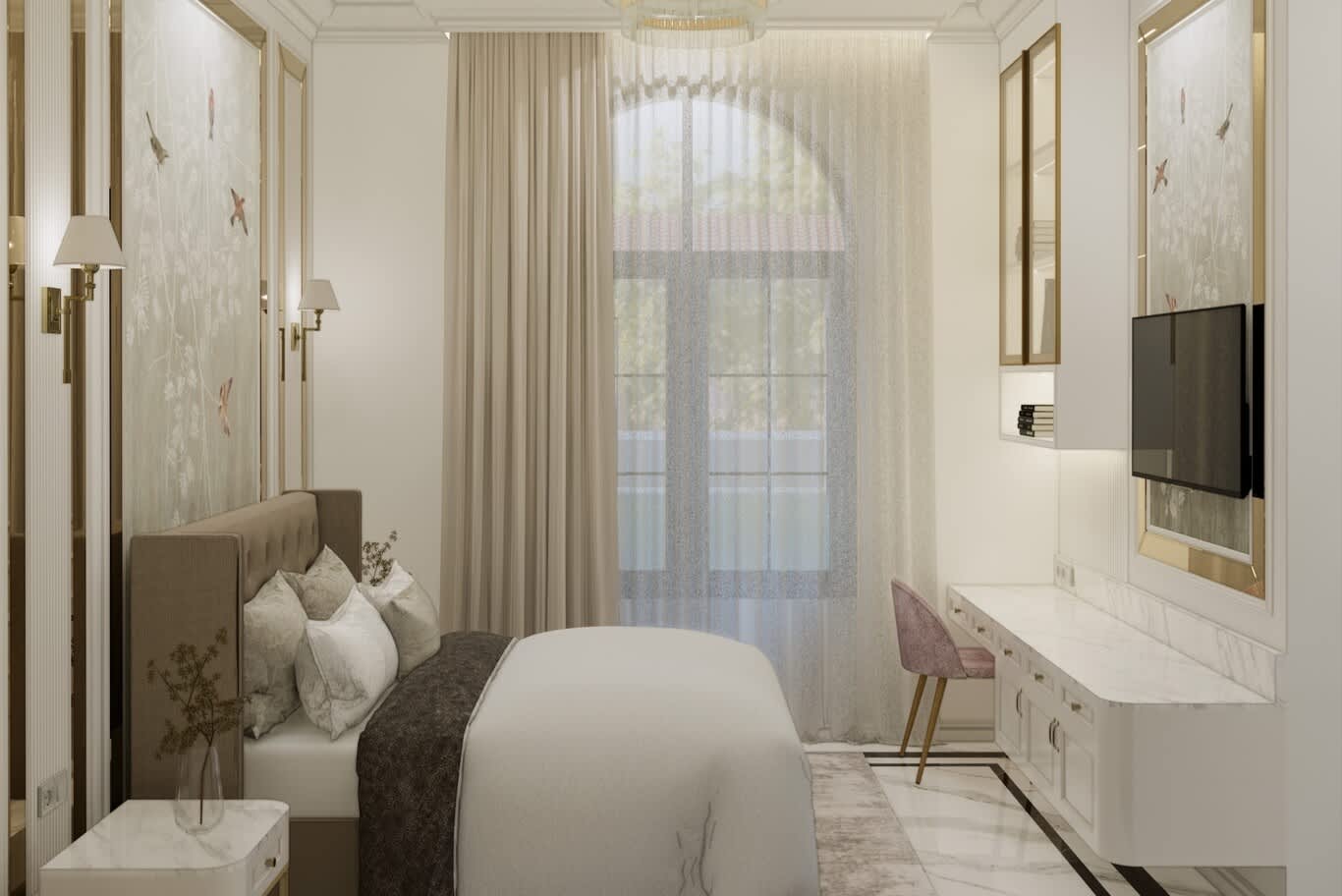
What to ask before you commission
A short field guide, offered from experience. Ask to see delivered Gulf work at your project's scale, then ask who — by name — will lead your design. Confirm the visualization scope in writing: every principal space, revised until approved. Interrogate the procurement plan; the difference between a good studio and a great one is often logistics. Ask how the majlis, family and service zones are separated in the plan before you discuss a single fabric. And ask how the design will fare in August — glazing, shading and humidity strategy reveal whether a studio designs for the Gulf or merely in it.
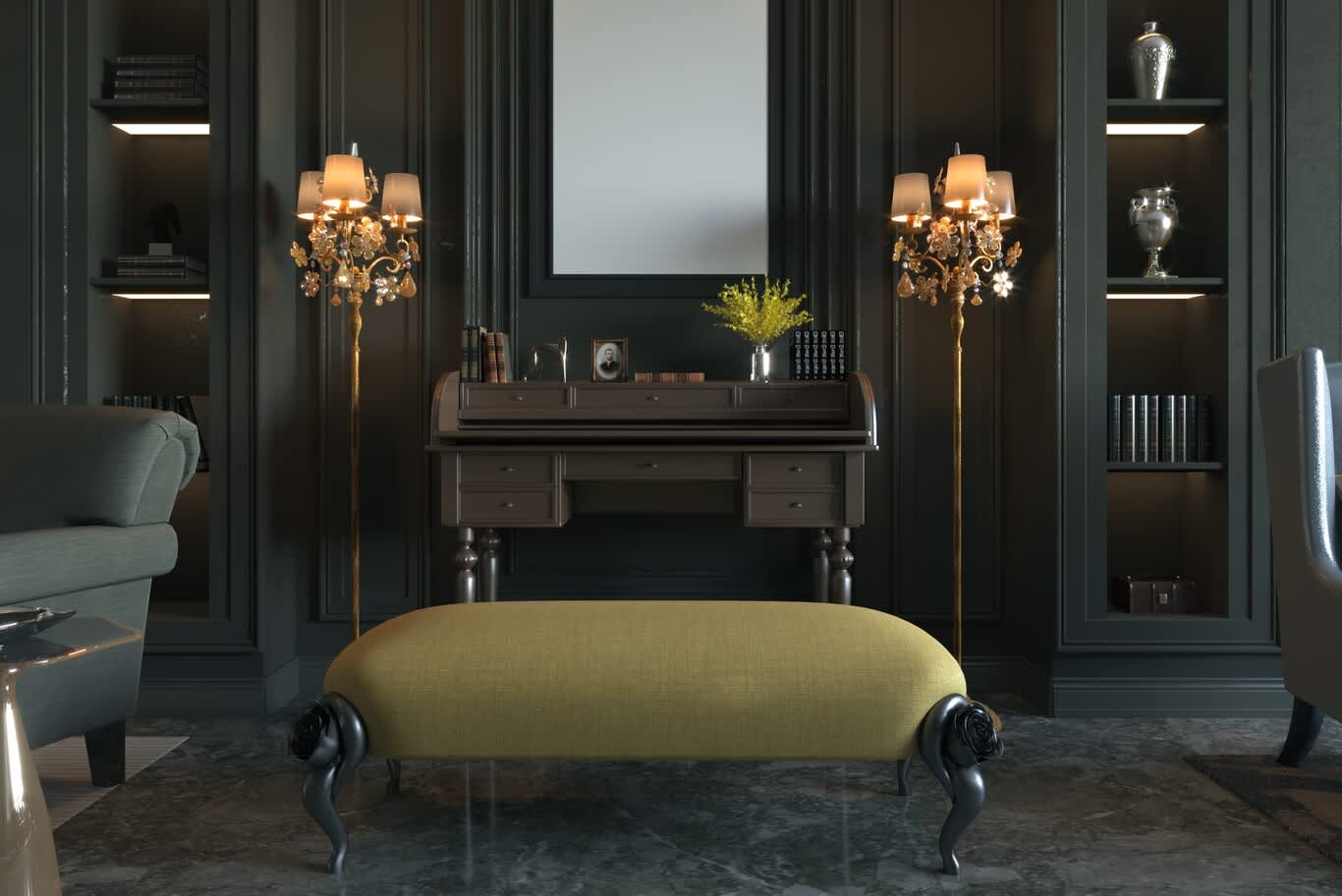
The island's moment
Bahrain is quietly assembling one of the Gulf's most interesting residential landscapes: heritage streets in Muharraq restored to museum standard, man-made islands adding shoreline by the year, a tower market finally worthy of the address, and a client base whose taste was formed over generations of trade with everywhere. The interiors now being drawn for the Kingdom — layered, crafted, sea-lit, discreetly intelligent — belong in the same conversation as anything on the Gulf's richer, louder coasts. Dubai studios serve that market not as outsiders but as neighbors; the water between is a commute, and the design culture on both shores is, increasingly, one.
Enquire: Contact Us
Discover: Interior Design Services in Bahrain
FREE CONSULTATION
TELL US ABOUT YOUR PROJECT
WE WOULD LOVE TO HEAR FROM YOU
Feel free to reach us via this contact form and one of our Design Consultants will get back to you at earliest.
OUR BRANCHES
UAE - DUBAI
+971 52 8111106 | hello@algedra.ae
TURKEY - ISTANBUL
+90 533 701 89 71 | info@algedra.com.tr
Leading Interior Design and Decor Company in Dubai and Abu Dhabi.
Algedra is a reputable, internationally recognized, and one of the most successful interior design companies in Dubai, and Abu Dhabi, which specializes in delivering interior design, architectural, and creative space planning projects throughout GCC, MENA, North Africa, Turkey and Russia.
Algedra is a one-stop solution for all your residential interior design and fit-out needs. We have successfully completed numerous villa interior and exterior design projects, where we integrated quality and originality to deliver interior masterpieces.
ALGEDRA, Interior Design Company in Dubai, is specialized in providing elegant and stunning interior design services for both residential and commercial projects. We turn our clients' dreams into reality, trans- lating their tastes and needs into beautiful and functional spaces.
Since the day we were founded, we have designed and built many branded residences, resorts, hotels, multi-purpose social spaces, and palace designs with different functions and concepts by following the ever-changing design trends over the world.
A key element of our work is a fusion of different cultures and designs, combining Greek, Italian, Eastern and Western influences with British innovation.
As a team of highly qualified interior designers and engineers, Algedra offers complete architectural services from mall design to corporate office design as well as the exterior design of any project based on customers' needs.
Our customers include leading names, we have completed diverse projects in hospitality, landscape, commercial, and residential designs. These projects contain cafes, restaurants, gym, villas, family sitting rooms, bedrooms, kitchens; all showcasing our company's exquisite details and high-end designs.
Residential Interior Design in Dubai
Algedra's interior designers and architects have an important mission: building villas, houses, apartments, condos, and anywhere else where you reside that will fulfill your needs while being structurally safe and sound.
Architectural Designs
There are so many details that go into designing an architectural design project. Every step of the project has been carefully considered for safety and daily comfort by Algedra's experts.
Commercial Design
Conceptualizing spaces for business, to elevate style, and to increase functionality to help enhance the bottom line of a company is vital, as well as employee comfort and interior design too. Our commercial interior designers translate client's concept in ways that are efficient, attractive and provide professional workspaces.
Fit-out Projects
Algedra Interiors delivering high-quality tailored fit-out projects that transform your villas, palaces and commercial spaces.
We're a passionate team of interior designers, architects and engineers. Every day we help clients to solve interior design problems and create engaging spaces!
Wherever you are in Kuwait, Saudi Arabia, Azerbaijan, Qatar, Morocco, Algeria, Tunisia, Libya, Egypt; don't hesitate, contact us to find out more about why we are one of the best interior design companies in Dubai and Abu Dhabi!