Home Page | Blog | The Retrofit Revolution: Updating Commercial Interiors in Dubai’s Traditional Business Districts
The Retrofit Revolution: Updating Commercial Interiors in Dubai’s Traditional Business Districts
1/8/2026
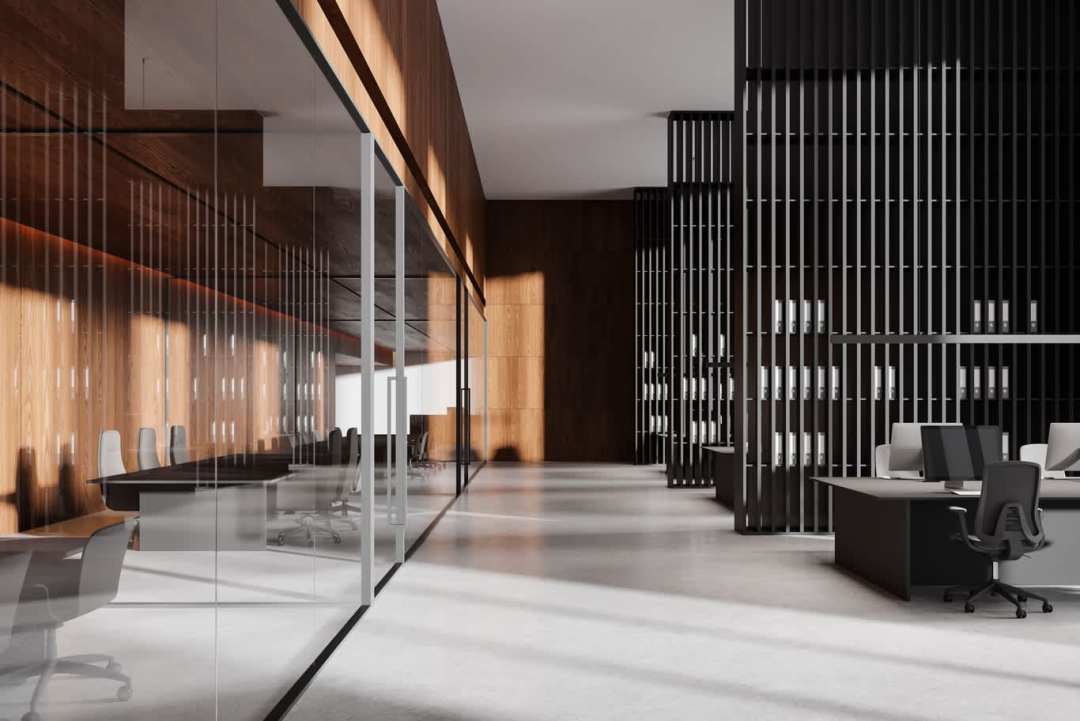
When most of the world thinks of Dubai commerce, they envision the shimmering glass monoliths of Downtown, the slick waterfront offices of Dubai Marina, or the purpose-built hubs of Media City. These are the glittering faces of the "new" Dubai. But as interior designers, we look at the city through a different lens.
While the headlines focus on the skyscrapers, a quiet revolution is taking place in the low-rise blocks of Bur Dubai, Deira, and specifically, Al Karama.
We call it the Retrofit Revolution.
For commercial tenants, the question is no longer just "Where should we move?" but "What can we make of what we have?" As design professionals, we are seeing a surge in clients who want to take these older, centrally located spaces and radically update their commercial interiors to rival any Grade-A office in the financial district.
Before we explore how we transform these spaces, we must understand where we are working.
1- Introduction to Al Karama
If Business Bay is Dubai’s suit and tie, Al Karama is its comfortable, well-worn jeans. Located on the western banks of Dubai Creek and located between the diplomatic district of Bur Dubai and the major artery of Sheikh Zayed Road, Karama is one of the city's most vibrant residential and commercial hubs.
Karama is legendary for its high-density living, its bustling street life, and its incredible diversity. It is a sensory overload in the best possible way. The air smells of shawarma and strong coffee; the sidewalks are a constant stream of pedestrians; and the ground floors of almost every building are dedicated to retail. It is famous among residents and tourists alike for its "secret" handbag markets, innumerable budget-friendly electronic stores, and an exploding culinary scene that ranges from hole-in-the-wall gems to trendy urban eateries.
Karama is authentic. It has a grit and a hustle that is palpable. However, many of its commercial buildings date back to the 80s and 90s. While structurally sound, their interiors—offices, shops, and restaurants—often suffer from outdated layouts, inefficient energy systems, and tired aesthetics.
For decades, businesses seeking modern digs moved out. Now, they are realizing the immense value of staying put and upgrading from within.
2- The Design Challenge: Diagnosing the "Old Dubai" Office
When a client hands us the keys to an un-renovated commercial interior in Karama, we usually encounter a specific set of design pathologies typical of the 90s era:
The Compartmentalization Trap: Heavy masonry walls or opaque partitions creating dark, isolated corridors.
The Ceiling Squeeze: Low structural slabs compounded by low-hanging, heavy grid false ceilings that make the space feel oppressive.
The Beige Fatigue: A dated palette of yellowish creams, heavy carpets, and poor-quality tiling.
Lighting Starvation: A reliance on harsh, flickering fluorescent tubes with little access to natural daylight.
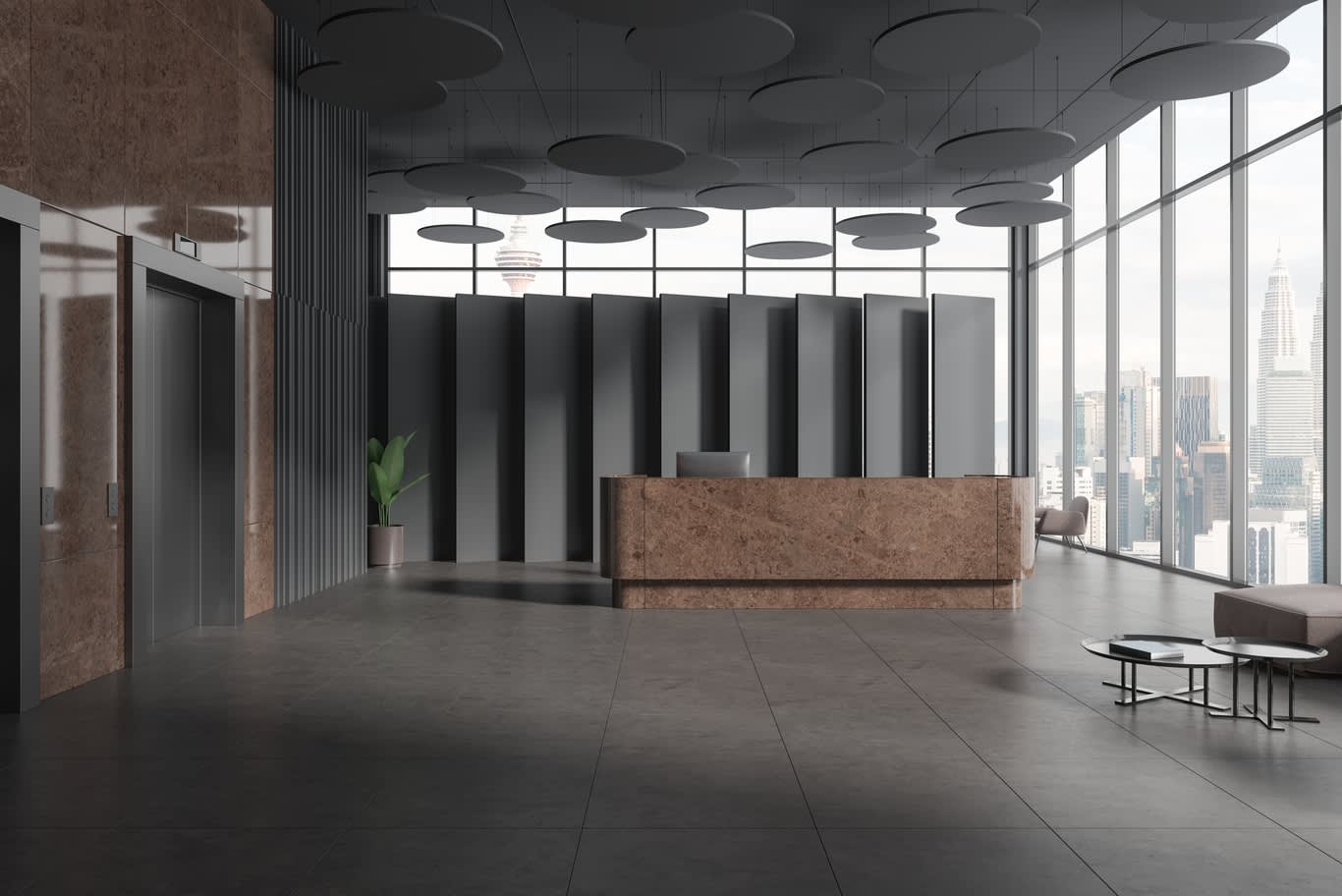
Our job is to perform surgery on these spaces. We don't just decorate; we re-engineer the experience of the environment. Here is how we are approaching the retrofit revolution.
3. Structural Archeology: The "Industrial Chic" Solution
One of the biggest hurdles in Karama is vertical space. Modern offices crave height, but older buildings here often have lower slab-to-slab heights.
The design solution? Expose everything.
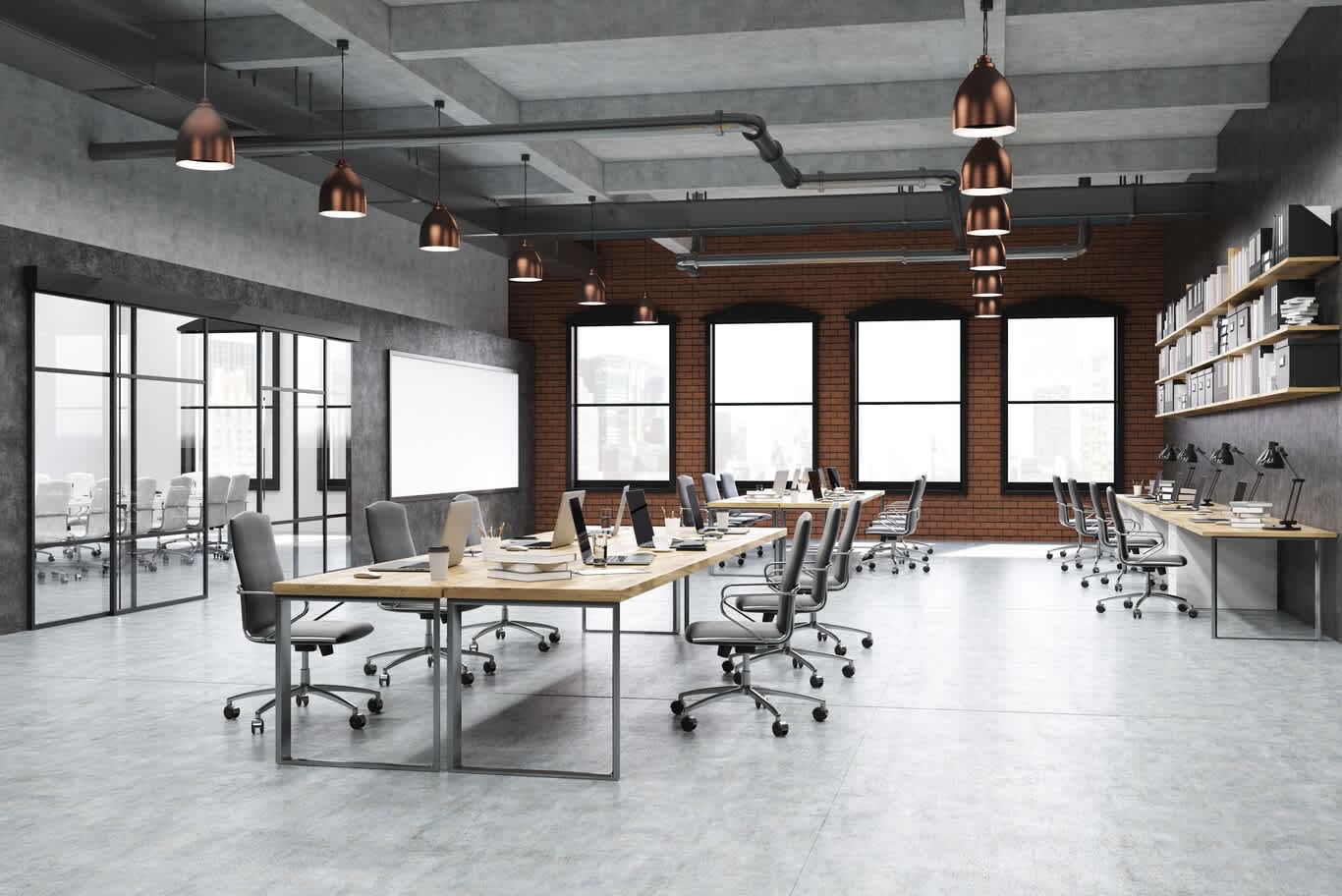
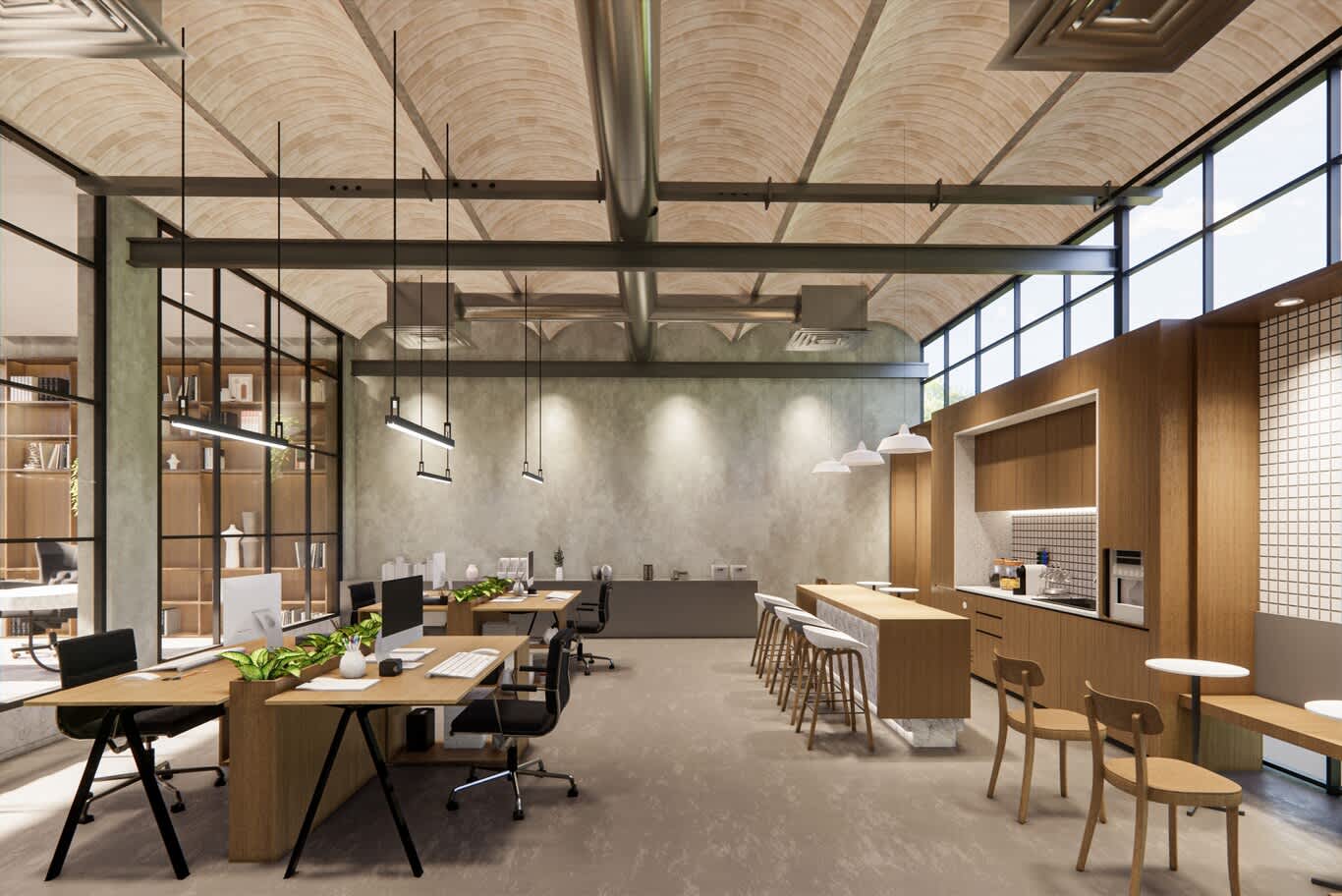
We are increasingly advising clients to strip out the old false ceilings entirely. By exposing the concrete soffit, the beams, and the mechanical services, we instantly gain 40 to 60 centimeters of perceived height. We sandblast the concrete to reveal its raw texture or spray it out in matte black or charcoal grey.
This creates an "Industrial Chic" aesthetic that is incredibly popular in London, New York, and Berlin, but fits perfectly in the urban context of Karama. We organize the cabling into neat trays and turn the air conditioning ducts into sculptural elements. Suddenly, a cramped 90s office feels like a spacious, modern loft.
4. Breaking the Grid: Fluid Space Planning
The old way of working in Karama involved the boss in a big corner office with a window, and staff in dark cubicles. The Retrofit Revolution demands a democratization of space.
In our recent projects, we demolish non-load-bearing internal walls to create open-plan environments. But open plan doesn't mean "noise and chaos." We use zoning strategies:
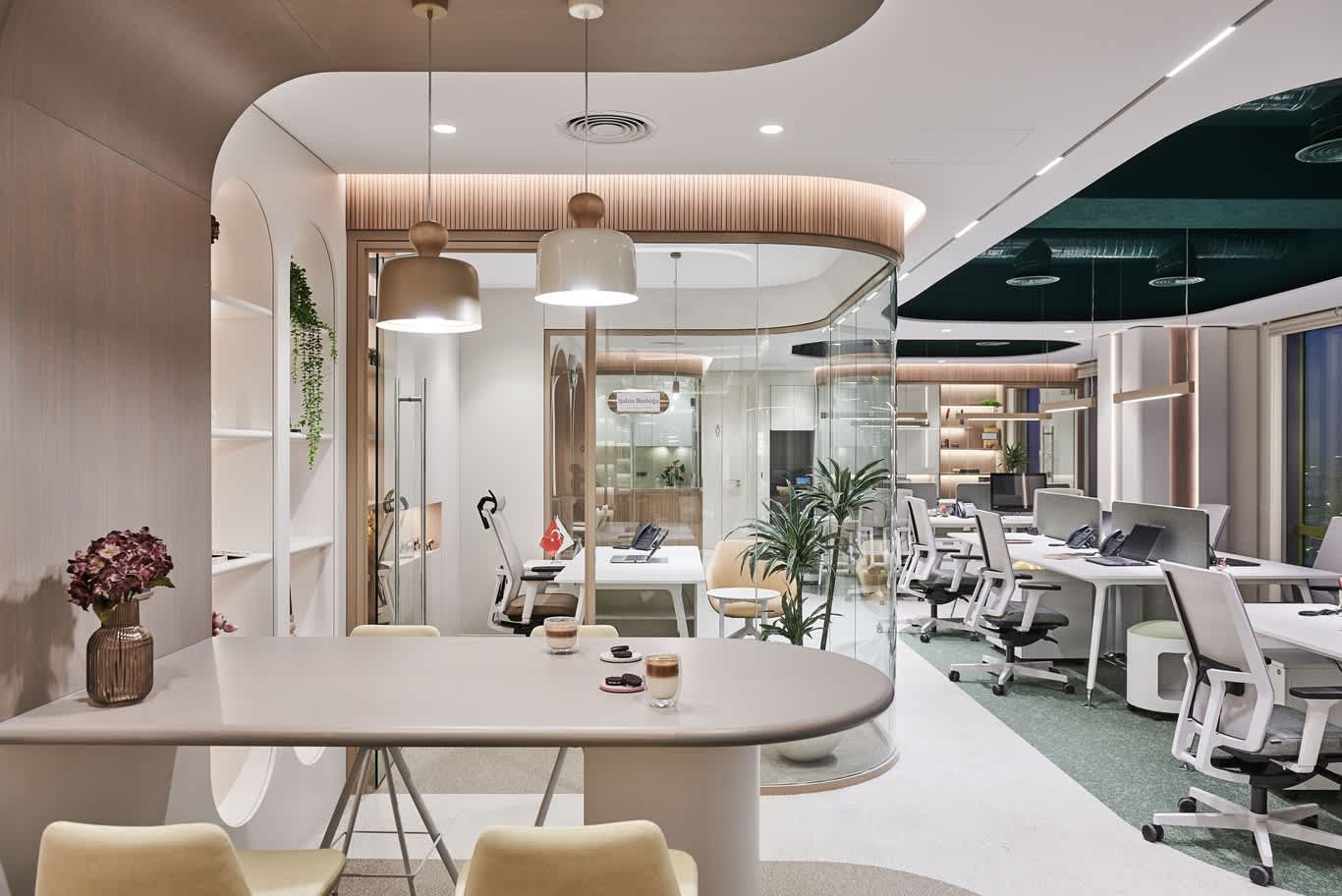
● Acoustic Pods: We install glass-fronted, soundproof pods for private calls or focused work. These add a modern architectural element without blocking light.
● The Hub: We move the pantry/breakout area from the back "dark corner" to the front of the house. In a modern Karama office, the coffee bar is the heart of the company culture, designed with the same aesthetic detail as a trendy local café.
● Flexible Furniture: We specify modular furniture that can be reconfigured. Older buildings are rigid; the interior design must be fluid to compensate.
5. Chasing the Light: Glazing and Translucency
Light is the most critical tool in the interior designer’s arsenal, especially in older buildings with deep floor plates and smaller windows.
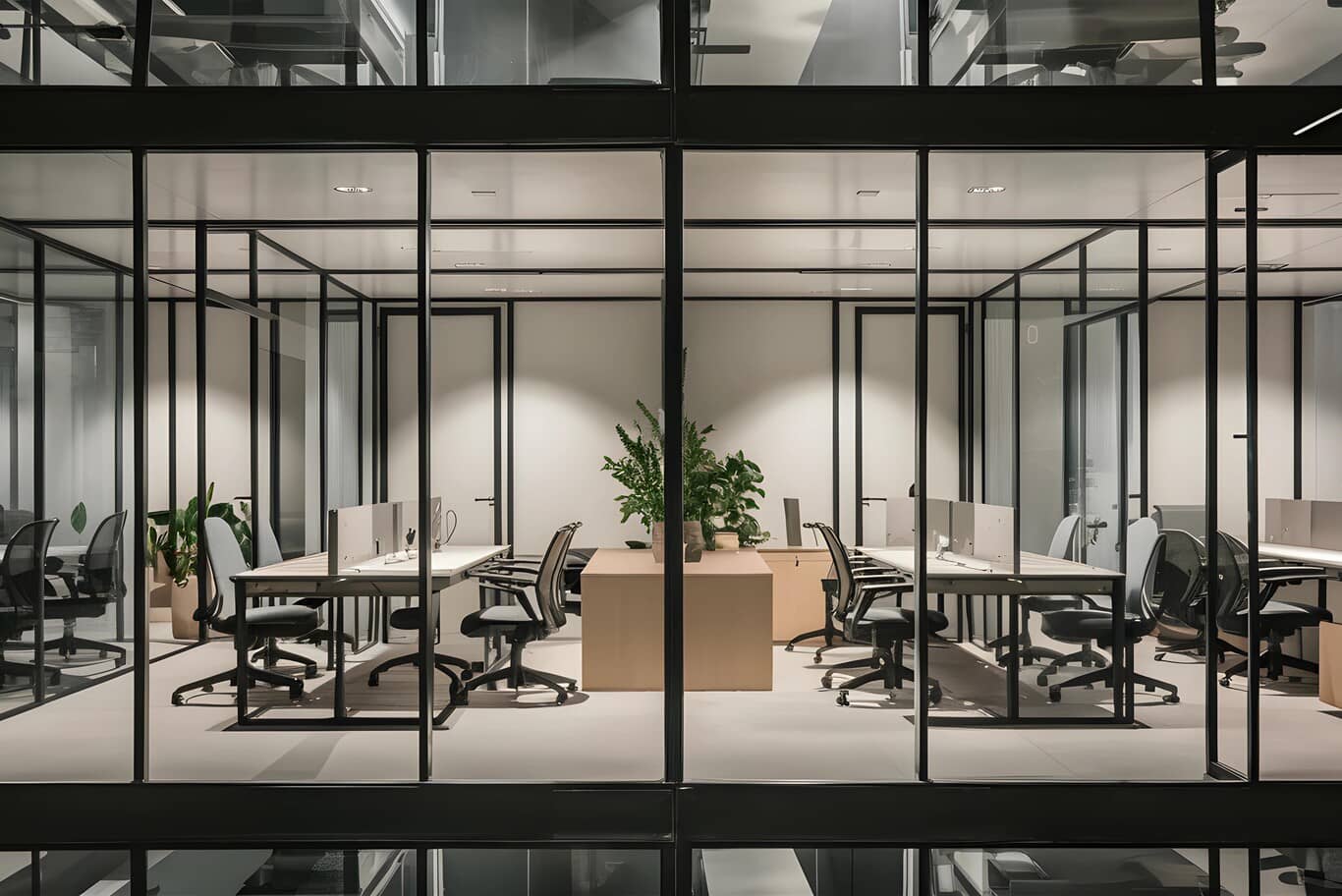
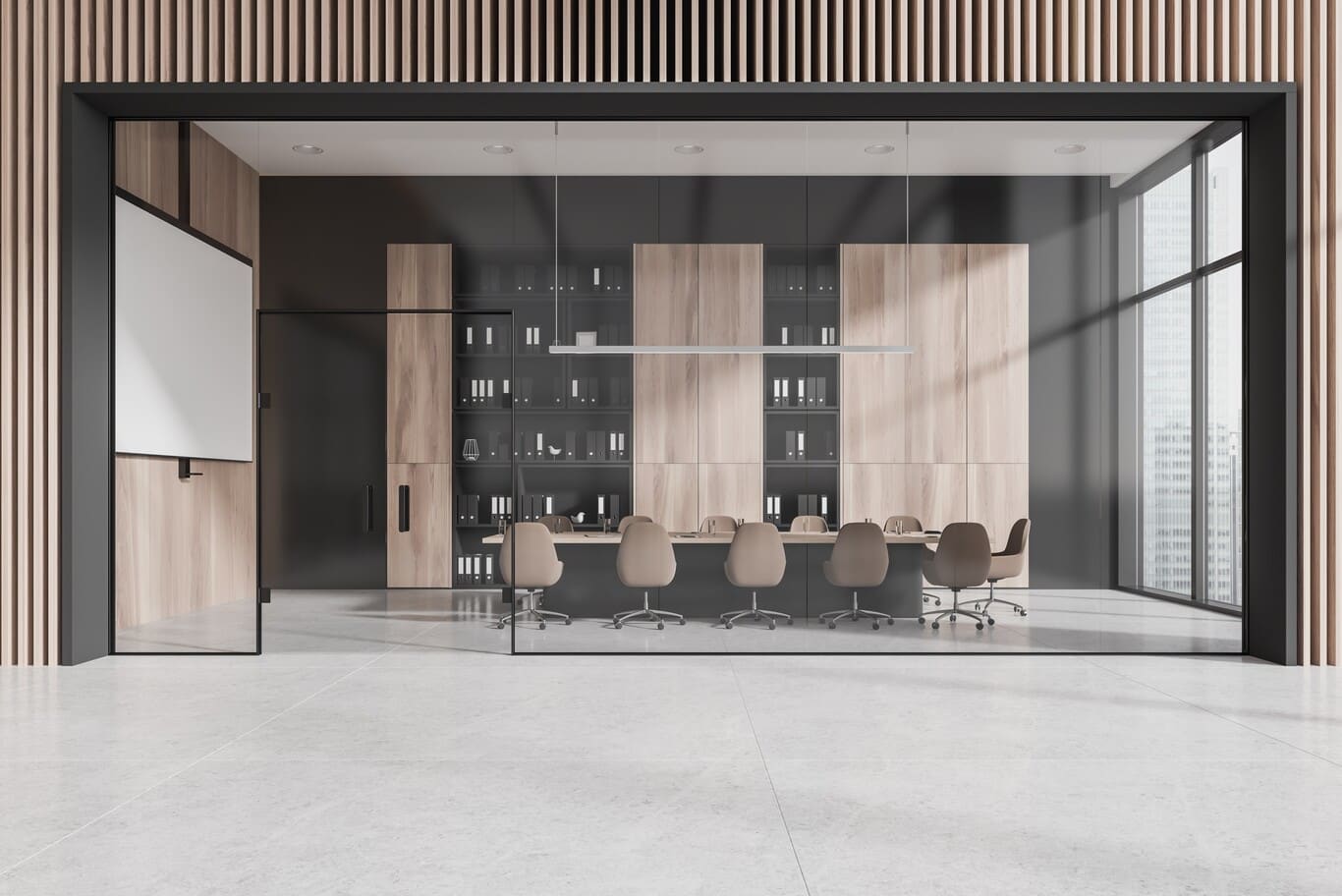
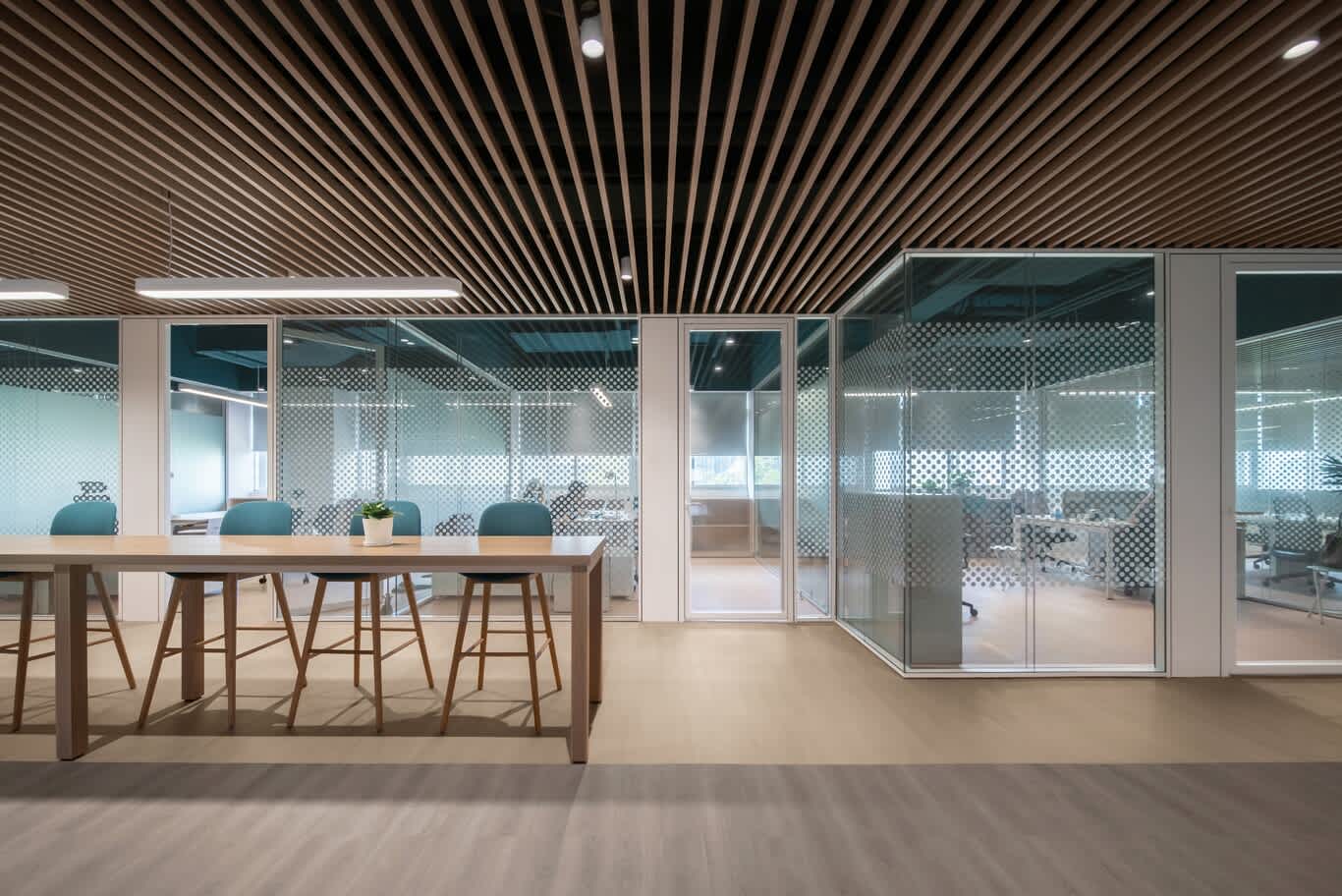
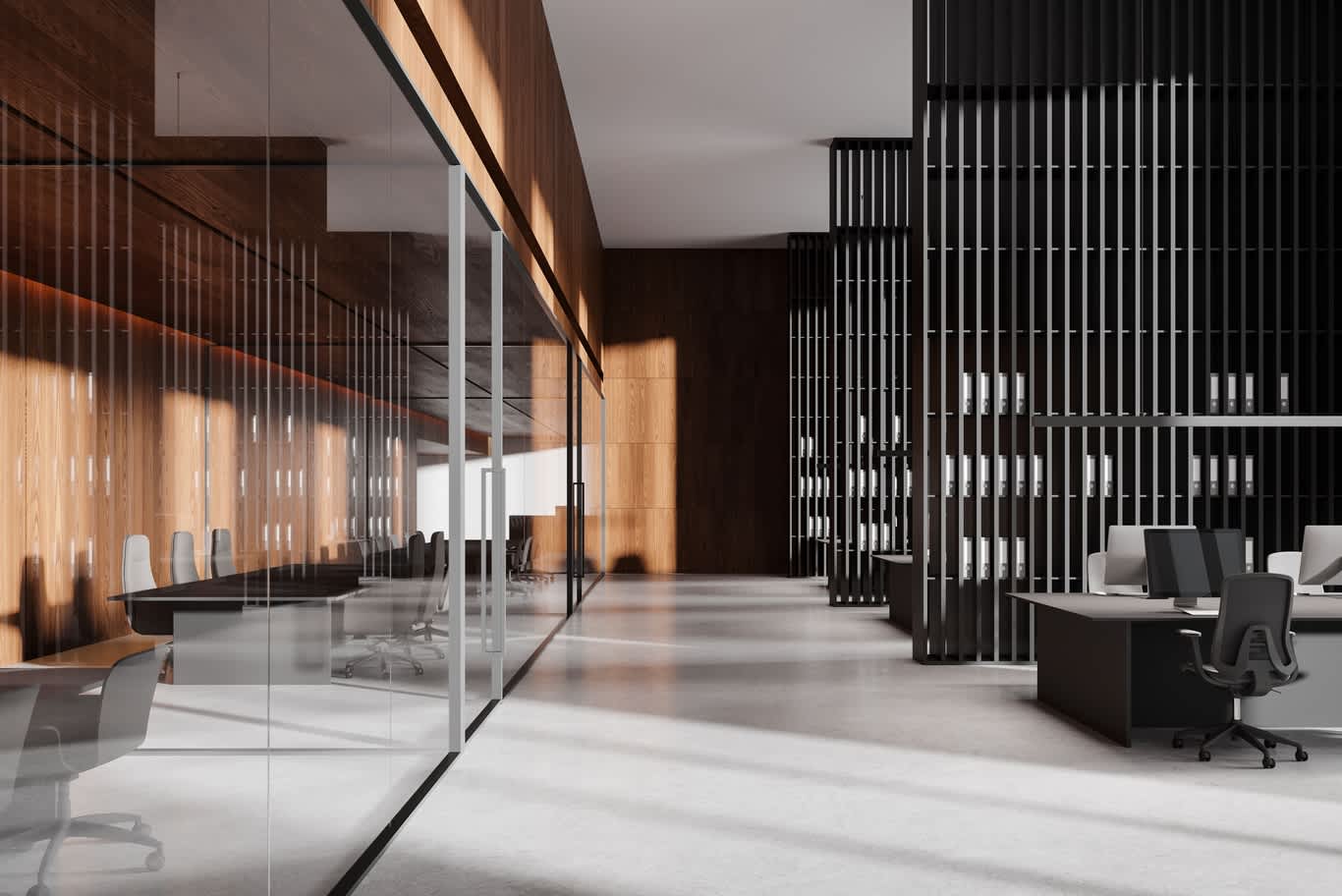
Our retrofit strategy involves "borrowed light." We replace solid corridor walls with floor-to-ceiling glass partitions (often with black metal framing to match the industrial vibe). This allows natural sunlight from the perimeter windows to penetrate deep into the core of the office.
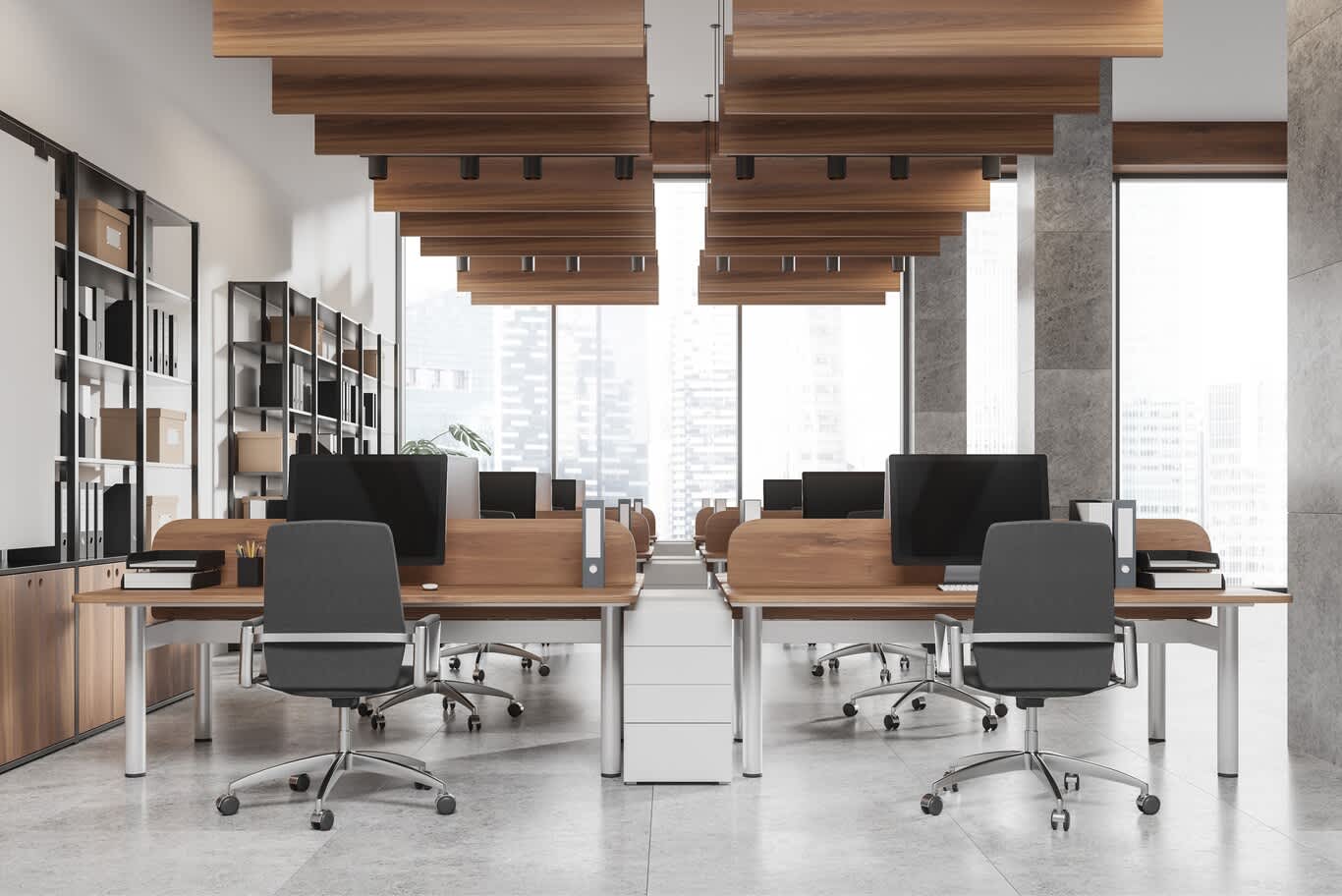
Where privacy is needed, we use fluted glass or smart switchable film rather than blinds. We also completely overhaul the artificial lighting. We strip out the fluorescents and install 4000K LED linear profiles that mimic natural daylight, suspended from the exposed ceiling. This is a productivity booster that transforms the mood of the workspace.
6. Materiality: High-Contrast Textures
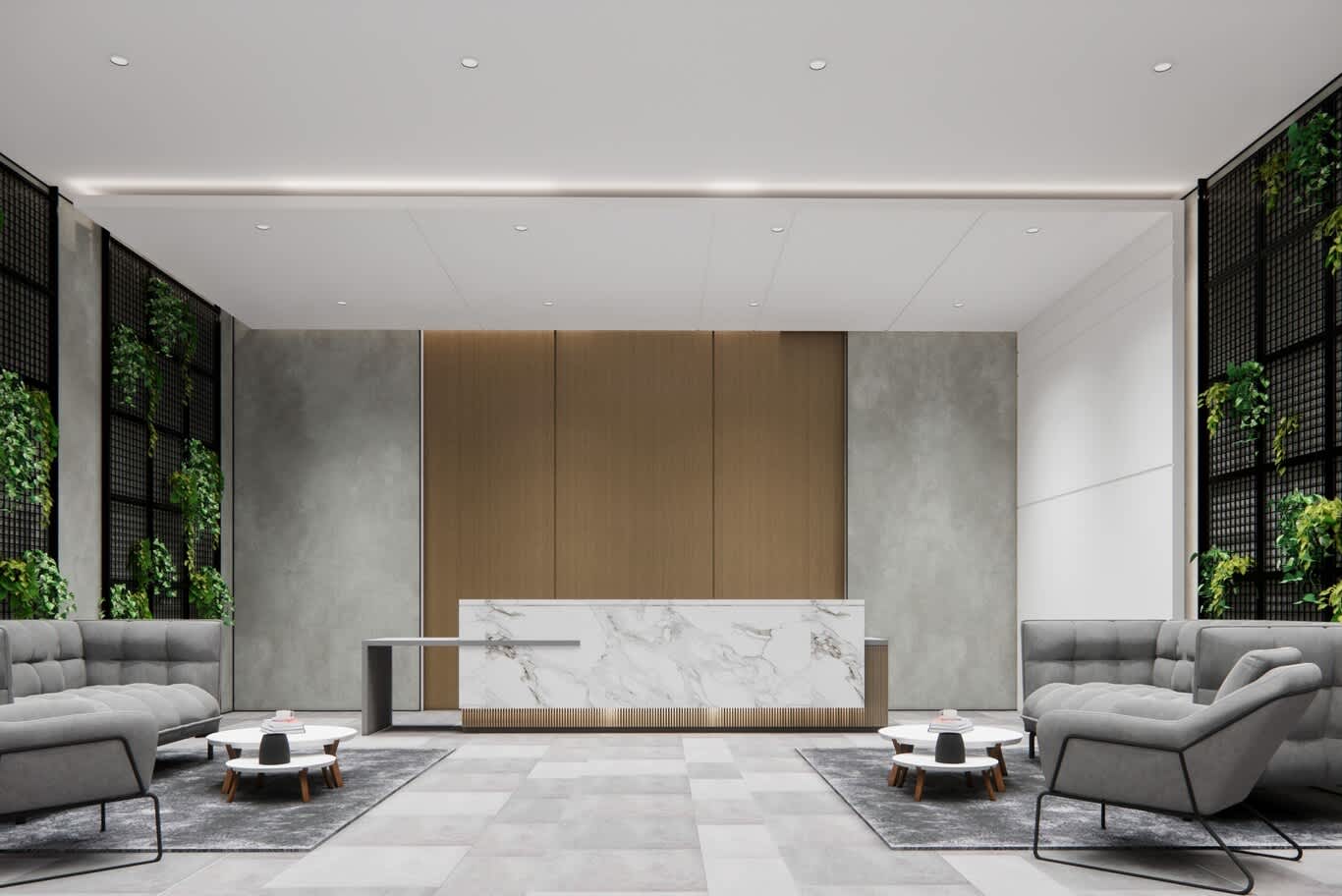
To update a commercial interior in Karama, we have to move away from the "Beige Fatigue." We are introducing high-contrast material palettes that feel premium and durable.
● Flooring: We often rip up old carpets to reveal the slab, pouring micro-topping cement or installing luxury vinyl tiles (LVT) in herringbones patterns. This creates a seamless flow.
● Warmth: To balance the exposed concrete and glass, we inject warmth through walnut or oak wood veneers in the joinery and wall paneling.
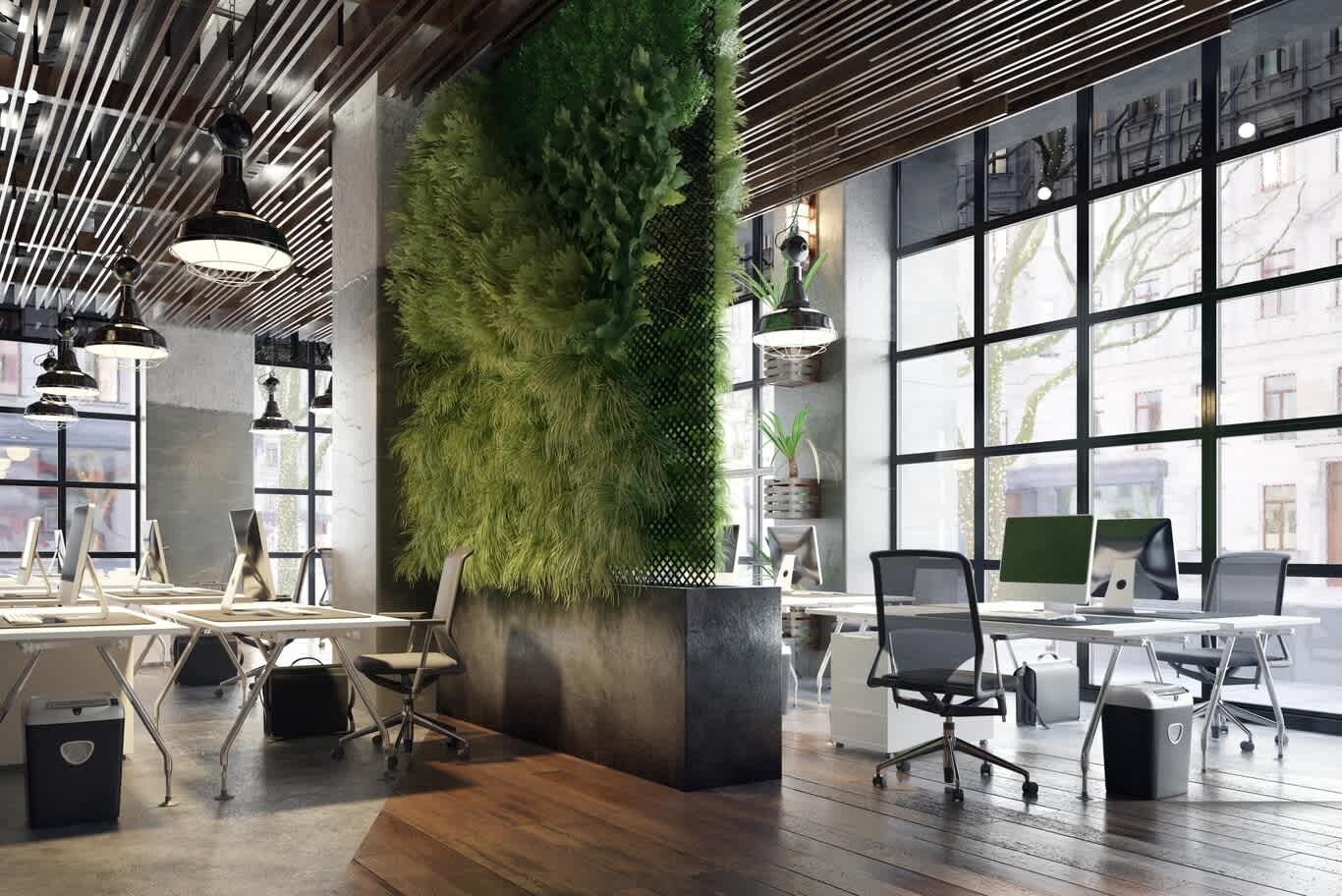
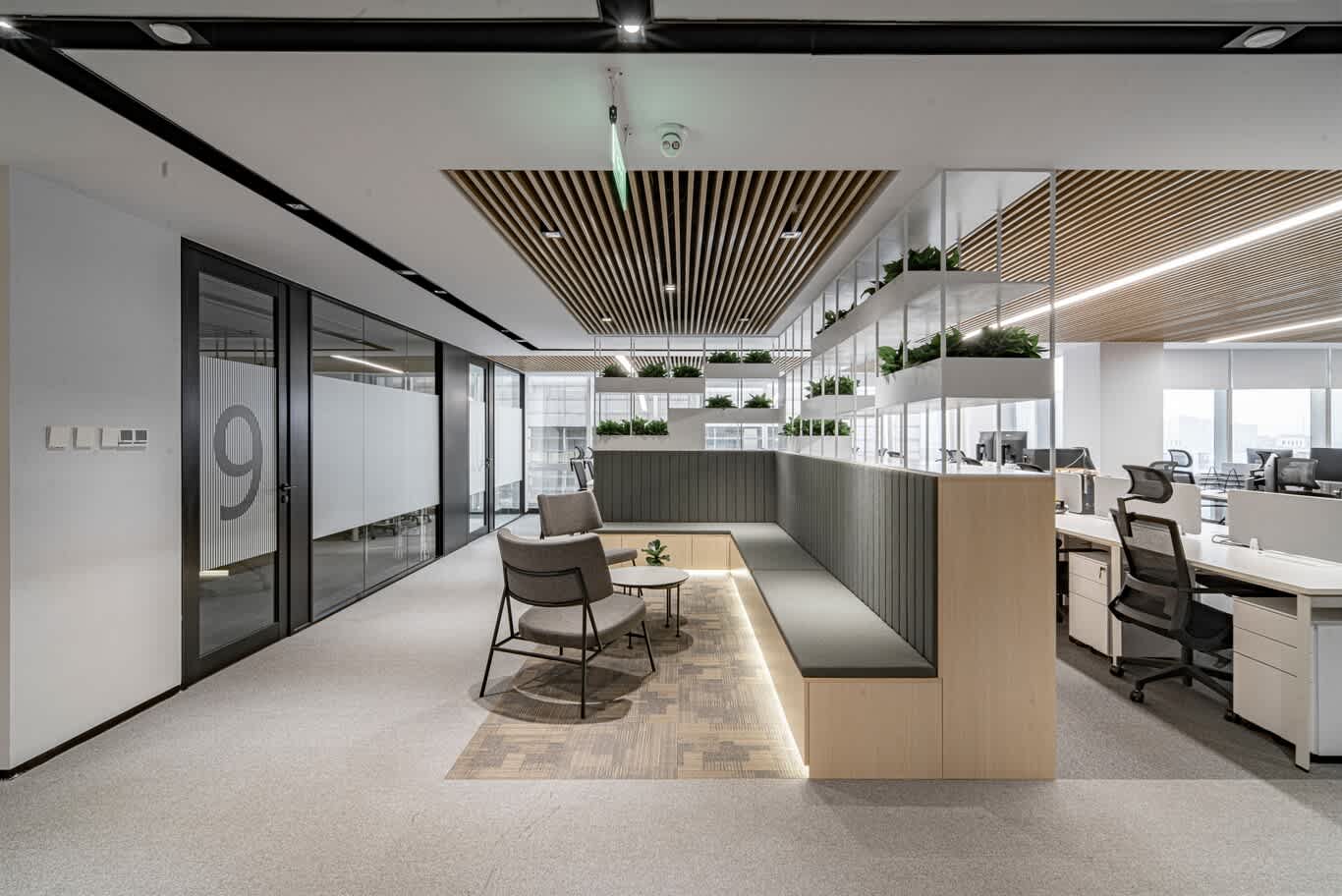
● Biophilic Design: Karama is a concrete jungle. The interior must be an oasis. We design custom planter boxes as room dividers and install preserved moss walls in reception areas. Bringing greenery inside isn't a trend; it's a necessary counter-balance to the urban density outside.
7. The Invisible Upgrade: MEP and Tech Integration
As design-build experts, we know that a pretty office is useless if it doesn't work. Retrofitting in Karama requires a heavy focus on MEP (Mechanical, Electrical, and Plumbing).
The existing electrical loads in 30-year-old buildings were not designed for modern server rooms and dual-monitor workstations. We upgrade the distribution boards and run CAT6 data cabling discreetly through floor boxes or overhead trays.
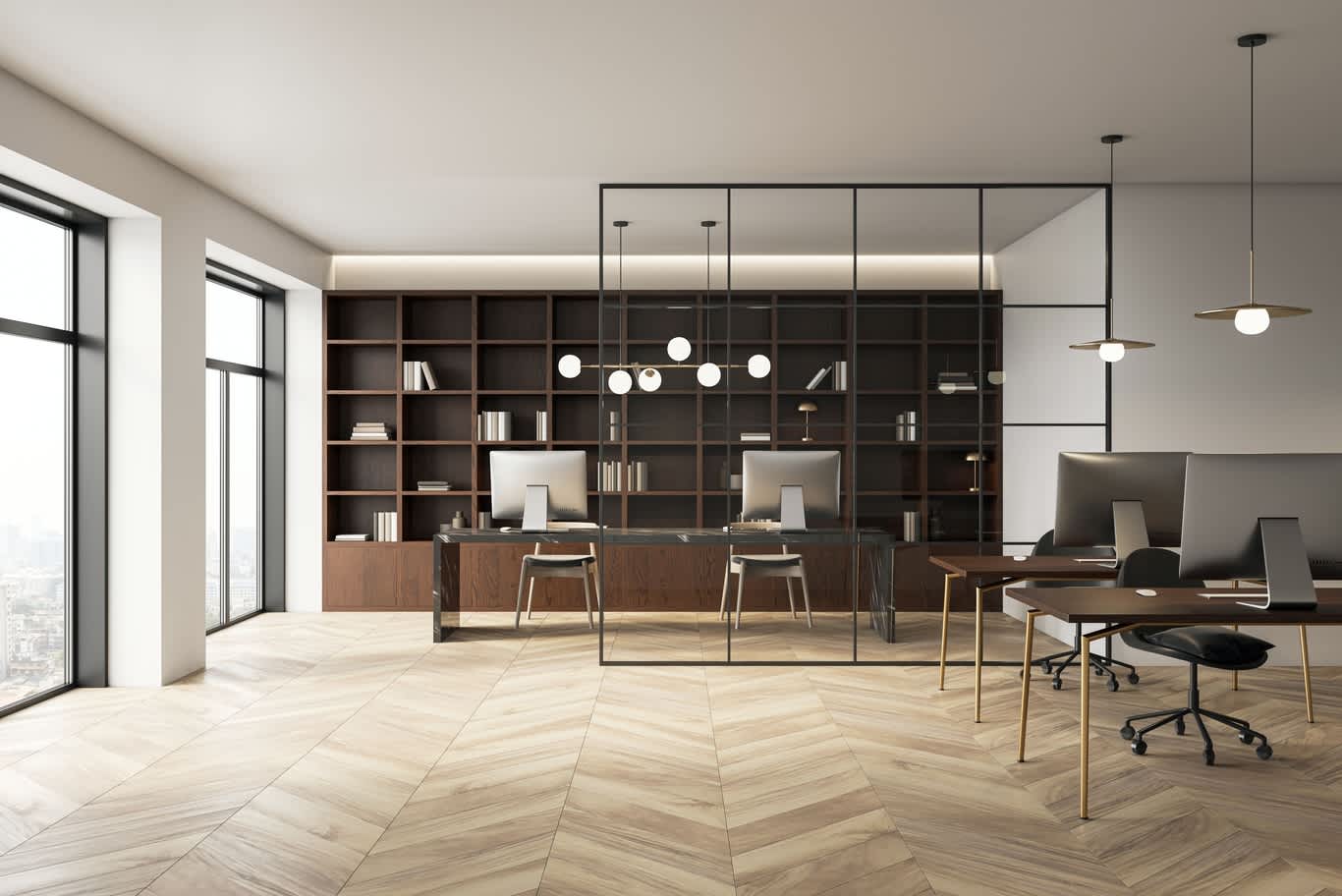
Crucially, we tackle the AC. Old buildings often have noisy, inefficient cooling. We retrofit with modern thermostats and re-balance the air flow, ensuring the "industrial open ceiling" design doesn't lead to hot pockets in the office.
8- The Business Case for Good Design
Why should a business invest in a high-end interior fit-out in an older district like Karama?
1. Talent Retention: The workforce of today—Gen Z and Millennials—cares deeply about their environment. They want "Instagrammable" moments and ergonomic comfort. A retrofitted, design-led office in Karama signals that the company is forward-thinking and values its staff, helping to attract talent that might otherwise only look at Downtown.
2. Brand Perception: When clients walk into a retrofitted space, the contrast is powerful. Leaving the gritty streetscape and entering a sleek, cool, biophilic office creates a "wow" factor that stays with them. It shows that the business has vision. Successful transformations in this neighborhood often start with a clear understanding of commercial interior design principles.
3. Cost Efficiency: By renovating rather than relocating, businesses save on the massive premiums of new free-zone rents. Investing that saving back into high-quality fit-out projects in Dubai yields a workspace that is operationally superior and aesthetically stunning, for a fraction of the 5-year cost of a new build.
9- The Future Impact: A Renaissance for Karama
The retrofit revolution is slowly but surely changing the face of Al Karama. It is sparking a renaissance that goes beyond aesthetics.
As more high-quality commercial spaces become available, the demographic of businesses is shifting. While traditional trading companies remain the backbone, we are seeing creative agencies, boutique marketing firms, tech startups, and artisanal coffee roasters moving in. They are attracted by the authenticity of the neighborhood and the ability to create unique, non-corporate headquarters.
This, in turn, elevates the surrounding area. A cool new retrofitted office complex drives demand for better lunchtime spots, encouraging local eateries to upgrade their own interiors. It creates a virtuous cycle of improvement.
The Retrofit Revolution is proving that Dubai’s older districts are not destined for obsolescence. By embracing their history while upgrading their functionality, areas like Al Karama are demonstrating resilience and adaptability. They are showing that a building doesn't need to be brand new to be world-class; it just needs vision, a bit of care, and the courage to reimagine what is already there.
Conclusion: The Designer’s Role in Urban Renewal
Al Karama is changing. The retrofit revolution is ensuring that this historic district remains relevant in a futuristic city.
As interior designers, we are the custodians of this transition. We have the privilege of taking the history of the building and layering the future on top of it. We are proving that you don't need a brand-new building to have a world-class workspace. You just need the courage to strip away the old layers and the vision to design something new within them.
Either it’s a boutique marketing agency, a family trading house, or a modern dental clinic, the potential in Karama’s interiors is limitless. It just takes the right design partner to unlock it.
Contact Us
Is your workspace stuck in the 90s? Don't move—improve. At Algedra Interior Design, we specialize in unlocking the potential of commercial spaces through intelligent, creative interior design.
Contact us today for a site consultation and let us envision what your space could become.
Explore more of our design guides and insights:
● Essential Beauty Salon Design Tips
FREE CONSULTATION
TELL US ABOUT YOUR PROJECT
WE WOULD LOVE TO HEAR FROM YOU
Feel free to reach us via this contact form and one of our Design Consultants will get back to you at earliest.
OUR BRANCHES
UAE - DUBAI
+971 52 8111106 | hello@algedra.ae
TURKEY - ISTANBUL
+90 533 701 89 71 | info@algedra.com.tr
Leading Interior Design and Decor Company in Dubai and Abu Dhabi.
Algedra is a reputable, internationally recognized, and one of the most successful interior design companies in Dubai, and Abu Dhabi, which specializes in delivering interior design, architectural, and creative space planning projects throughout GCC, MENA, North Africa, Turkey and Russia.
Algedra is a one-stop solution for all your residential interior design and fit-out needs. We have successfully completed numerous villa interior and exterior design projects, where we integrated quality and originality to deliver interior masterpieces.
ALGEDRA, Interior Design Company in Dubai, is specialized in providing elegant and stunning interior design services for both residential and commercial projects. We turn our clients' dreams into reality, trans- lating their tastes and needs into beautiful and functional spaces.
Since the day we were founded, we have designed and built many branded residences, resorts, hotels, multi-purpose social spaces, and palace designs with different functions and concepts by following the ever-changing design trends over the world.
A key element of our work is a fusion of different cultures and designs, combining Greek, Italian, Eastern and Western influences with British innovation.
As a team of highly qualified interior designers and engineers, Algedra offers complete architectural services from mall design to corporate office design as well as the exterior design of any project based on customers' needs.
Our customers include leading names, we have completed diverse projects in hospitality, landscape, commercial, and residential designs. These projects contain cafes, restaurants, gym, villas, family sitting rooms, bedrooms, kitchens; all showcasing our company's exquisite details and high-end designs.
Residential Interior Design in Dubai
Algedra's interior designers and architects have an important mission: building villas, houses, apartments, condos, and anywhere else where you reside that will fulfill your needs while being structurally safe and sound.
Architectural Designs
There are so many details that go into designing an architectural design project. Every step of the project has been carefully considered for safety and daily comfort by Algedra's experts.
Commercial Design
Conceptualizing spaces for business, to elevate style, and to increase functionality to help enhance the bottom line of a company is vital, as well as employee comfort and interior design too. Our commercial interior designers translate client's concept in ways that are efficient, attractive and provide professional workspaces.
Fit-out Projects
Algedra Interiors delivering high-quality tailored fit-out projects that transform your villas, palaces and commercial spaces.
We're a passionate team of interior designers, architects and engineers. Every day we help clients to solve interior design problems and create engaging spaces!
Wherever you are in Kuwait, Saudi Arabia, Azerbaijan, Qatar, Morocco, Algeria, Tunisia, Libya, Egypt; don't hesitate, contact us to find out more about why we are one of the best interior design companies in Dubai and Abu Dhabi!