Home Page | Blog | Luxurious Home Office Designs for Your Residence
Luxurious Home Office Designs for Your Residence
12/15/2025
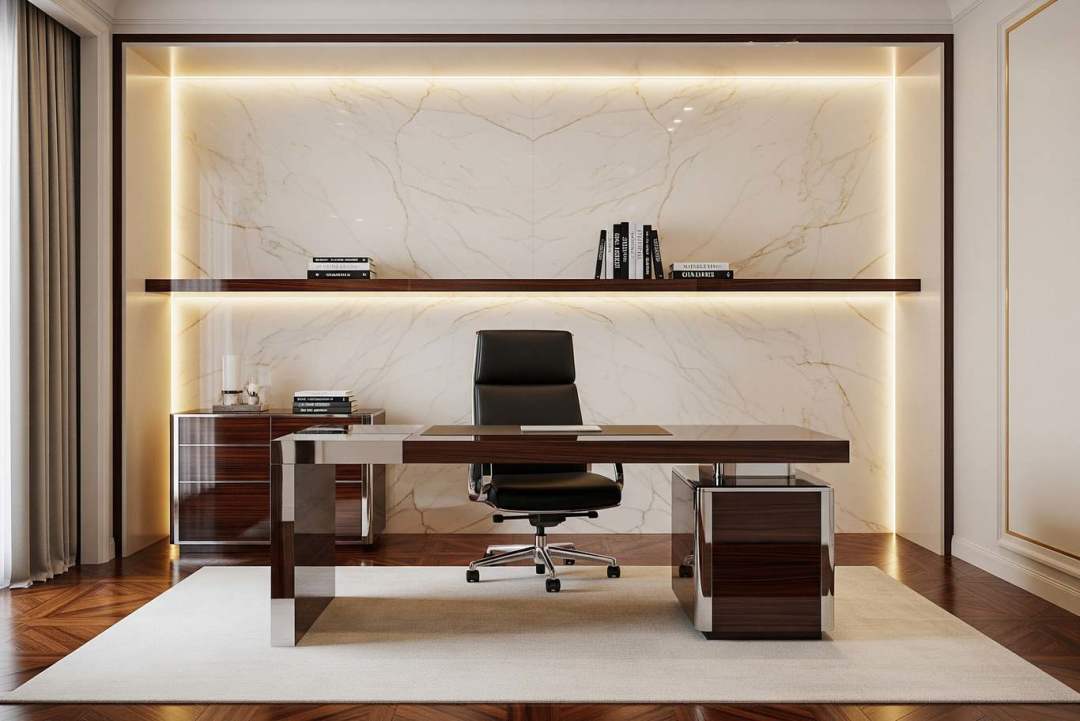
For many professionals, remote work has evolved from an occasional perk to an everyday reality. As the home office becomes a permanent part of domestic life, families are no longer satisfied with makeshift workstations or kitchen tables. They expect their workspace to be productive, comfortable and stylish.
Instead of settling for the spare bedroom, homeowners are commissioning custom cabinetry, investing in executive furniture and integrating cutting‑edge technology. The goal is to create a space that rivals the ambience of a CEO’s office while still feeling like part of your home.
This guide focuses on high‑end home office design. It distils insights from designers and luxury furniture makers to help you craft a professional yet indulgent workspace. From selecting the right room to choosing statement furniture, optimizing light and acoustics, integrating smart tech and curating art, the following sections show how to transform a room into a personal sanctuary of productivity.
1- Choose a prime location
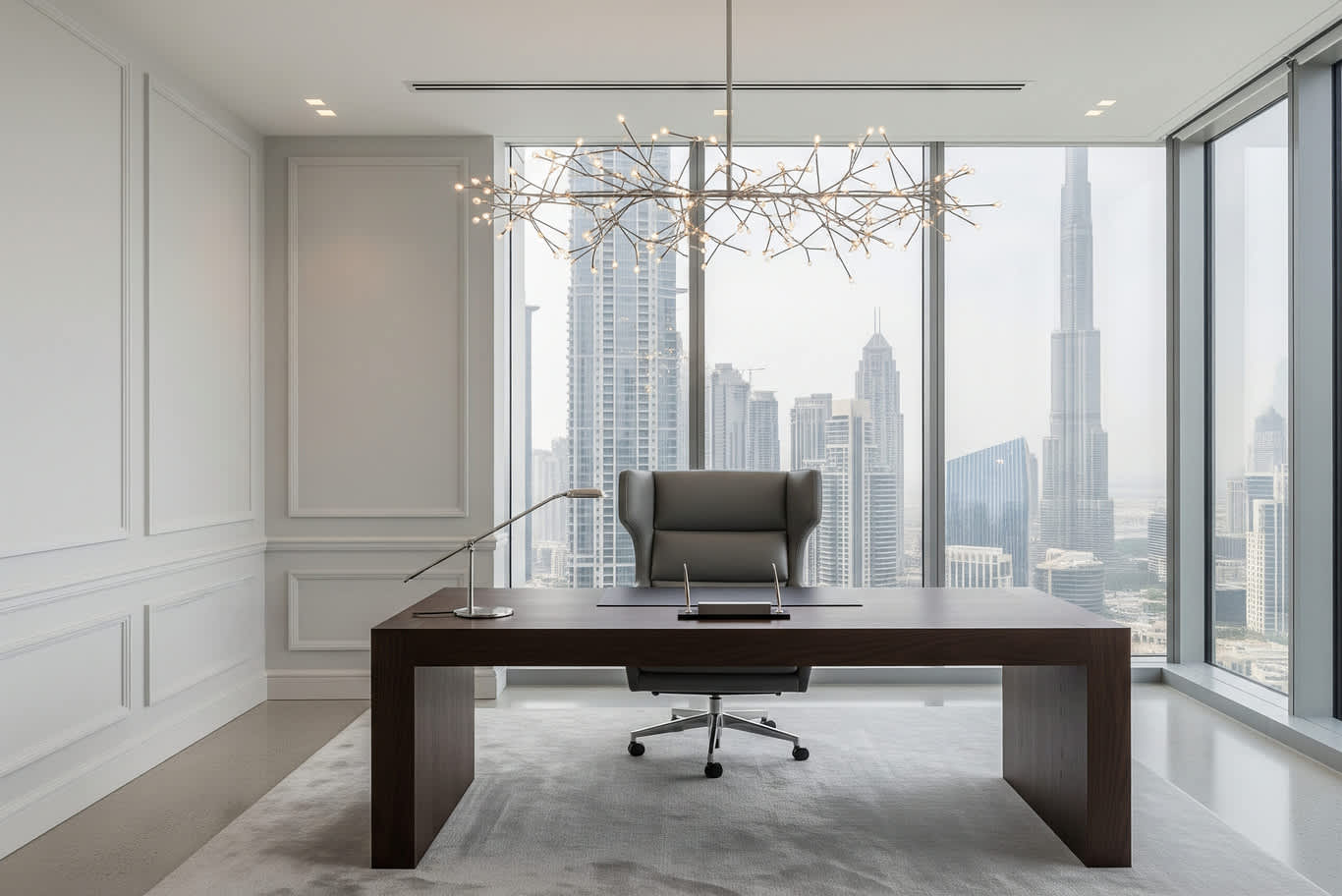
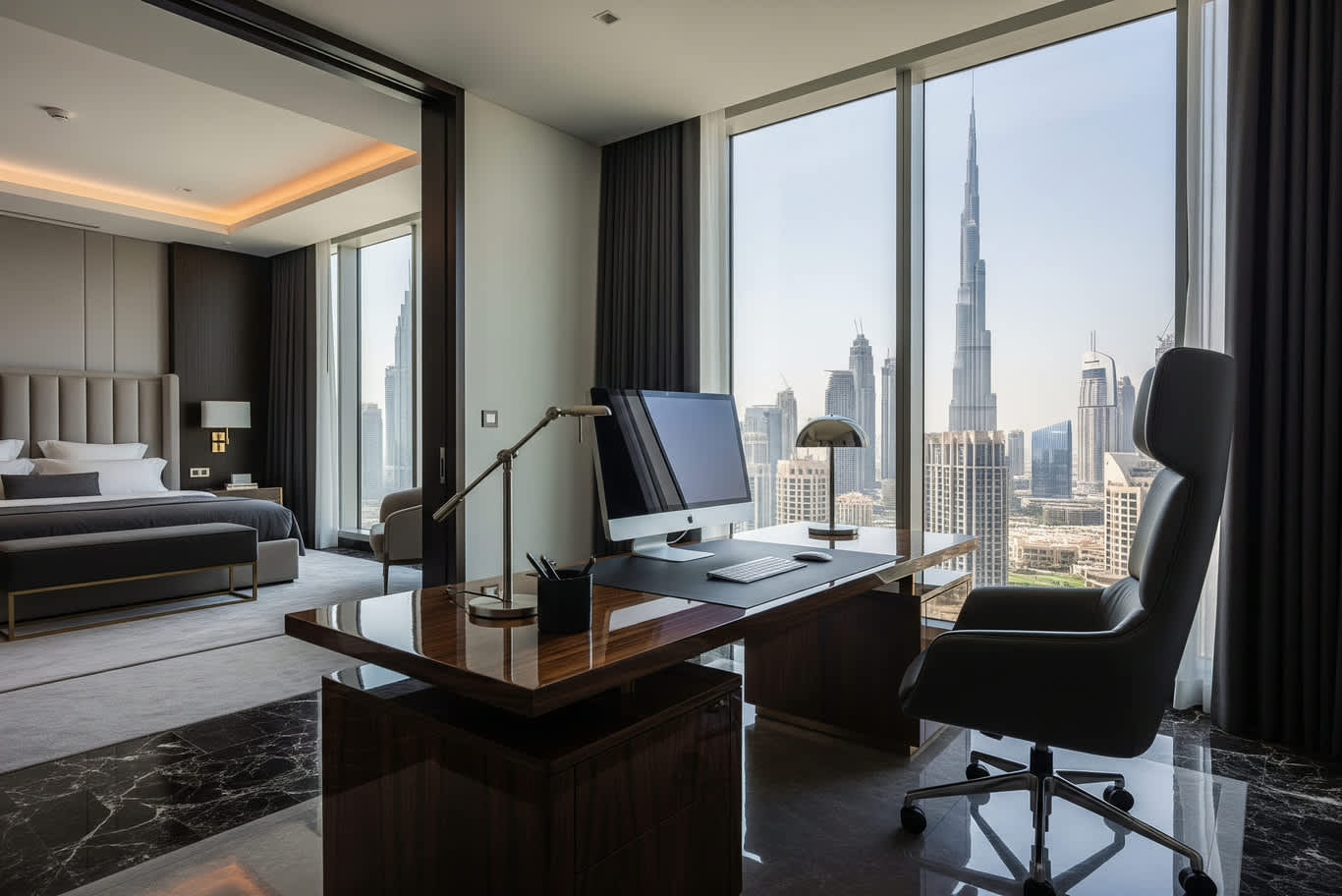
Luxury begins with choosing the right room. Interior designers recommend situating the office in a quiet area of the house with good views and natural light; this helps create a serene atmosphere that enhances focus. A scenic view and daylight are not just indulgences—natural light has measurable benefits. Studies cited by workplace experts show that employees exposed to daylight sleep longer and better than those without windows, experience fewer headaches and eyestrain and feel more engaged. When planning your home office, select a room with windows or consider adding skylights to improve your well‑being and productivity.
2- Plan the layout and built‑ins
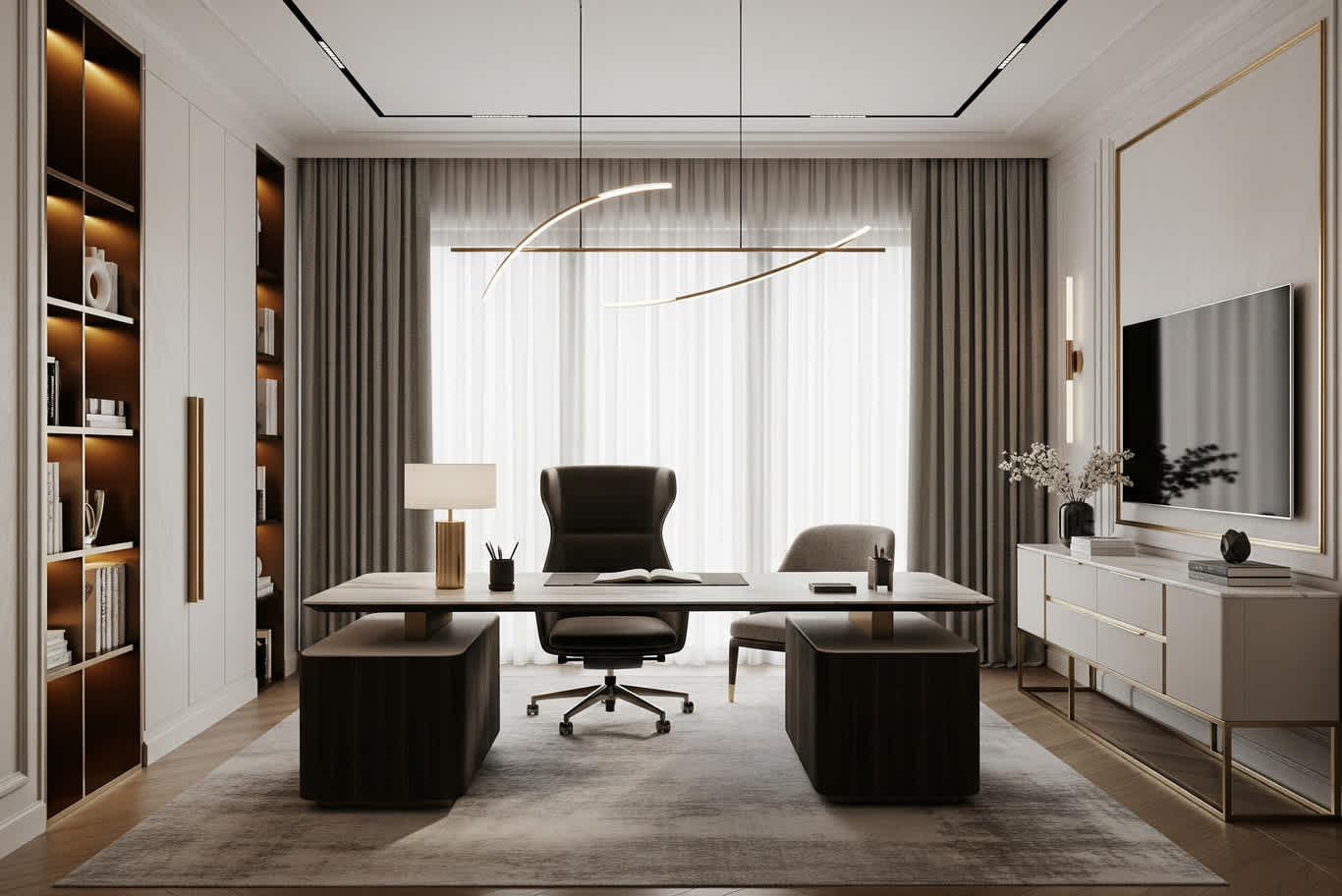
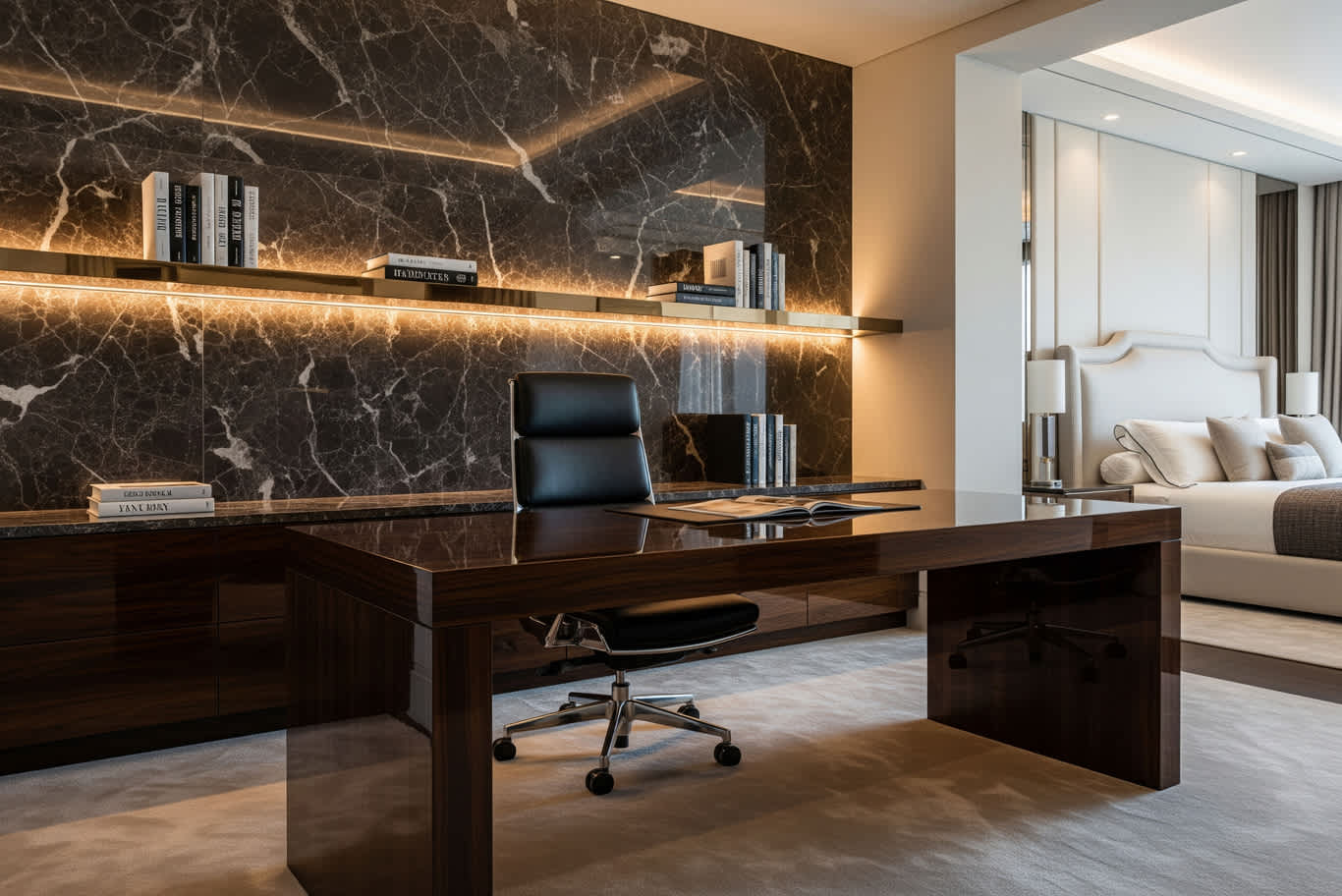
The hallmark of a luxurious office is customization. Homeowners are investing in bespoke built‑ins, hidden storage and tailor‑made desks that fit seamlessly into their space. Custom cabinetry ensures a cohesive look while keeping clutter out of sight. If the office must perform double duty—as a guest room, gym or reading nook—consider a multifunctional design. Fold‑out desks, sofa beds and modular shelving allow the room to transform easily. Built‑in bookcases or wall units provide display space for books, art and accolades, while closed cabinets keep paperwork and technology concealed.
3- Invest in statement furnishings
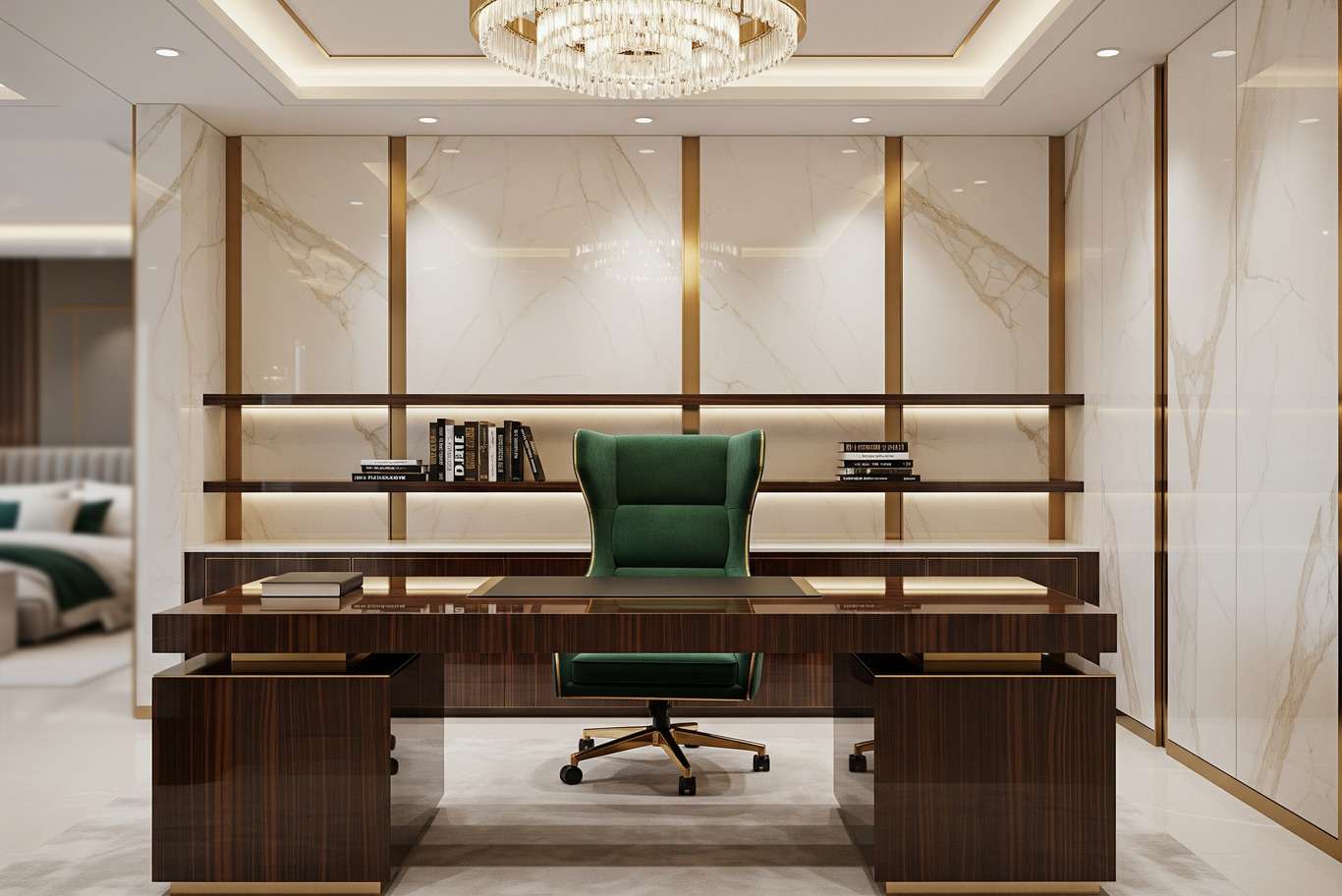
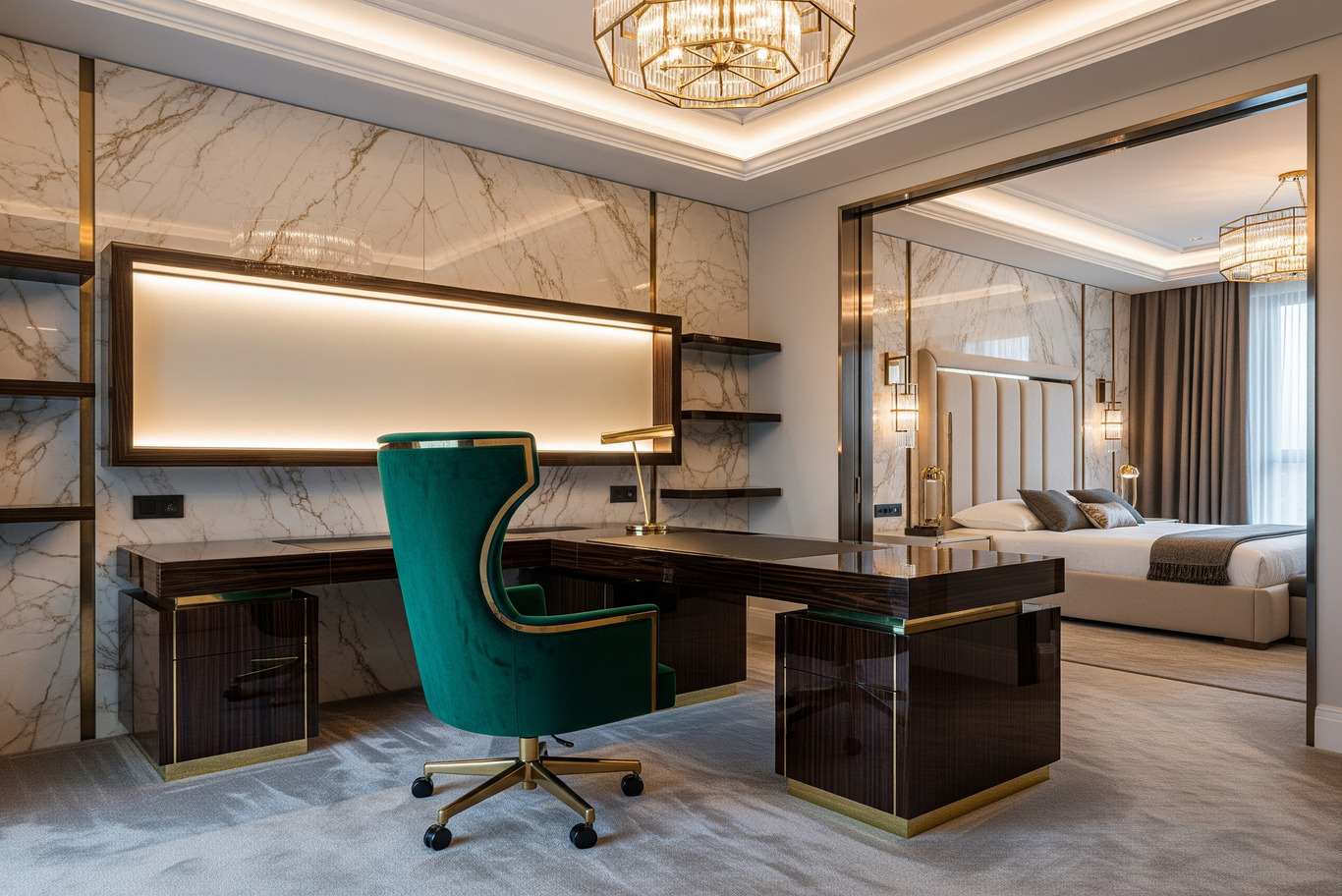
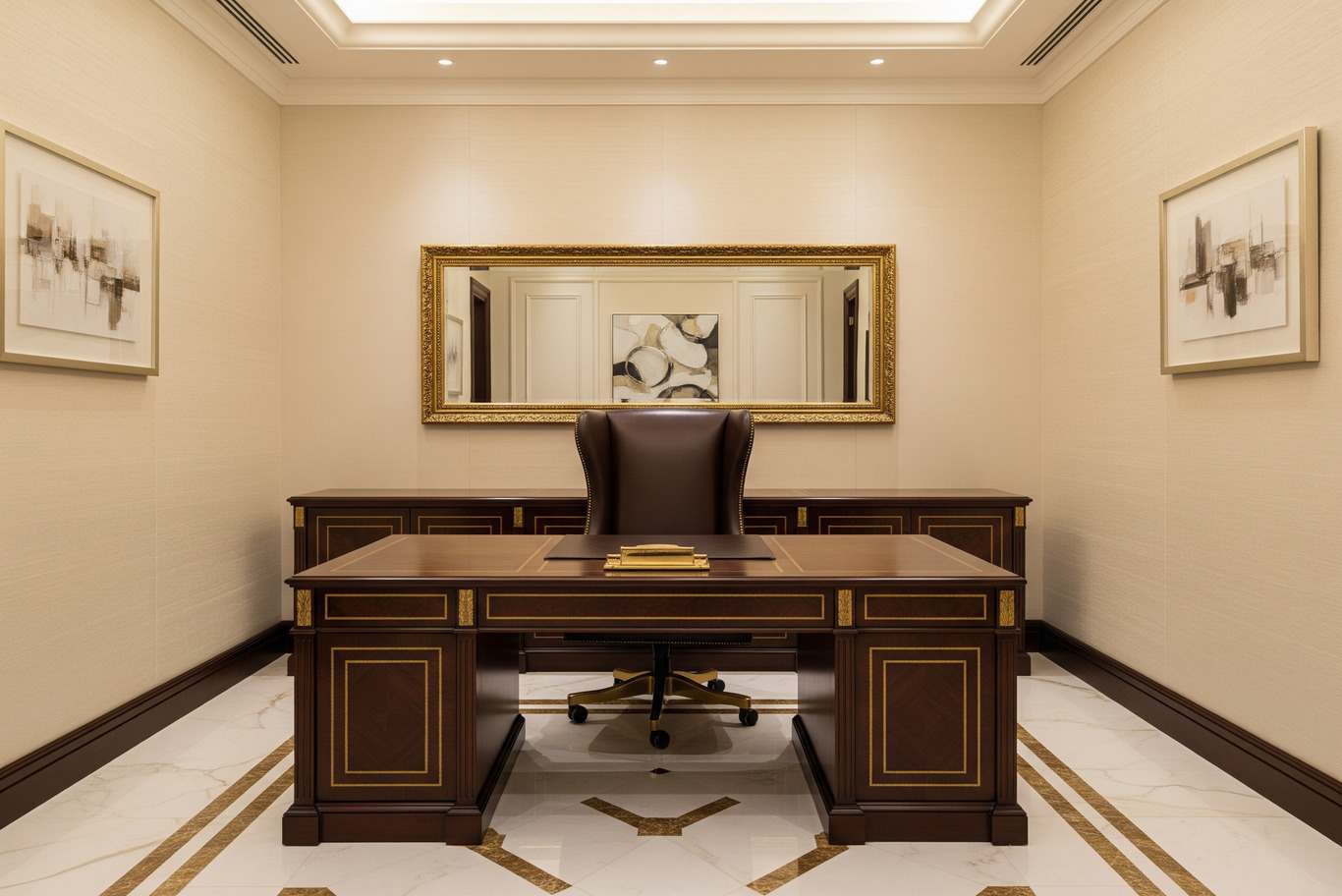
A luxury office should feel like an executive suite. The desk is the centerpiece, so opt for a custom or designer desk crafted from premium materials like walnut, marble or glass. Modern CEO offices often feature glass‑top executive tables, solid oak desks with brass accents and marble finishes—elements that work equally well at home. Pair the desk with an ergonomic chair that supports the spine’s natural curve. Medical studies indicate that sit‑stand workstations may reduce low back pain, and ergonomic chairs with lumbar support and adjustable seat pan tilt encourage neutral spine postures. Investing in these pieces enhances comfort and prevents fatigue during long workdays.
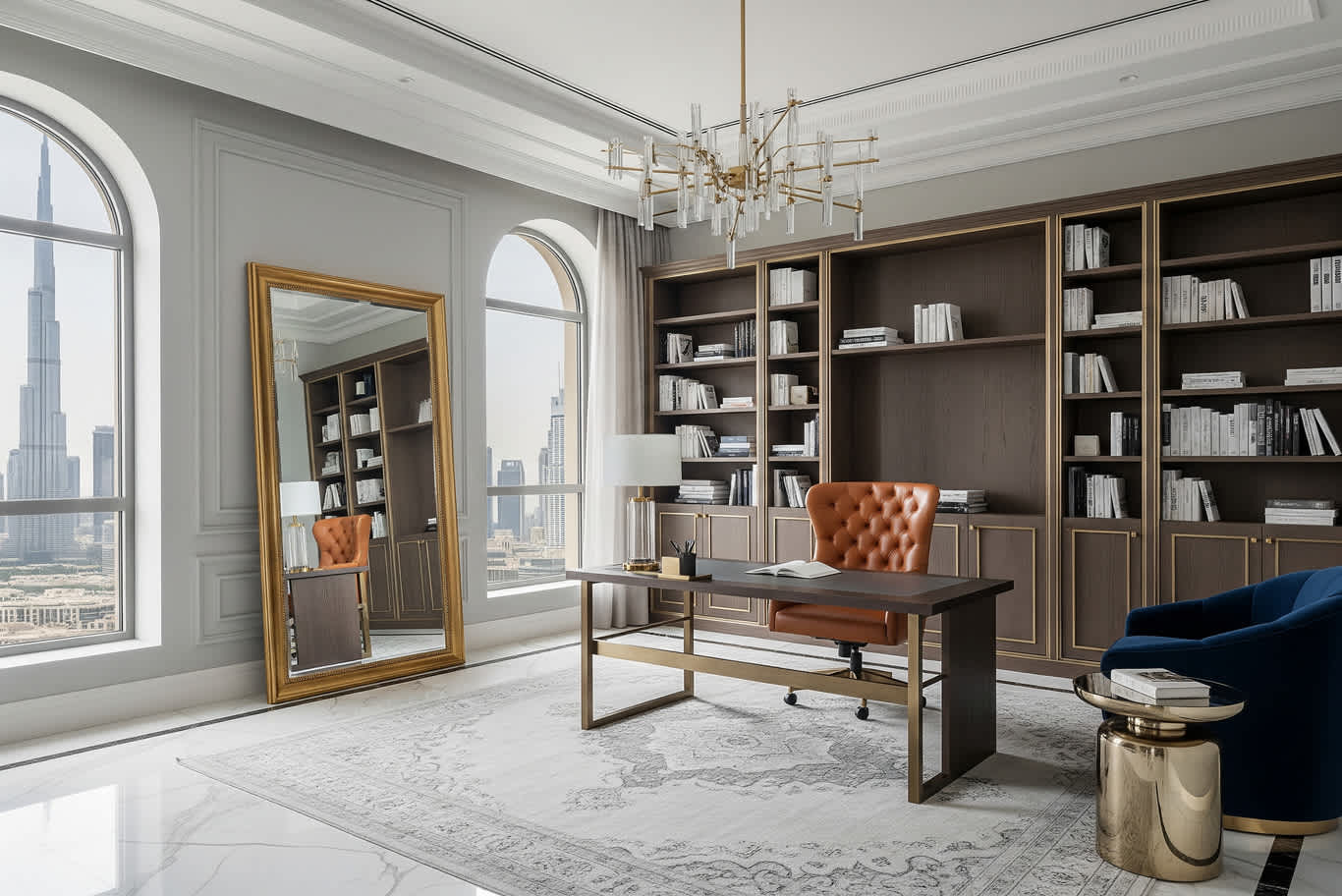
Check our home office interior design portfolio to see more details and projects.
4- Establish a sophisticated color palette
Color sets the mood of your workspace. Luxury home offices embrace deep blues, charcoal grays, rich greens and warm neutrals, often used on accent walls, cabinetry or upholstery. Contemporary designers also predict a rise in moody paint colors and color‑drenched rooms, where walls and ceilings are painted in rich, saturated hues to create drama. Greens continue to dominate interior palettes; designers note that clients are requesting shades ranging from olive to sage because they bring a natural sense of relief in an increasingly digital world. Warm, earthy tones like creamy neutrals, taupe, mossy green and deep rust can make your office feel inviting and grounded. Choose a palette that complements the rest of your home, then layer textures and finishes to add depth.
5- Rich natural materials
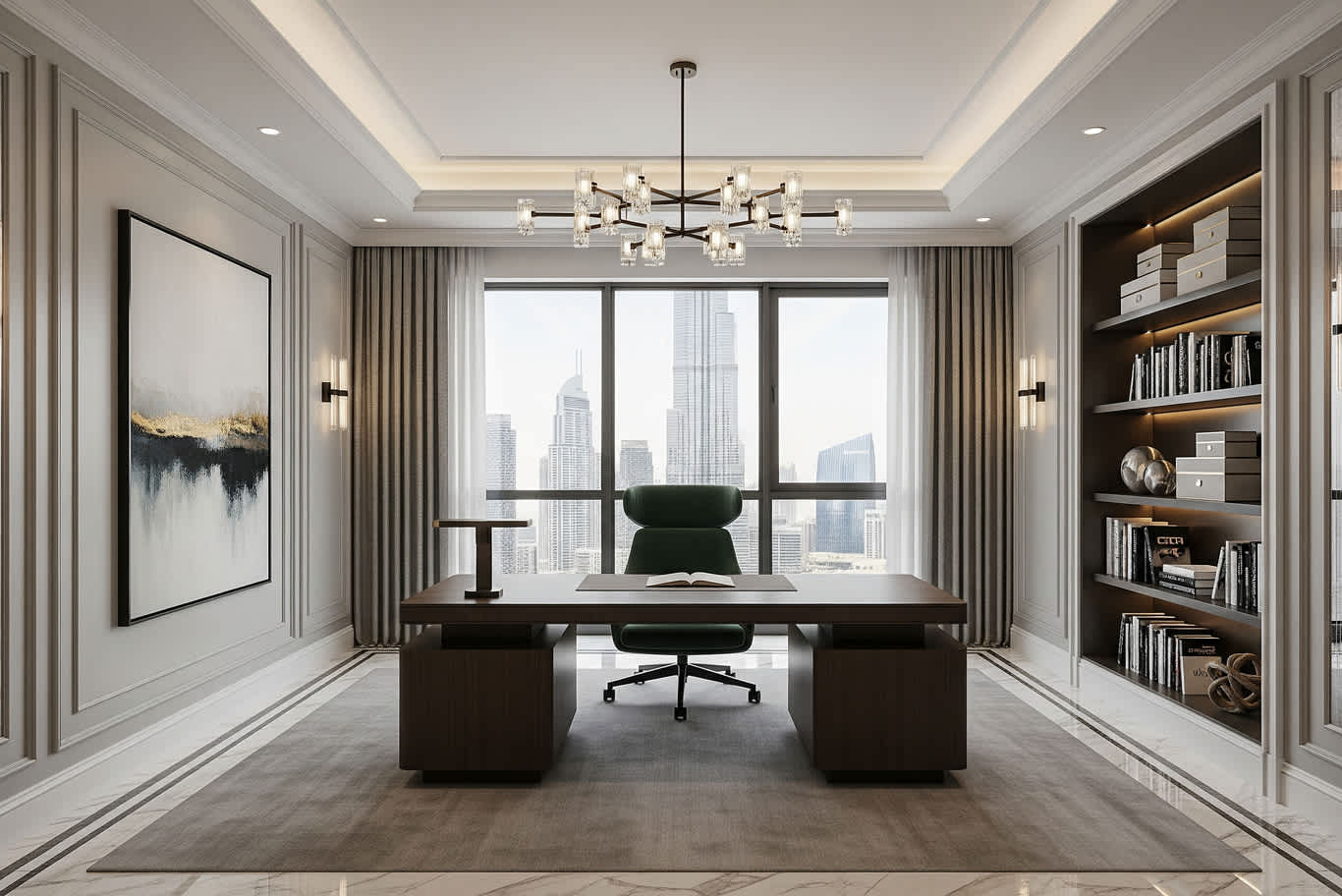
Luxury design is defined by its use of high‑quality materials. Solid wood (walnut, oak and teak), natural stone (marble, granite), glass and leather create a sense of permanence and sophistication. Designers note that velvet chairs, leather desk surfaces and handwoven rugs are popular finishes. Metal accents—brass, bronze or polished nickel—add a refined edge, while textured wallpaper, intricate moldings and wainscoting bring depth. The industrial loft style celebrates raw materials like exposed brick, weathered wood, metal and concrete; balancing these with plush rugs and linen curtains prevents the space from feeling cold.
6- Sustainable elegance
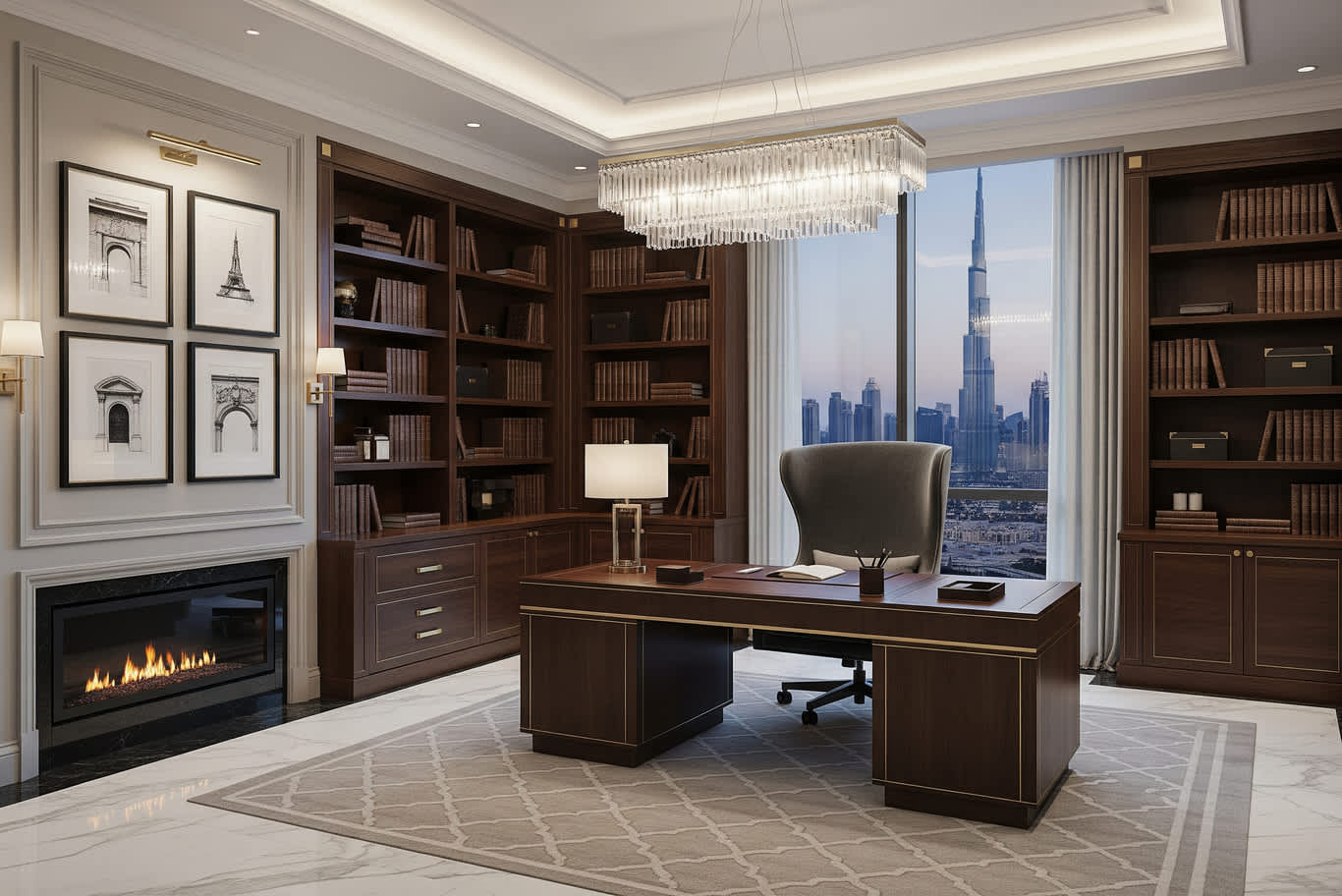
Sustainability has become a core component of luxury. Designers emphasise using eco‑friendly materials such as recycled wood, low‑VOC paints and sustainable textiles. Bamboo or reclaimed wood furniture offers a stylish, durable alternative to new lumber. Incorporating indoor plants not only softens industrial or minimalist schemes but improves air quality and creates a tranquil atmosphere. High‑end offices also integrate energy‑efficient LED lighting and solar‑powered gadgets to minimise environmental impact.
7- Smart office ecosystems
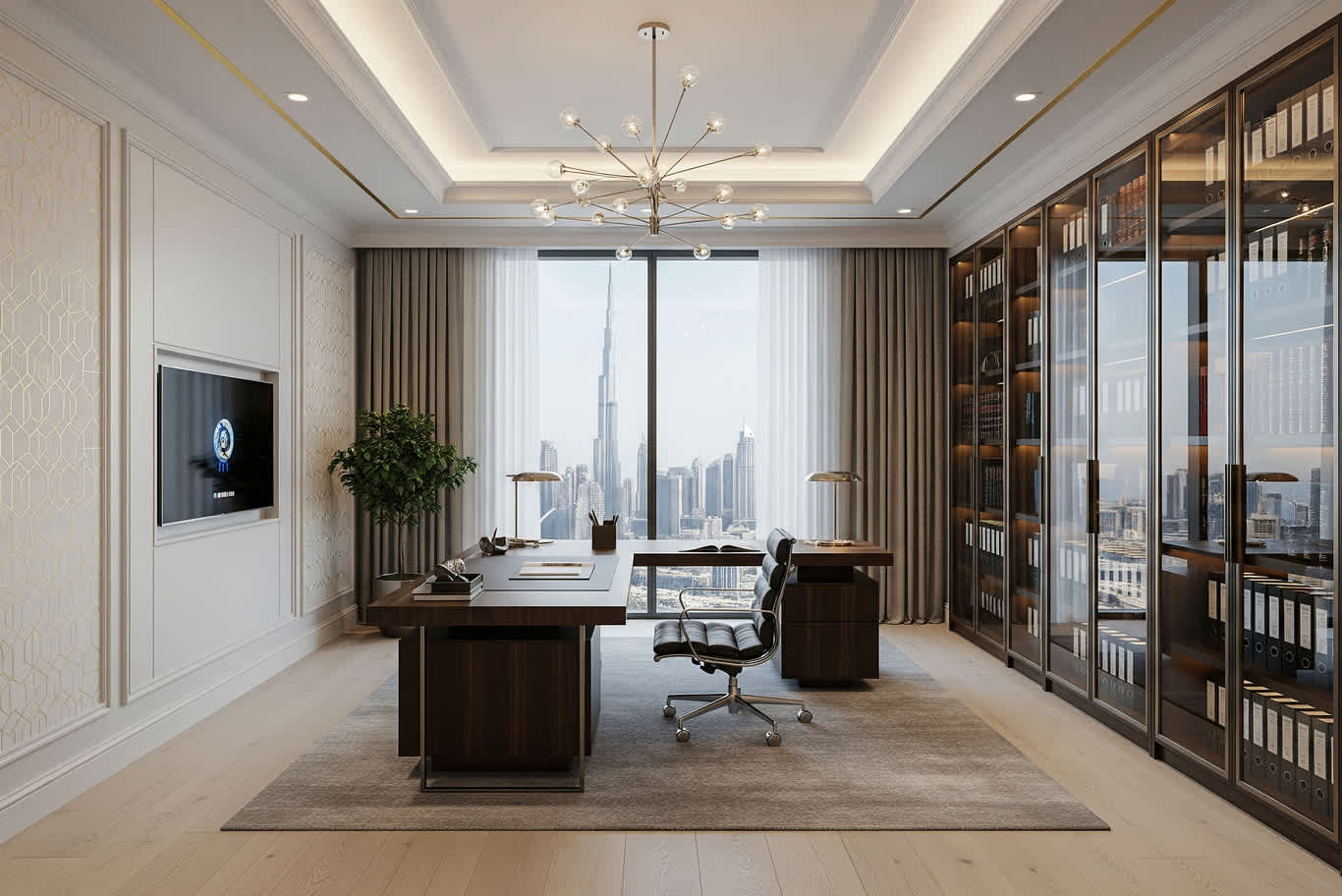
Technology is woven into the fabric of modern luxury offices. Smart desks with height adjustment, voice‑activated assistants and high‑resolution video conferencing setups are becoming standard. A tech‑integrated smart office leverages IoT devices, automated systems and seamless connectivity to enhance comfort and efficiency. Key elements include wireless charging pads built into desks, smart plugs controlling lighting and monitors, and voice assistants like Amazon Alexa or Google Assistant. Automated lighting and climate control systems adapt the environment to your preferences; LED lighting with adjustable color temperatures transitions from cool, focus‑enhancing daylight to warm, relaxing hues. Reliable high‑speed internet ensures that devices communicate smoothly. When planning your office, choose devices that are compatible with each other and invest in cable management to maintain a clean aesthetic.
8- Integrated displays and collaboration tools
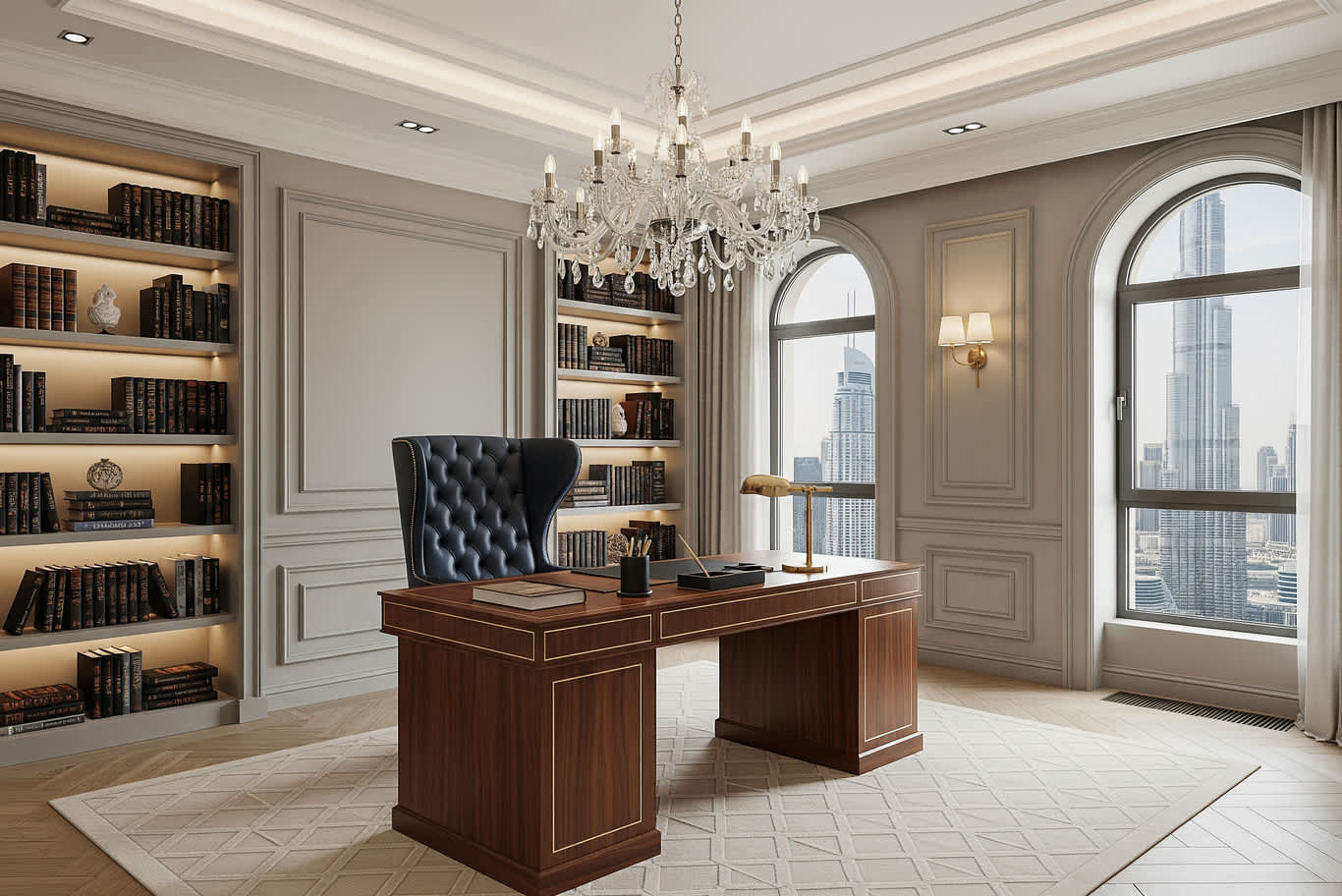
In executive offices, the integration of innovation includes interactive displays, digital whiteboards and touchscreens that replace conventional whiteboards. These tools facilitate brainstorming and presentations, turning your office into a boardroom when needed. For creators and designers, large monitors or multi‑screen setups support complex workflows. A dedicated video‑conferencing system with good cameras and microphones ensures professional interactions when meeting remotely.
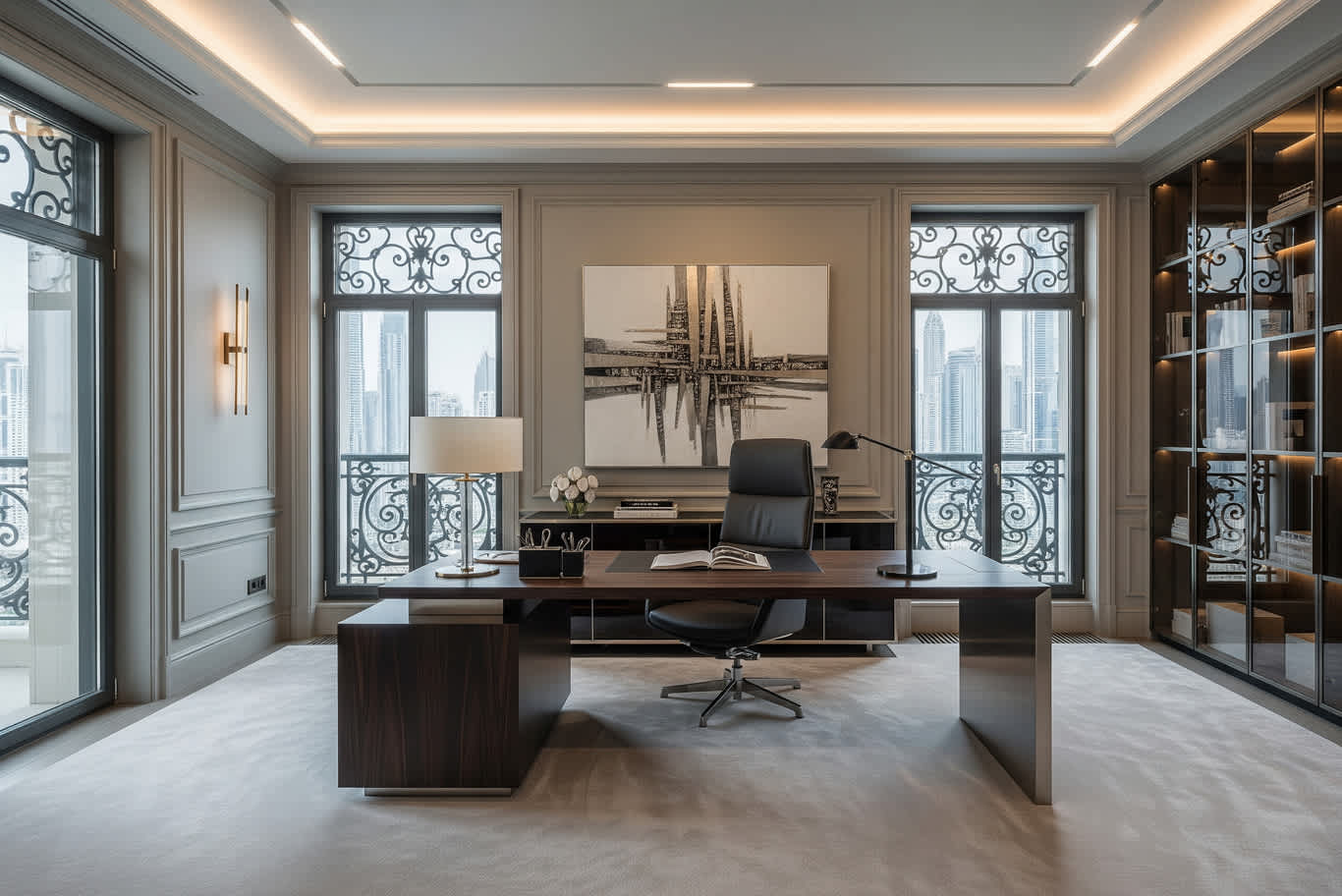
9- The biophilic philosophy
Biophilic design, popularised by biologist E.O. Wilson, emphasises our innate connection to nature. A biophilic office uses plants, natural light, organic textures and patterns to boost well‑being and productivity. This style transforms your workspace into a calming sanctuary and has been shown to reduce stress and enhance focus. Key elements include living plants, water features, ample natural light and natural materials. Furniture and accessories with soft curves or leaf‑like patterns mimic natural forms.
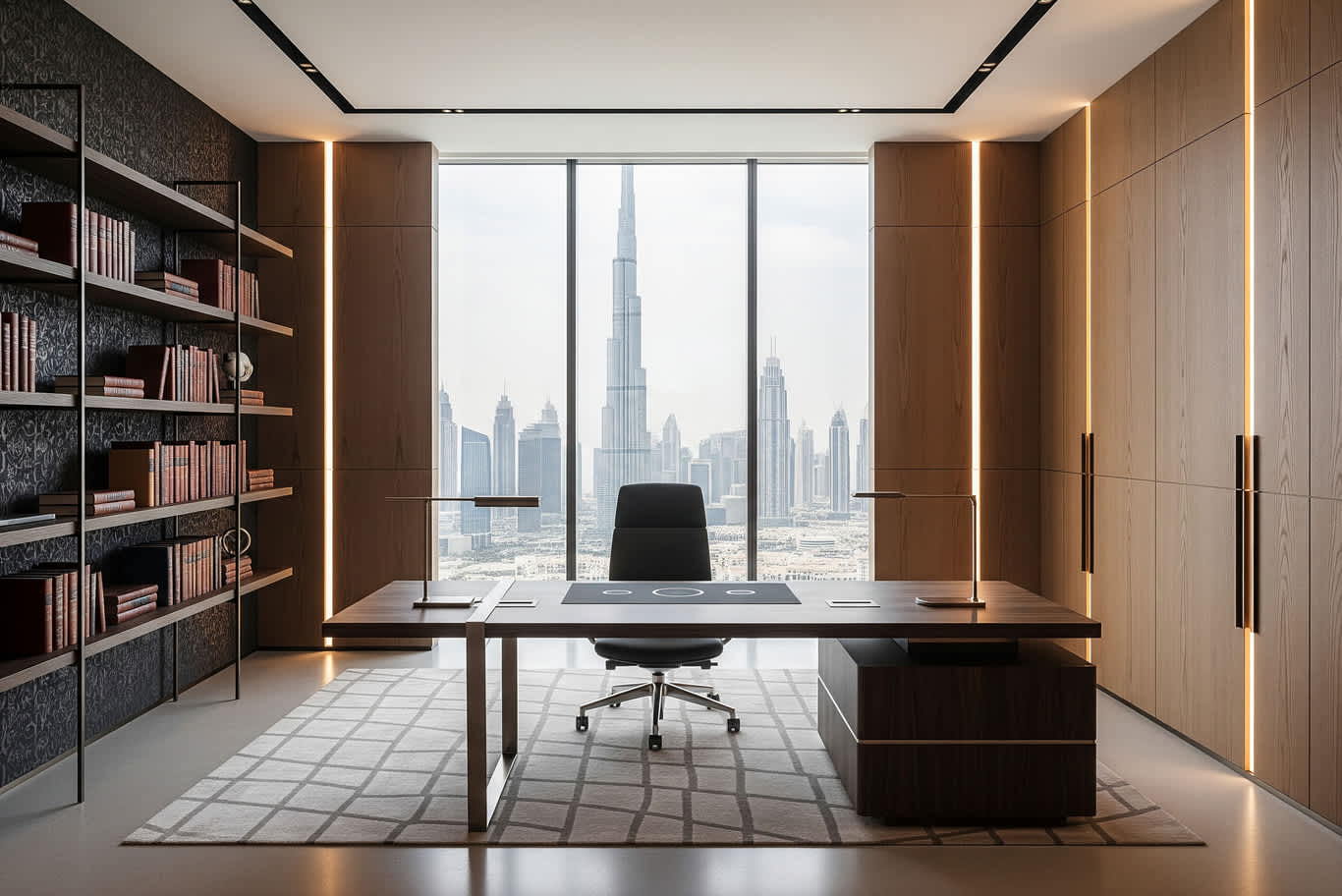
10- Practical implementation
Start by introducing low‑maintenance plants like snake plants, ZZ plants or pothos, which thrive in various light conditions. Group plants at different heights to create a layered, jungle‑like effect. If your office lacks natural light, use full‑spectrum grow lights to keep greenery healthy. Complement the living elements with a solid wood desk, a stone paperweight or a wool rug for tactile variety. To enhance sensory experiences, incorporate a small desktop fountain for soothing ambient sounds or use a nature‑inspired soundscape.
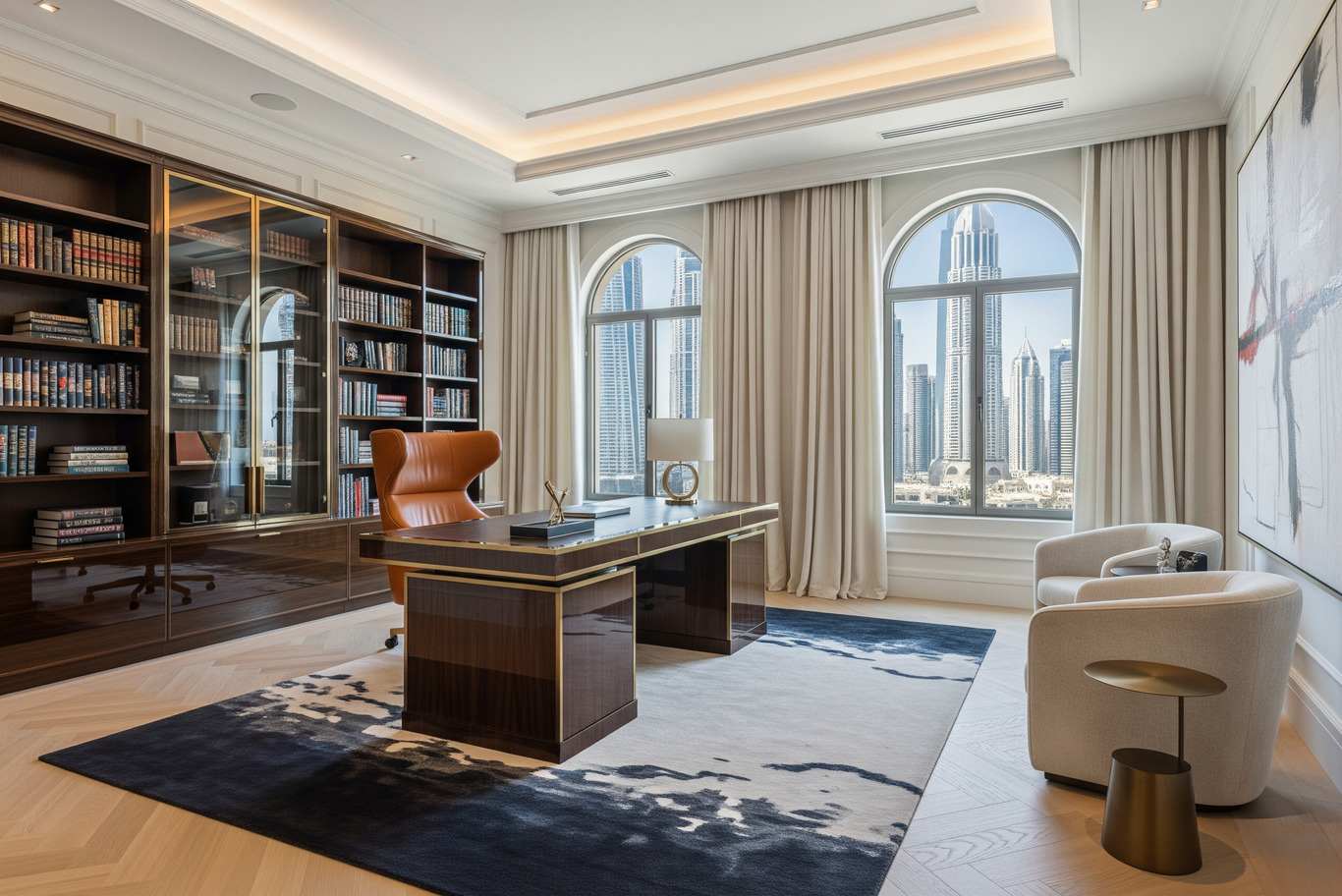
11- Maximising natural light
Maximise daylight exposure by positioning your desk near windows or installing skylights. Research indicates that employees with exposure to natural light sleep better, take less sick leave and experience fewer headaches and vision problems. Natural light also boosts mood, engagement and productivity. To control glare, use motorised blinds or adjustable shades. When natural light is limited, mimic daylight cycles with smart lighting systems that adjust brightness and color temperature throughout the day.
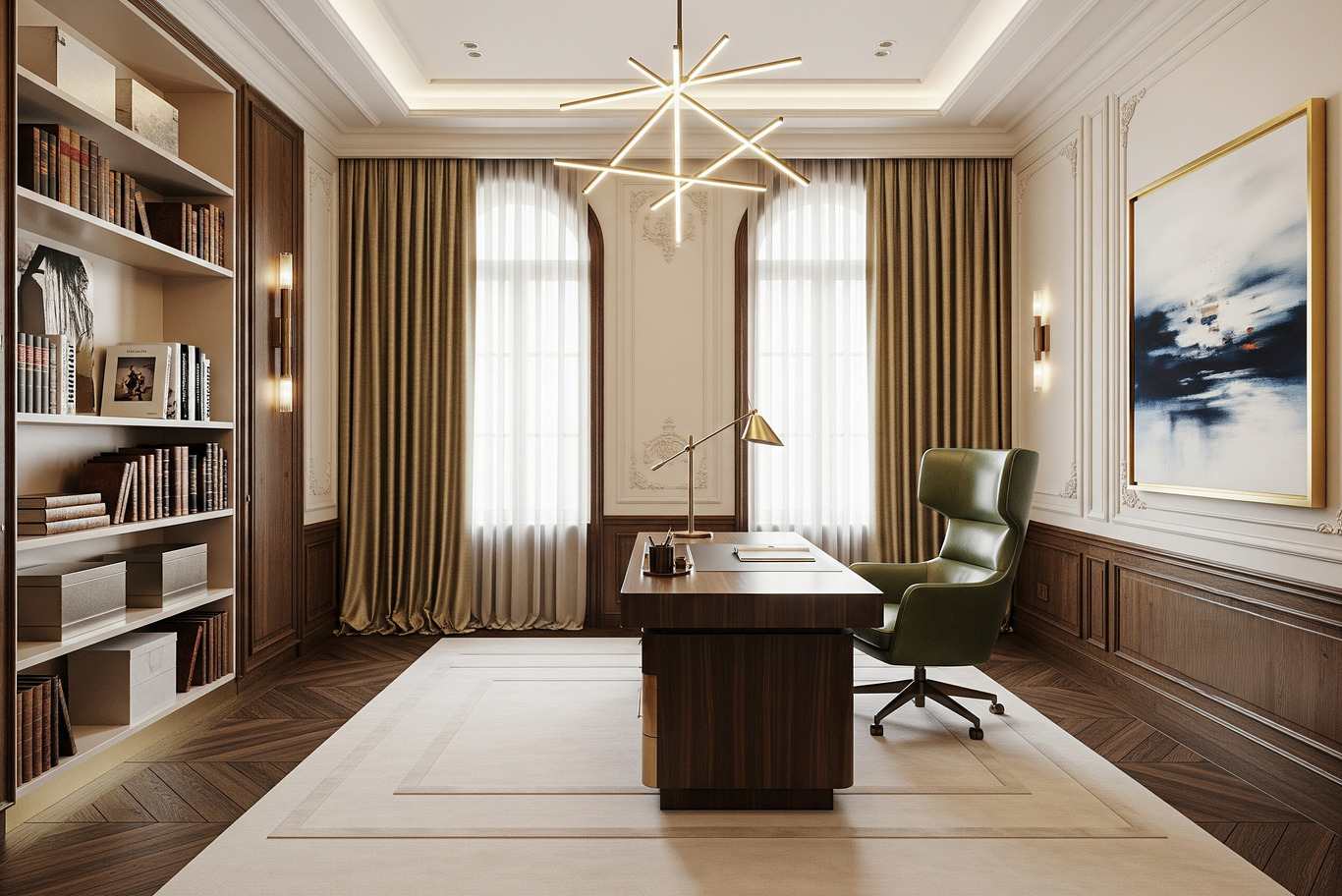
12- Statement fixtures
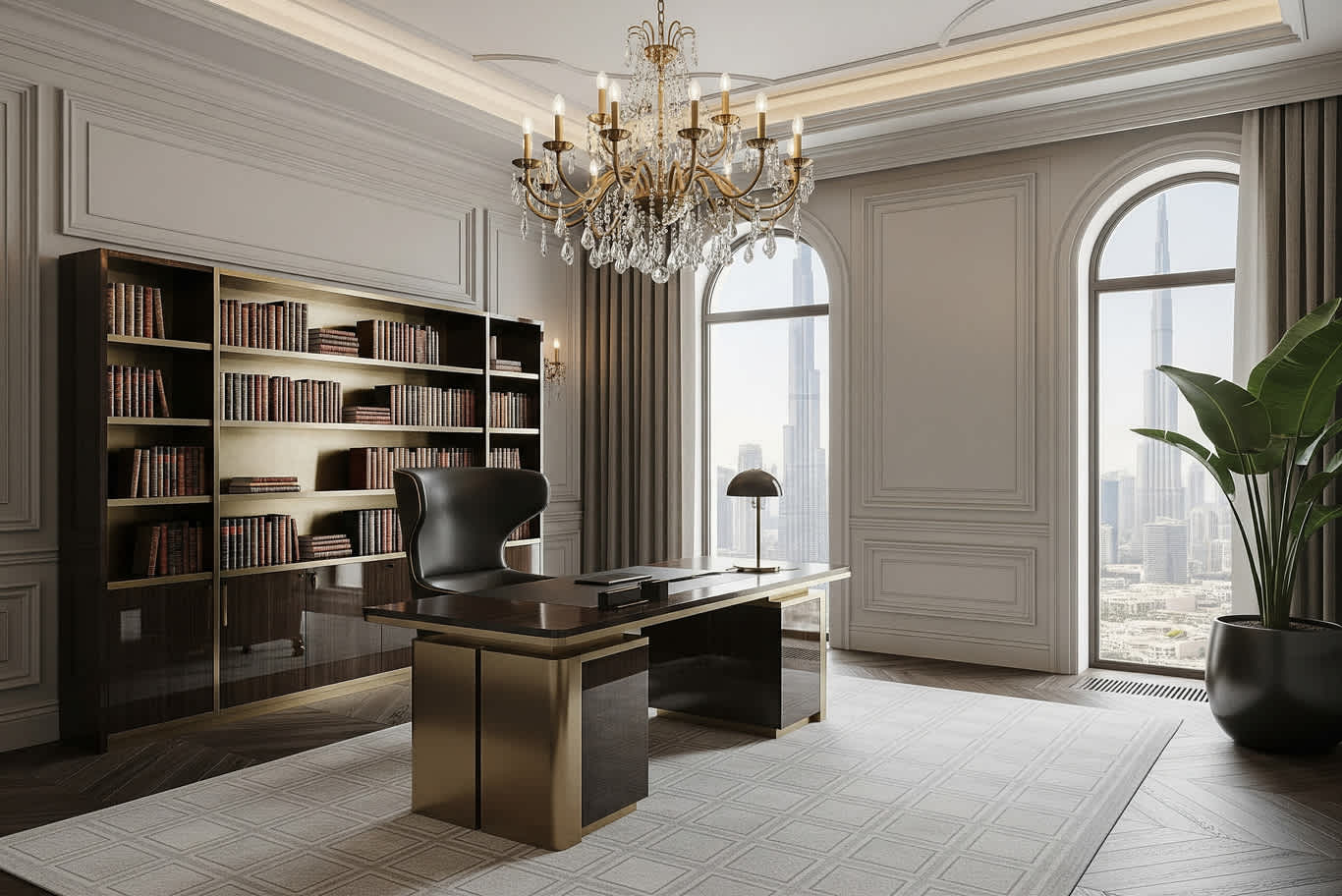
In luxury spaces, lighting serves as both a functional necessity and a design statement. Oversized chandeliers, designer pendant lights and sculptural task lamps create focal points and elevate the ambience. The industrial style favors Edison‑bulb pendants and metal task lamps, while mid‑century modern offices often include sputnik chandeliers or arc lamps. Layer your lighting: combine ambient light (overhead fixtures or recessed lights), task lighting (desk lamps) and accent lighting (wall sconces or under‑shelf LED strips). LED technology with adjustable color temperature allows you to shift from bright, energizing light during work hours to warm, relaxing light for evening tasks.
13- Layering and control
For total control, integrate lighting into your smart ecosystem. Voice assistants or smartphone apps can adjust brightness and color temperature. Motorised curtains or smart glass can modulate sunlight. Layered lighting improves productivity by reducing eye strain and highlighting key architectural features. Dimmers and scene settings allow you to switch from focused work mode to a relaxed reading ambience with a tap.
14- Chairs and desks that support the body
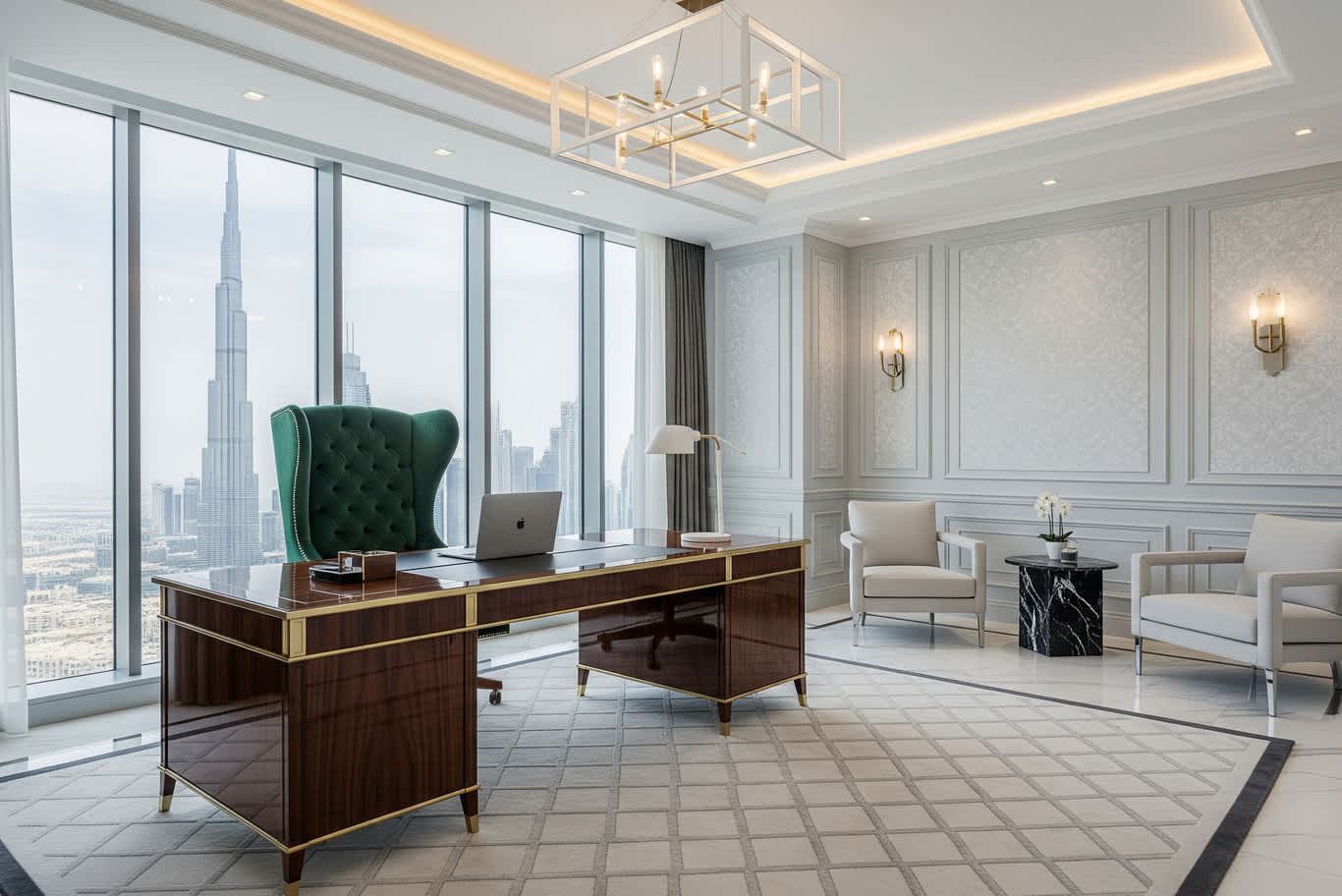
Luxury offices prioritise ergonomics because comfort is critical for productivity. Prolonged sitting is linked to musculoskeletal issues, but the right equipment can mitigate these problems. Ergonomic chairs should provide adjustable lumbar support, headrests and multi‑directional armrests to maintain the spine’s natural S‑curve. Research indicates that lumbar support and seat pan tilt adjustability result in more neutral spinal and pelvic postures. Height‑adjustable or standing desks encourage movement and may reduce low back discomfort. A well‑designed chair paired with a sit‑stand desk allows you to alternate between sitting and standing, reducing fatigue and improving circulation.
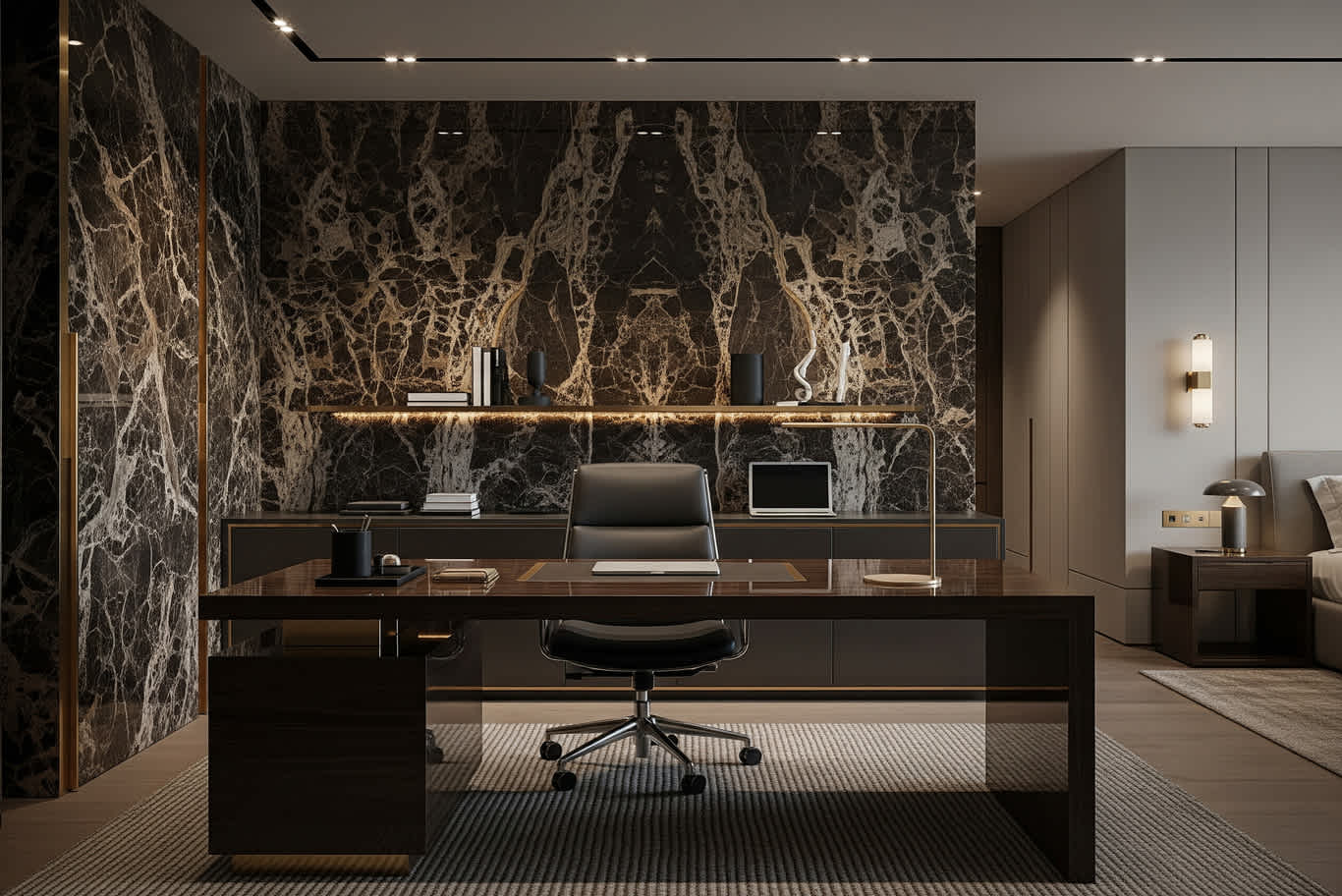
If you are curious to know how to select the right home office table, read Finding the Perfect Table for Your Home Office.
15- Layout and accessories
Arrange your desk so that monitors are at eye level and keyboard and mouse are within easy reach. Use footrests or anti‑fatigue mats when standing to relieve pressure on the lower back. Additional accessories such as monitor stands, footrests and keyboard trays enhance ergonomics and support proper posture. Keep documents at eye level with a document holder to reduce neck strain.
16- Style Inspirations: Curated Aesthetics
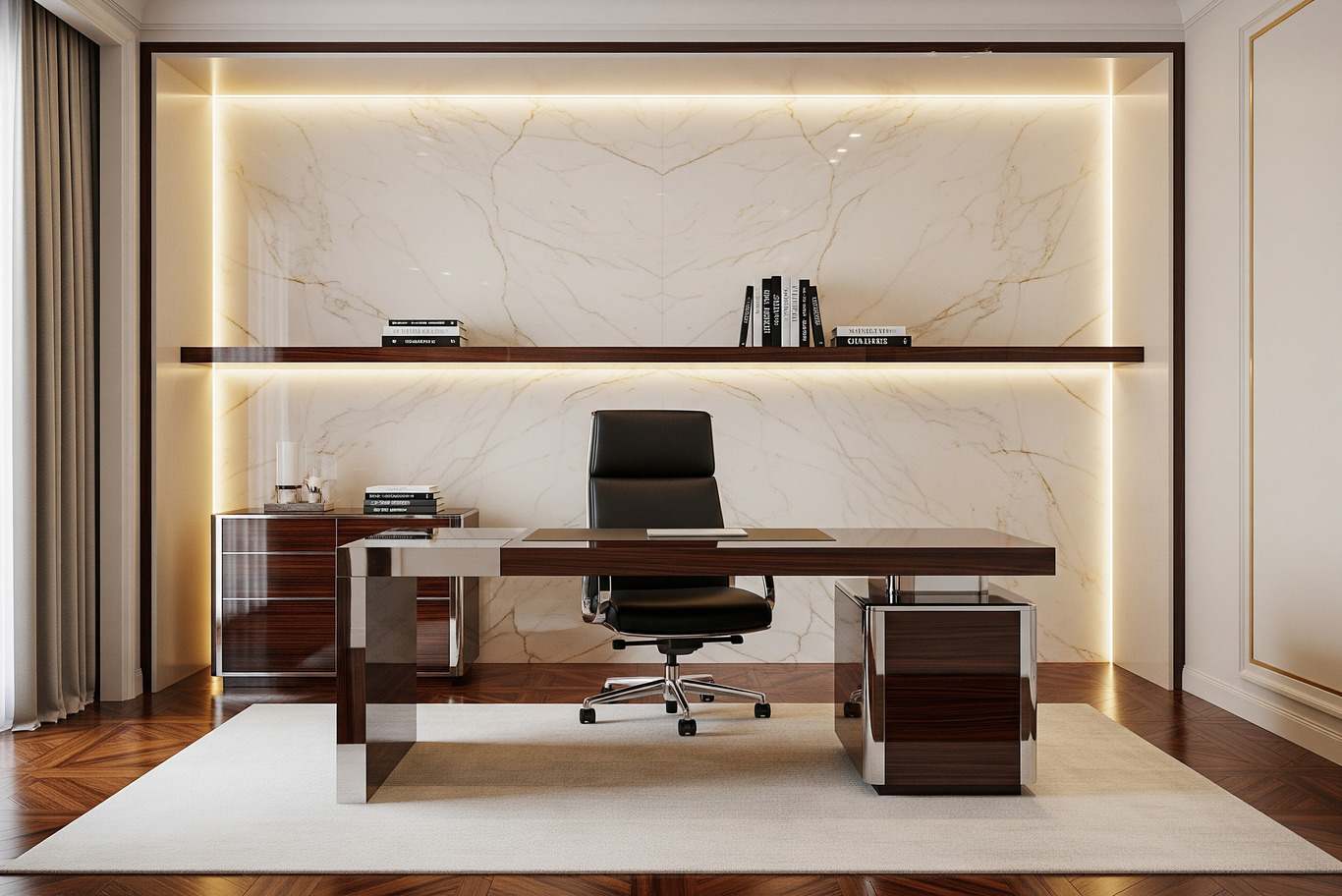
Luxury home offices can express various design styles. Here are a few of the most influential styles of 2026:
A- Minimalist Scandinavian
The Minimalist Scandinavian style blends form and function, prioritising natural light, clean lines and clutter‑free surfaces. It relies on a neutral color palette—whites, grays and light beiges—complemented by light wood finishes like birch or ash. Furniture is simple yet elegant, with an emphasis on functionality. Closed cabinets and drawers keep surfaces clear, while one or two high‑impact statement pieces (a designer lamp or sculptural chair) add personality. This style suits those seeking serenity and order.
B- Industrial Loft
The Industrial Loft aesthetic draws inspiration from converted warehouses. It features exposed brick, weathered wood, metal and concrete. The color palette is moody—blacks, grays and browns accented by leather and patinated metal. Furniture tends to be large and functional, often with visible hardware. To implement this style, start with a substantial desk combining wood and metal, add statement lighting like Edison‑bulb pendants and soften the look with distressed leather chairs and plush rugs. Incorporating houseplants brings organic warmth, balancing the ruggedness.
C- Mid‑Century Modern
A Mid‑Century Modern office blends nostalgia and timelessness. Originating from the 1950s and 1960s, it celebrates clean lines, organic curves and rich wood tones. Teak, walnut and rosewood furniture, often with tapered legs, anchor the space. Iconic pieces like the Eames Lounge Chair or sputnik chandeliers provide focal points. Warm earth tones—muted oranges, mustard yellows and avocado greens—create an inviting atmosphere. Keep decor minimal to let the furniture shine and integrate modern technology discreetly.
D- Creative Artist’s Studio
For those who need a dynamic, flexible space for creative work, a creative studio office merges workstation and art studio. This style prioritises zoning—designating areas for computer work, messy projects and inspiration boards. Storage is abundant and accessible, using a mix of open shelves, clear containers and rolling carts. Durable, flexible furnishings like large workbenches and tables on casters withstand spills and support physical projects. Good ventilation and task lighting are essential, especially for painting or crafting. The goal is to create a space that adapts to your creative flow rather than restricting it.
E- Cozy Reading Nook
If comfort and reflection are your priorities, consider a cozy reading nook office. This design blends a dedicated workspace with the ambience of a personal library, inspired by the Hygge lifestyle. Plush seating, layered textiles and warm lighting create a sanctuary for deep work and quiet contemplation. Add built‑in bookshelves, a fireplace or a reading lamp to complete the vibe. This style encourages slow productivity and is ideal for writers, academics and anyone who values introspection.
Read our article on Stylish and Functional Home Office Ideas for Villas to get more insight into workstations designs.
17- Artwork and collections
A luxury office should reflect its owner’s personality. Decorate with curated art, sculptures or personal collections to create visual interest. Large‑scale abstract paintings or vintage collector’s pieces make a bold statement. Display personal accolades, milestones or family photos to remind you of your achievements and values. Unique desk accessories—like monogrammed leather desk pads, custom stationery or designer bookends—add tailored touches.
18- Sound and privacy
Quiet is critical for focus. Consider acoustic solutions such as carpets, rugs, acoustic wall panels or sound‑absorbing ceiling tiles to reduce noise. For shared homes, portable soundproof booths or sliding partitions can provide acoustic privacy during video calls. Integrated smart speakers can play ambient sounds or music to mask external noise and help you concentrate.
19- Finishing Touches and Amenities
A- Beverage and hospitality stations
A hallmark of a luxury office is convenience. A bespoke beverage station with a built‑in coffee bar or mini fridge keeps refreshments close at hand. Stock it with coffee, tea, sparkling water or snacks. If space allows, incorporate a wine cabinet or small bar for after‑hours relaxation. These amenities transform your office into an inviting retreat.
B- Lighting and climate control
Install layered lighting combining ambient, task and accent lights to create a balanced atmosphere. Use smart thermostats and motorised blinds to maintain a comfortable temperature year‑round. Consider adding a fireplace or electric heater for cozy winter days; conversely, ceiling fans or air purifiers can keep the air fresh and cool during summer.
C- Storage and organisation
Clutter undermines luxury. Integrated storage—like hidden drawers, built‑in cabinets and vertical shelving—keeps your workspace tidy and functional. For smaller offices or multi‑purpose rooms, fold‑away desks or Murphy beds allow you to transform the space as needed. Use stylish boxes or bins to hide supplies and label them for easy access. A clutter‑free environment enhances focus and lets your design shine.
Conclusion
Designing a luxurious home office is about crafting a space where productivity, comfort and beauty coexist. The most successful offices are tailored to the user’s lifestyle—combining custom cabinetry and high‑end materials with smart technology, biophilic elements, statement lighting and ergonomic furniture. Whether your aesthetic leans toward minimalist Scandinavian, industrial loft, mid‑century modern, creative studio or cozy reading nook, the principles remain the same: choose quality over quantity, prioritise natural light and wellness, integrate technology seamlessly and personalise with art and meaningful objects. By following these guidelines and embracing the trends outlined here, you can transform your home office into a luxurious sanctuary that elevates both work and life.
Contact Us
If you are planning a high-end residential project or looking to design a refined home office within your residence, Algedra works closely with homeowners, developers, and private clients across the UAE and internationally.
Our team manages each project from initial consultation through design development and execution, with a clear focus on spatial planning, material selection, and architectural consistency.
To discuss your project or request a consultation, contact Algedra!
FAQ
1. Does Algedra design luxury home offices as part of residential projects?
Yes. Algedra designs bespoke home offices for villas, penthouses, townhouses, and private residences, either as part of a full interior project or as a dedicated space within an existing home.
2. Can Algedra customize the home office to match the rest of the residence?
Absolutely. Home office designs are developed to align with the overall interior concept, including materials, finishes, cabinetry style, lighting language, and architectural detailing used throughout the residence.
3. Does Algedra handle custom furniture and built-in cabinetry?
Yes. Algedra designs custom desks, wall units, shelving, storage systems, and integrated cabinetry based on the room layout and client requirements. All elements are specified to suit scale, proportion, and daily use.
4. Can Algedra work with international clients or remote projects?
Yes. Algedra regularly works with international clients and manages projects remotely through structured design stages, detailed drawings, material specifications, and coordinated communication.
5. How do I start a project with Algedra?
You can begin by contacting Algedra via filling the contact form or phone to schedule an initial consultation. During this stage, the team reviews your requirements, timeline, and project scope before moving forward with design proposals.
FREE CONSULTATION
TELL US ABOUT YOUR PROJECT
WE WOULD LOVE TO HEAR FROM YOU
Feel free to reach us via this contact form and one of our Design Consultants will get back to you at earliest.
OUR BRANCHES
UAE - DUBAI
+971 52 8111106 | hello@algedra.ae
TURKEY - ISTANBUL
+90 533 701 89 71 | info@algedra.com.tr
Leading Interior Design and Decor Company in Dubai and Abu Dhabi.
Algedra is a reputable, internationally recognized, and one of the most successful interior design companies in Dubai, and Abu Dhabi, which specializes in delivering interior design, architectural, and creative space planning projects throughout GCC, MENA, North Africa, Turkey and Russia.
Algedra is a one-stop solution for all your residential interior design and fit-out needs. We have successfully completed numerous villa interior and exterior design projects, where we integrated quality and originality to deliver interior masterpieces.
ALGEDRA, Interior Design Company in Dubai, is specialized in providing elegant and stunning interior design services for both residential and commercial projects. We turn our clients' dreams into reality, trans- lating their tastes and needs into beautiful and functional spaces.
Since the day we were founded, we have designed and built many branded residences, resorts, hotels, multi-purpose social spaces, and palace designs with different functions and concepts by following the ever-changing design trends over the world.
A key element of our work is a fusion of different cultures and designs, combining Greek, Italian, Eastern and Western influences with British innovation.
As a team of highly qualified interior designers and engineers, Algedra offers complete architectural services from mall design to corporate office design as well as the exterior design of any project based on customers' needs.
Our customers include leading names, we have completed diverse projects in hospitality, landscape, commercial, and residential designs. These projects contain cafes, restaurants, gym, villas, family sitting rooms, bedrooms, kitchens; all showcasing our company's exquisite details and high-end designs.
Residential Interior Design in Dubai
Algedra's interior designers and architects have an important mission: building villas, houses, apartments, condos, and anywhere else where you reside that will fulfill your needs while being structurally safe and sound.
Architectural Designs
There are so many details that go into designing an architectural design project. Every step of the project has been carefully considered for safety and daily comfort by Algedra's experts.
Commercial Design
Conceptualizing spaces for business, to elevate style, and to increase functionality to help enhance the bottom line of a company is vital, as well as employee comfort and interior design too. Our commercial interior designers translate client's concept in ways that are efficient, attractive and provide professional workspaces.
Fit-out Projects
Algedra Interiors delivering high-quality tailored fit-out projects that transform your villas, palaces and commercial spaces.
We're a passionate team of interior designers, architects and engineers. Every day we help clients to solve interior design problems and create engaging spaces!
Wherever you are in Kuwait, Saudi Arabia, Azerbaijan, Qatar, Morocco, Algeria, Tunisia, Libya, Egypt; don't hesitate, contact us to find out more about why we are one of the best interior design companies in Dubai and Abu Dhabi!