Home Page | Blog | The Most Expensive Trends of 2027: Colored Marble, Gold Leaf and Hand-Cast Plaster in High-End Interior Design
The Most Expensive Trends of 2027: Colored Marble, Gold Leaf and Hand-Cast Plaster in High-End Interior Design
11/24/2026

Rosso Levanto cut in sequence, gold leaf burnished with an agate stone, cornices pulled from silicone moulds by hand — the finishes commanding the highest invoices in the coming year share one quality: hours of skilled labor you can see from across the room.
Walk into the most expensive rooms on the drawing boards right now and you will find the money sitting somewhere new. Budgets that once flowed toward oversized sofas, statement art and ever-larger screens now settle into the shell of the room — the wall, the ceiling, the stone underfoot — and into the hands of the craftspeople who finish it. Our designers follow the forecasts and the supplier order books closely, and the costliest directions gather around three crafts in particular: colored marble, water-gilded gold leaf and hand-cast plaster. Polished lime finishes, scagliola, deep lacquer, lost-wax bronze and hand-painted silk follow close behind, and every one of them asks for patience, skill and a client willing to wait for both.
Why the Shell of the Room Now Carries the Budget
Gold leaf explains the shift better than any trend report. Conservators and gilding specialists point out that a gilded surface carries a far larger share of labor cost than material cost, even with the price of gold climbing. The leaf itself weighs almost nothing; the gesso, the bole, the laying and the burnishing consume days of a specialist's time for every few square meters of ceiling.
Marble follows similar arithmetic. A single slab of Breccia Capraia carries a quarry price, yet selecting four sequential slabs from one block, templating them, mitring the edges and fixing them around a vanity multiplies that figure several times over. Plaster behaves the same way: the gypsum in a cornice costs very little, while the model, the mould and the hand that fixes each length set the invoice.
The costliest finishes of a couple of seasons ago leaned toward technology — home cinemas, AI-driven lighting, hydrotherapy suites. Spending now swings decisively toward craft, and forecasters describe homes built on warmth, character and handmade surfaces, and for clients at the top of the market, that preference translates directly into hours of artisan labor written into the specification.
Colored Marble Replaces the White Slab
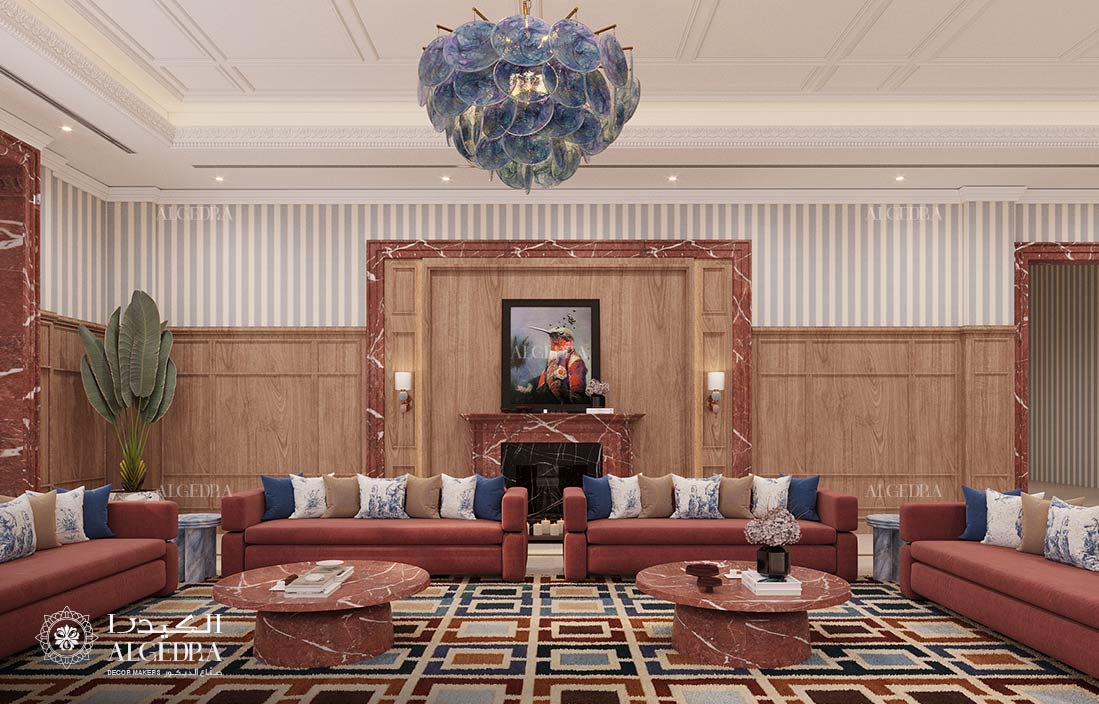
Calacatta and Carrara remain the reference stones, yet the specification sheets crossing our designers' desks increasingly call for color. Stone suppliers report that bolder selections — green marbles, warm browns, dramatic brecciated stones — now go into smaller, higher-impact applications: a powder room, a bar alcove, a fireplace surround, the top of a console.
Four stones lead the movement. Rosso Levanto runs from blood red toward aubergine, with white veins cracking across the surface like lightning and threads of serpentine green appearing in some blocks. Verde Alpi delivers a deep forest green broken by pale fractures. Breccia Capraia, quarried in the Apuan Alps and historically sold as Fior di Pesco Apuano, gathers peach, violet and grey fragments into a natural mosaic that Roman builders prized. Calacatta Viola, the stone once traded as Breccia Medicea and a favorite of the Medici family, sets burgundy and purple clasts against a cream ground.
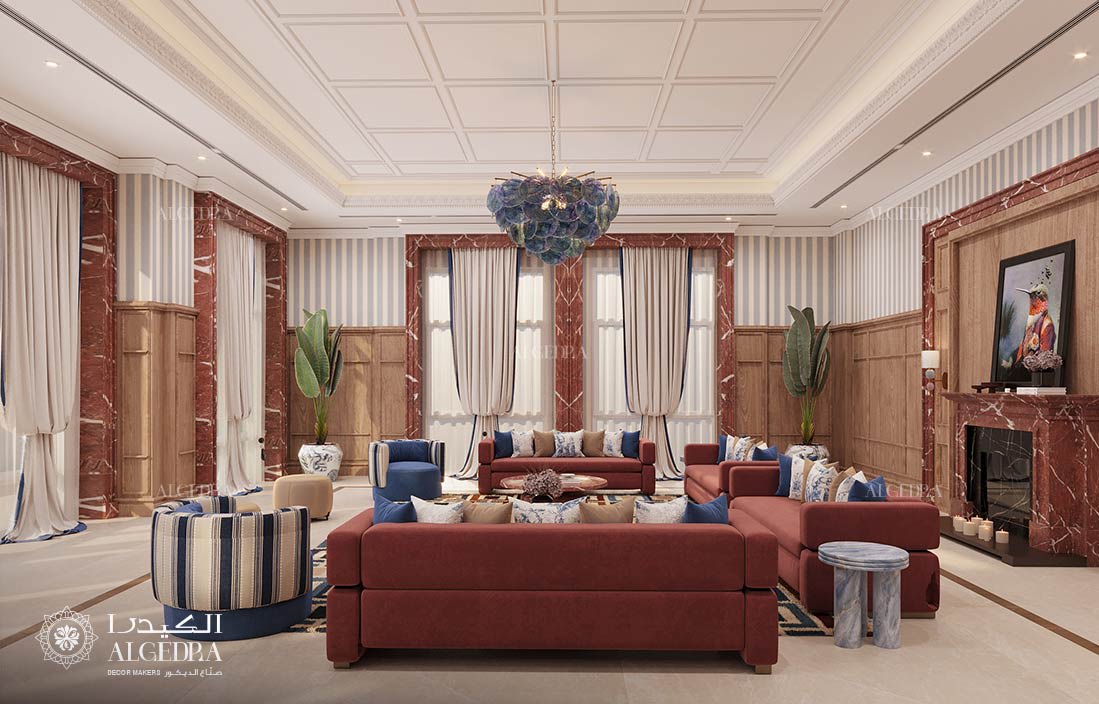
We wrote a full portrait of Rosso Levanto for readers weighing that one stone on its own. Across all four, the wider lesson concerns dosage. Colored marble reads strongest in a measured quantity: one island, one chimney breast, one dining table top. Wrap an entire room in Verde Alpi and the green turns heavy within a week, while a single slab framed by limewashed walls and pale oak keeps its drama for years.
Pairings matter as much as quantity. Rosso Levanto warms beside antique brass and walnut, Verde Alpi sharpens against polished nickel and white plaster, and Calacatta Viola softens next to dusty pink upholstery and aged bronze. Our designers sample each stone under the room's own daylight and evening lighting before committing, since red and violet marbles shift tone noticeably between a north window and a warm 2700-kelvin lamp.
The Real Cost Sits in a Book-Matched Sequence
Price per square meter tells only part of the story. Book-matching means the fabricator takes consecutive slabs cut from one block and opens them like the pages of a book, so the veining mirrors along each joint. A feature wall of four slabs therefore needs four neighbors from the same block, polished on matching faces, which narrows supply to a handful of bundles at any moment. Some stone yards offer Calacatta Viola book-matched sets in lots of five slabs and no more, and once a client reserves them, that particular pattern disappears from the market. The most ambitious schemes carry one continuous figure from the floor up the wall and across the bath front, which means the fabricator lays out every slab digitally before a single cut, mapping each vein to its final position.
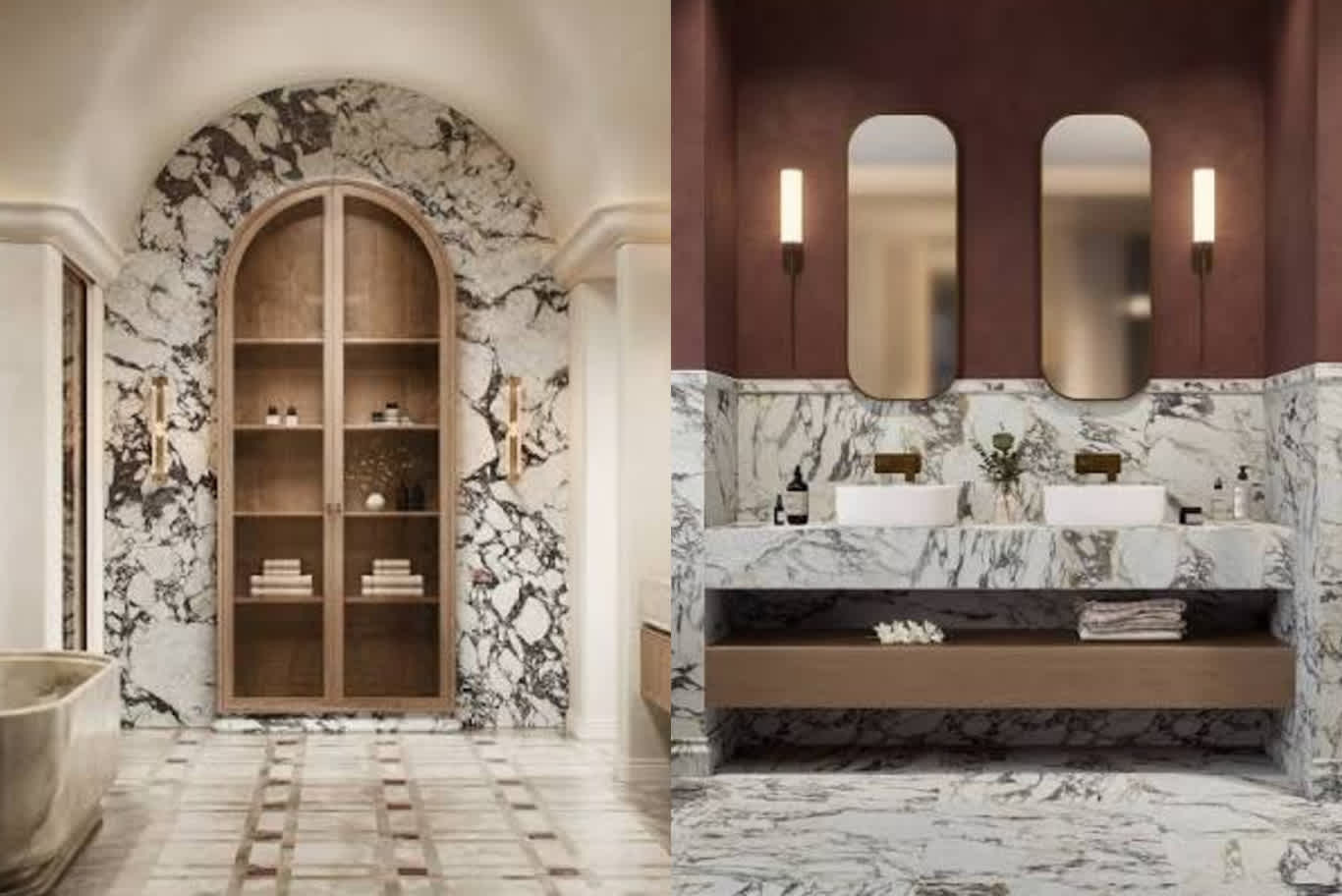
Bathrooms show off the technique best. A Calacatta Viola vanity wall with a mitred, waterfall-edge basin, matched slab to slab, turns the room into a jewel box, and our team plans that work as part of bathroom design from the first layout, because slab dimensions decide the position of every niche, mixer and mirror.
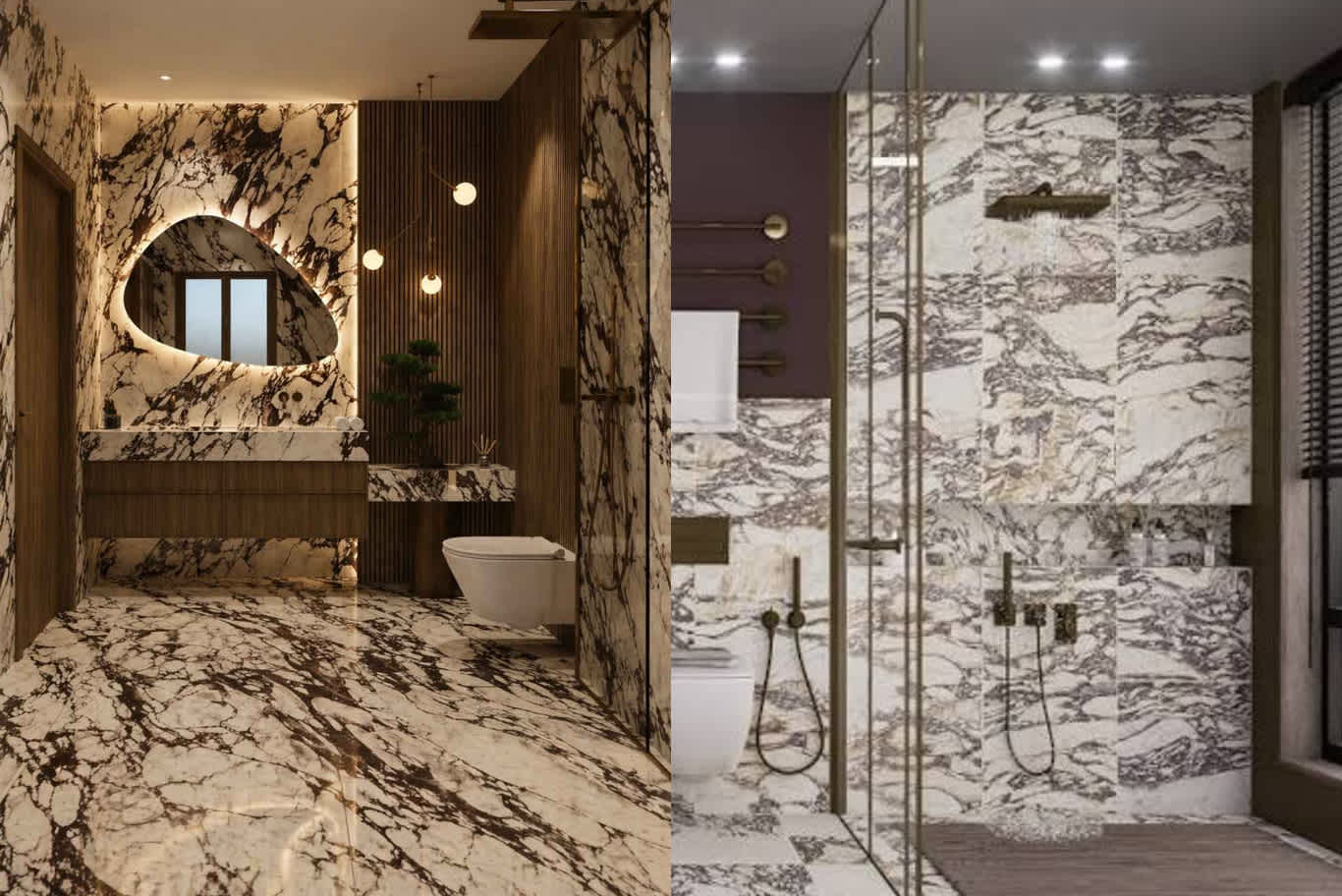
Specify a penetrating sealer at installation and reseal on a regular cycle. Marble is calcite, so lemon juice, perfume and acidic cleaners etch the polish on contact; a honed finish hides etching better on a kitchen island, while a mirror polish suits a wall that hands rarely touch.
Water Gilding Returns to the Ceiling
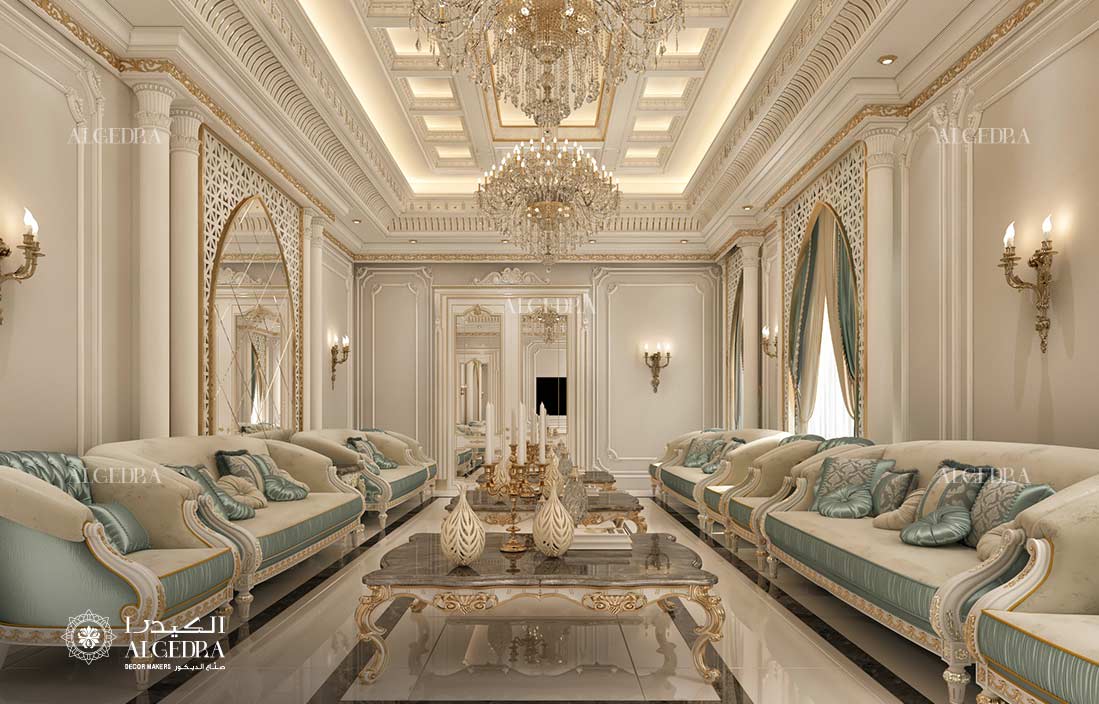
Gilders work in two traditions. Water gilding, the older and more demanding method, starts with layers of gesso followed by a fine clay called bole. The gilder wets the bole, floats each leaf onto it and, once the surface dries, burnishes the gold with an agate stone to a mirror shine. Oil gilding lays the leaf onto an oil-based size and gives a bright, matte sheen; it adheres to deep, complicated relief more readily and refuses a burnish.
Karat matters as much as method. Most interior leaf runs at 22 karat or above, and specialists move up to around 23.75 karat for work facing the weather. Alloying shifts the color — silver cools the gold toward lemon, copper or bronze warms it toward rose — so the gilder chooses the leaf to suit the stone and timber surrounding it. Genuine leaf costs roughly sixteen times as much as imitation metal leaf, and it repays the outlay: pure gold resists tarnish, so the gilded surface stays bright for generations.
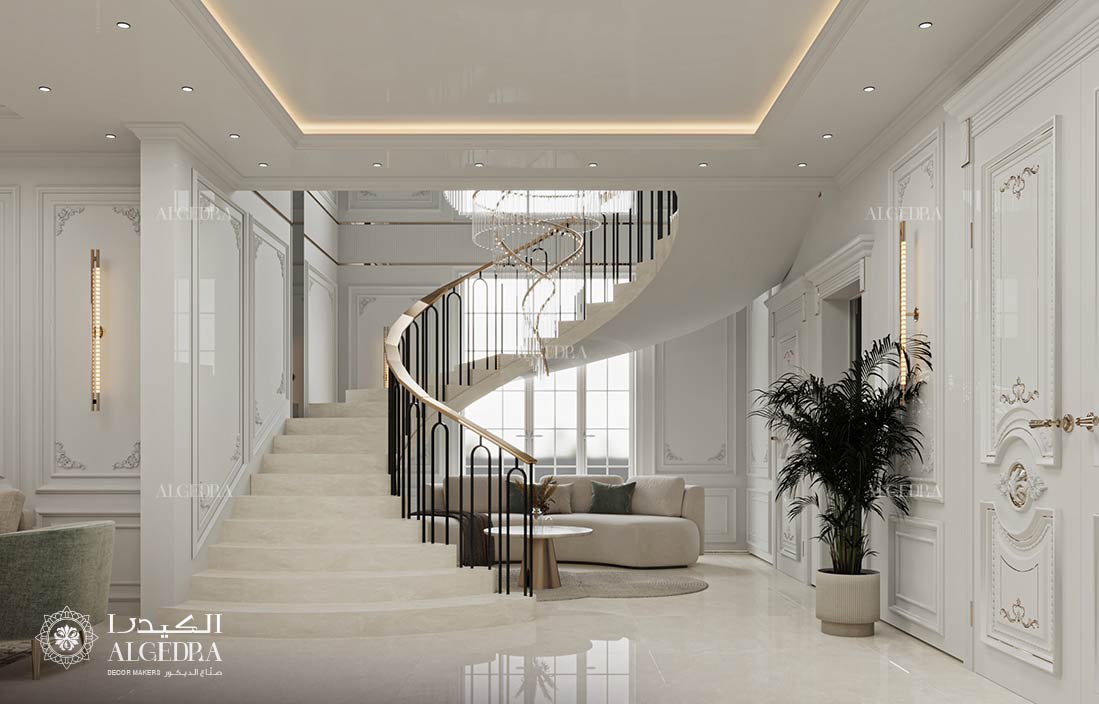
Case in point: the arrival rotunda of a waterfront palace interior we conceptualized carries gilded arabesque relief across a domed ceiling, with a crystal spiral dropping through the double-height space to a sunken lounge below. Gold at that height catches every change in daylight, and the carved damask plaster lining the grand staircase continues the same handmade register down to eye level.
Placing Gold Leaf With Restraint
The rooms that wear gold best ration it. Gild the fillet of a cornice, the inner bead of a coffer, the reveal around a pair of doors, and leave the field in warm white or pale stucco. Restraint keeps the metal precious and spares the owner the visual fatigue some designers warn about when an entire wall glints back at them. Palladium and white-gold leaf offer a cooler alternative for clients drawn to the craft yet wary of yellow metal; both hold their brightness, while silver leaf needs a sealing coat to stay bright.
Water-gilded work also belongs on furniture: a carved console, a pier mirror, the apron of a dining table. Pair burnished highlights with matte oil-gilded grounds on the same piece and the contrast reads as depth. At night, cove lighting set a hand's width below a gilded ceiling grazes the leaf and lifts it, and a dimmer lets the gold glow softly through dinner.
Hand-Cast Plaster Cornices, Coffers and Ceiling Roses
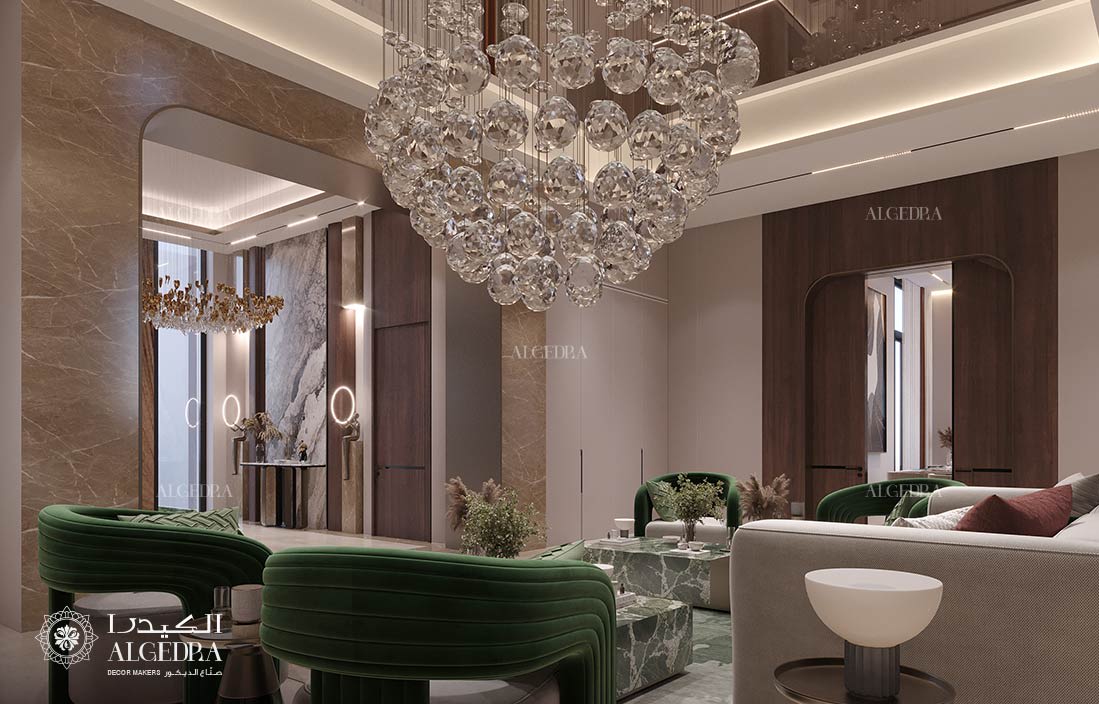
Fibrous plaster sits at the center of the plaster revival. The plasterer models a profile or carves an ornament, takes a silicone rubber mould from it, then casts each length in fine plaster reinforced with hessian scrim and timber laths. Run-in-situ work takes the opposite route: a craftsman pulls a zinc-edged running mould along a wet plaster bed on site, producing a cornice that follows the wall in one continuous line.
Bespoke profiles carry the cost. A stock cornice comes off a catalog shelf; a profile drawn for one room — a Louis XVI egg-and-dart scaled to a four-meter ceiling, or a stepped Art Deco band for an apartment with modest height — needs its own model, its own mould and a skilled fixer to make good every joint by hand. On lower ceilings, plasterers favor cornices that sit short on the wall and spread across the ceiling, painted in the wall color, to lift the room visually.
Ceilings of that ambition belong in the drawing package, so our luxury villa interior design work fixes reflected ceiling plans, cornice sections and lighting coves together at the drawing stage, months ahead of the first chair arriving on site. Coffer depths, chandelier hooks and air-conditioning grilles all have to coordinate with the plaster, and a late change to any one of them means recasting moulds.
Polished Lime Plaster Carries the Craft Onto the Walls
Below the cornice, polished lime plaster brings the same handmade logic to the walls. Marmorino blends lime with marble dust and limestone aggregate for a soft satin glow. Stucco lustro, the high-gloss Venetian finish, builds aged lime putty and super-fine marble flour in thin coats, then seals them with soap and wax until the wall gleams with the depth of polished stone. Tadelakt, the Moroccan lime plaster of palaces and hammams, compresses under a polishing stone and black olive soap into a water-repellent skin suited to showers and steam rooms.
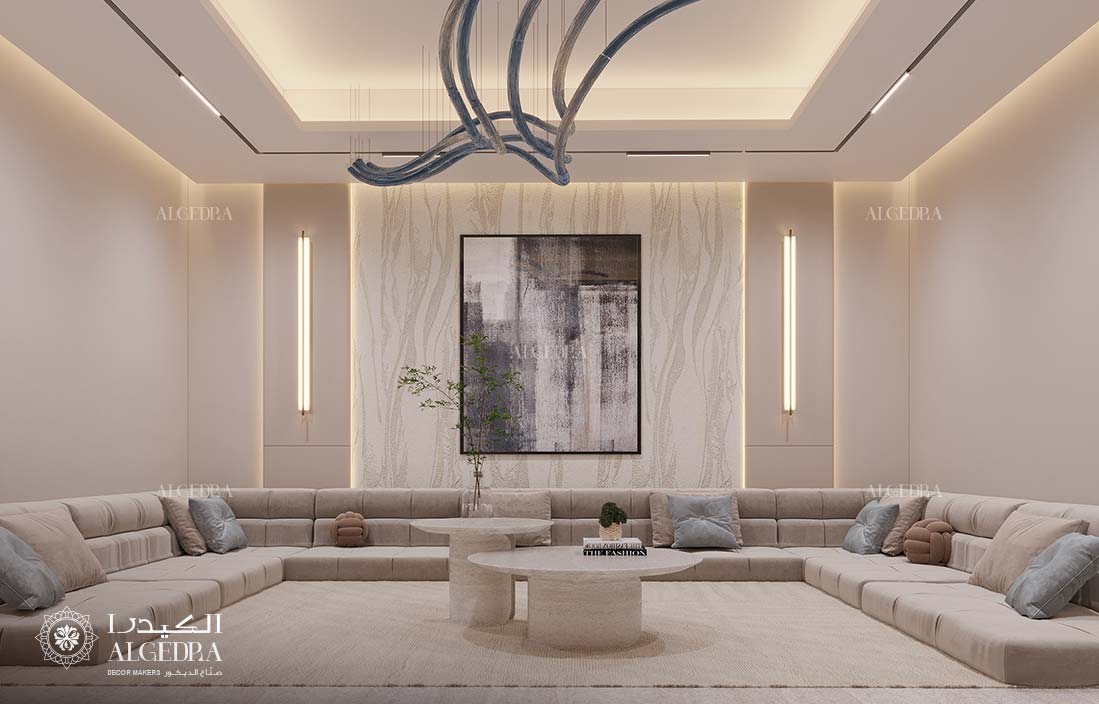
Labor again sets the price. Each coat needs its own curing window and its own trowel pass, and a skilled applicator burnishes the final layer across the whole elevation in one session to avoid lap marks. Owners re-wax a polished plaster wall every couple of years and clean it with water or a mild soap, a modest ritual for a surface that ages into a soft patina and breathes like the stone it imitates.
Scagliola and Pietra Dura Come Back to the Dining Table
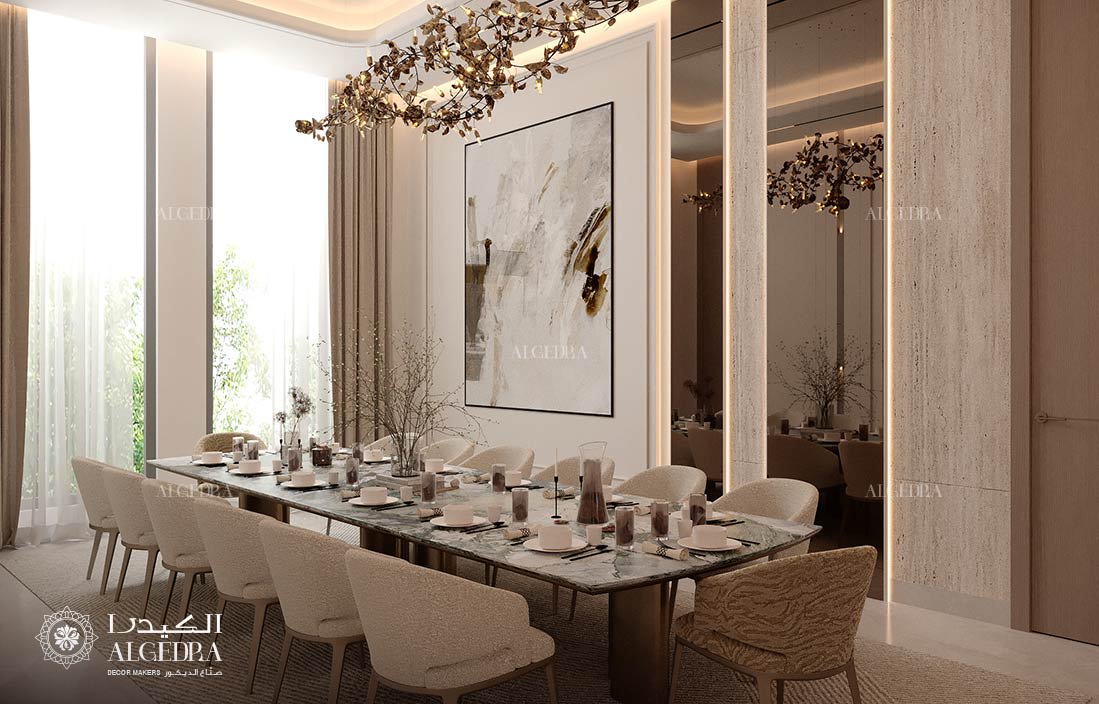
Pietra dura sets hand-cut semi-precious stones — lapis lazuli, malachite, agate, mother-of-pearl — into a marble ground so tightly that the joints vanish, producing what collectors call paintings in stone. Scagliola emerged in seventeenth-century Tuscany as a more affordable answer to the pietra dura made for the Medici; artisans mix selenite, animal glue and pigment into a paste, inlay it, cure it and polish it to a marble-like gloss. Exceptional pieces in either craft still command collector prices.
Both crafts are finding their way back into homes through the dining table, the console and the cabinet door. A scagliola top lets you commission a pattern — a border of laurel, a field of scattered stars, a family monogram — in colors no quarry supplies, while pietra dura offers the collector's version at a collector's price.
We draw these tops alongside the room around them; in dining room interior design the table settles the palette for the chairs, the rug and the chandelier, so an inlaid top asks for quiet walls, upholstery in one solid tone and a single sculptural light suspended at the right height above it.
Lacquer Built in Deep, Hand-Rubbed Layers
Lacquer has returned to walls, ceilings and joinery, and the costliest versions trace their method to Asian craft. Japanese urushi uses the sap of the lacquer tree, while Vietnamese son mai builds multiple hand-applied layers, sanding and polishing each one to a glassy finish. True lacquer on a library or a bar cabinet takes weeks of applying, curing and rubbing, which explains the gap in price against a high-gloss paint.
Dark, saturated tones carry gloss best — oxblood, bottle green, aubergine, ink blue. Balance a lacquered room with matte textures such as raw silk, honed stone or open-pore oak, so light moves softly from one surface to the next. Indirect light from a concealed cove flatters lacquer more than any downlight, and a lacquered ceiling above dark walls gives a study or a powder room the enclosed glow of a jewelry case.
Lost-Wax Bronze for Hardware and Balustrades
Every guest touches a door lever, so hardware tells a visitor a great deal about a house. The most expensive pieces come from lost-wax, or investment, casting: the foundry builds a wax pattern, coats it in ceramic slurry, melts the wax away and pours molten bronze into the cavity. The method delivers finer, more repeatable detail than sand casting, the process behind the majority of mass-produced metal hardware.

Balustrades follow the same route. Cast bronze balusters with a hand-applied patina, a sculpted newel and a curved handrail shaped from heated wax patterns bring the weight and warmth of sculpture to a staircase. Silicon bronze stands up well to humid, salty air, a sensible specification for coastal homes, and its patina darkens gracefully toward a deep chocolate brown over the years.
Hand-Painted Silk and Straw Marquetry Dress the Smaller Rooms
Hand-painted silk wall coverings — chinoiserie branches, scenic landscapes, silk painted to resemble travertine — remain among the priciest papers a decorator can hang, and some makers now add beading and embroidery to the painted ground. Each set of panels begins as a drawing scaled to the room's elevations, so a branch can climb exactly between two windows and a bird can perch above the bed.
Straw marquetry, shagreen and parchment cover the smaller surfaces: a dressing-room door, the panels of a study, the drawer fronts of a vanity. Artisans split, flatten and lay rye straw strand by strand in fan or chevron patterns that shift color as you walk past, and some workshops now work selenite and mica into the marquetry for an added shimmer.
Spending on Craft That Ages Well
A large invoice settles only half the question. The gap between a room that costs a fortune and a room that feels luxurious comes down to judgment — which stone, how much gold, which wall deserves the plaster and which one stays plain.
The crafts in this edit share a useful trait for owners thinking in decades: they improve with care. Marble develops a soft patina, burnished gold holds its brightness, lime plaster deepens with each waxing, and bronze darkens toward a richer brown. Concentrate two or three of them in the rooms you use most, keep the remaining surfaces calm, and the investment shows every time you walk through the door.
For the broader picture of materials and layouts shaping homes next year, our twelve directions for the coming year's interiors cover sculptural staircases, lit joinery and double-height drapery that sit comfortably beside colored stone and gilded ceilings.
Reserve the Stone and the Craftsmen Early
Colored marble, gold leaf and hand-cast plaster all reward early planning: book-matched slabs need reserving, mould-makers need drawings and gilders need dry, finished ceilings. If you are planning a villa, a palace or a penthouse and want these finishes specified with care, complete our project enquiry form with a few lines about the property and the rooms you have in mind, and one of our design consultants will get back to you.
Frequently Asked Questions
What is the most expensive interior finish right now?
Water-gilded gold leaf and pietra dura inlay sit near the top, because both rely on specialist labor measured in days per square meter. Book-matched sequences of rare colored marble, such as Calacatta Viola, follow closely, since a matched set can come from only one block.
Is colored marble a passing trend?
Colored marble has a history stretching back to Roman and Renaissance interiors, and stones like Rosso Levanto and Breccia Capraia have returned many times. Used in measured quantities — an island, a vanity, a fireplace — it stays relevant far longer than a room clad wall to wall.
What is the difference between water gilding and oil gilding?
Water gilding lays gold leaf on wetted bole over gesso and allows burnishing to a mirror shine with an agate stone. Oil gilding lays the leaf on an oil-based size, gives a matte sheen, follows deeper relief and suits larger surfaces.
How do you maintain polished lime plaster walls?
Clean marmorino and stucco lustro with water or a mild soap, avoid harsh chemicals, and re-wax the surface every couple of years. Tadelakt in wet areas benefits from periodic treatment with olive oil soap or a mineral wax.
Does hand-cast plaster suit a modern interior?
Yes. Simple stepped, square-edge or shadow-gap profiles bring the depth of cast plaster to contemporary rooms, and fluted or reeded panels give a modern take on classical moulding.
FREE CONSULTATION
TELL US ABOUT YOUR PROJECT
WE WOULD LOVE TO HEAR FROM YOU
Feel free to reach us via this contact form and one of our Design Consultants will get back to you at earliest.
OUR BRANCHES
UAE - DUBAI
+971 52 8111106 | hello@algedra.ae
TURKEY - ISTANBUL
+90 533 701 89 71 | info@algedra.com.tr
Leading Interior Design and Decor Company in Dubai and Abu Dhabi.
Algedra is a reputable, internationally recognized, and one of the most successful interior design companies in Dubai, and Abu Dhabi, which specializes in delivering interior design, architectural, and creative space planning projects throughout GCC, MENA, North Africa, Turkey and Russia.
Algedra is a one-stop solution for all your residential interior design and fit-out needs. We have successfully completed numerous villa interior and exterior design projects, where we integrated quality and originality to deliver interior masterpieces.
ALGEDRA, Interior Design Company in Dubai, is specialized in providing elegant and stunning interior design services for both residential and commercial projects. We turn our clients' dreams into reality, trans- lating their tastes and needs into beautiful and functional spaces.
Since the day we were founded, we have designed and built many branded residences, resorts, hotels, multi-purpose social spaces, and palace designs with different functions and concepts by following the ever-changing design trends over the world.
A key element of our work is a fusion of different cultures and designs, combining Greek, Italian, Eastern and Western influences with British innovation.
As a team of highly qualified interior designers and engineers, Algedra offers complete architectural services from mall design to corporate office design as well as the exterior design of any project based on customers' needs.
Our customers include leading names, we have completed diverse projects in hospitality, landscape, commercial, and residential designs. These projects contain cafes, restaurants, gym, villas, family sitting rooms, bedrooms, kitchens; all showcasing our company's exquisite details and high-end designs.
Residential Interior Design in Dubai
Algedra's interior designers and architects have an important mission: building villas, houses, apartments, condos, and anywhere else where you reside that will fulfill your needs while being structurally safe and sound.
Architectural Designs
There are so many details that go into designing an architectural design project. Every step of the project has been carefully considered for safety and daily comfort by Algedra's experts.
Commercial Design
Conceptualizing spaces for business, to elevate style, and to increase functionality to help enhance the bottom line of a company is vital, as well as employee comfort and interior design too. Our commercial interior designers translate client's concept in ways that are efficient, attractive and provide professional workspaces.
Fit-out Projects
Algedra Interiors delivering high-quality tailored fit-out projects that transform your villas, palaces and commercial spaces.
We're a passionate team of interior designers, architects and engineers. Every day we help clients to solve interior design problems and create engaging spaces!
Wherever you are in Kuwait, Saudi Arabia, Azerbaijan, Qatar, Morocco, Algeria, Tunisia, Libya, Egypt; don't hesitate, contact us to find out more about why we are one of the best interior design companies in Dubai and Abu Dhabi!