Home Page | Blog | Defining Features of Contemporary Villa Design & Architecture
Defining Features of Contemporary Villa Design & Architecture
1/3/2026
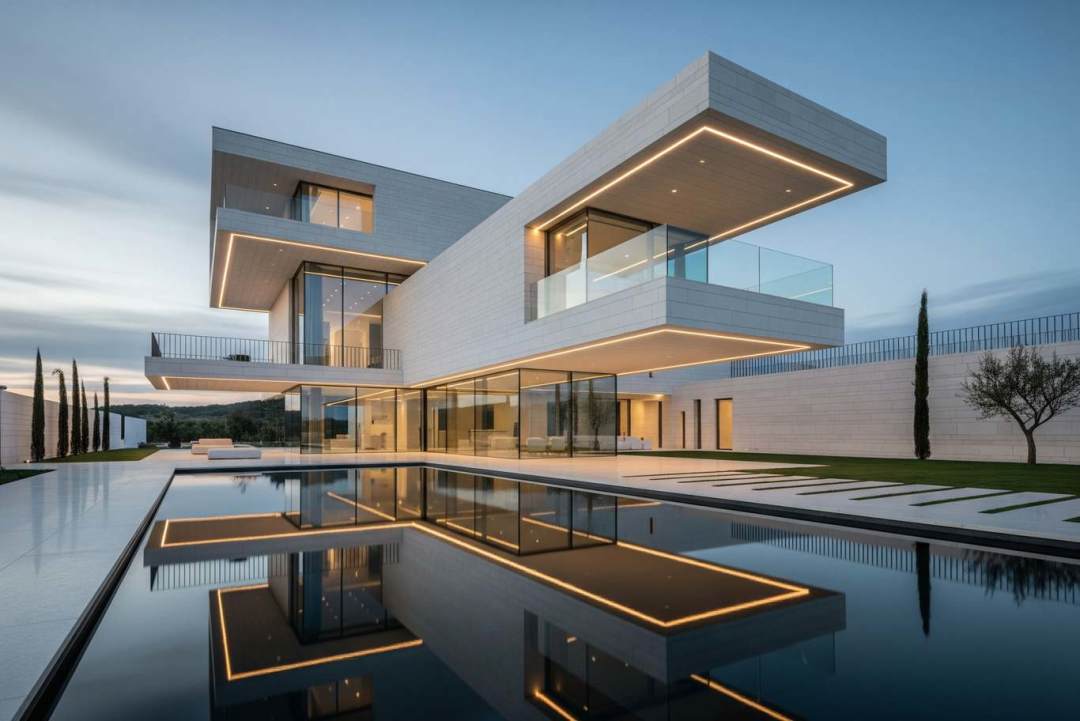
The residential construction industry moves fast, but few styles have captured the imagination of homeowners and builders quite like contemporary architecture. While often confused with modernism, this design language is strictly of the "now." It is fluid, borrowing from the past but looking aggressively toward the future. When applied to the specific typology of the villa—a structure traditionally associated with leisure, space, and luxury—contemporary design finds its most expressive playground.
This article explores the defining characteristics, structural philosophies, and aesthetic choices that shape today’s most stunning contemporary villas. We will look at how architects are rethinking privacy, light, and materiality to create homes that are not just shelters, but statements of living.
1- The Distinction Between Modern and Contemporary
Before analysing specific design elements, we must clear up a common naming confusion. In real estate listings and design magazines, "modern" and "contemporary" are used interchangeably. However, they mean very different things to an architect.
Modern architecture refers to a specific time period, roughly the early to mid-20th century. It includes styles like Mid-Century Modern, Brutalism, and International Style. It has strict rules regarding form following function and a rejection of ornament.
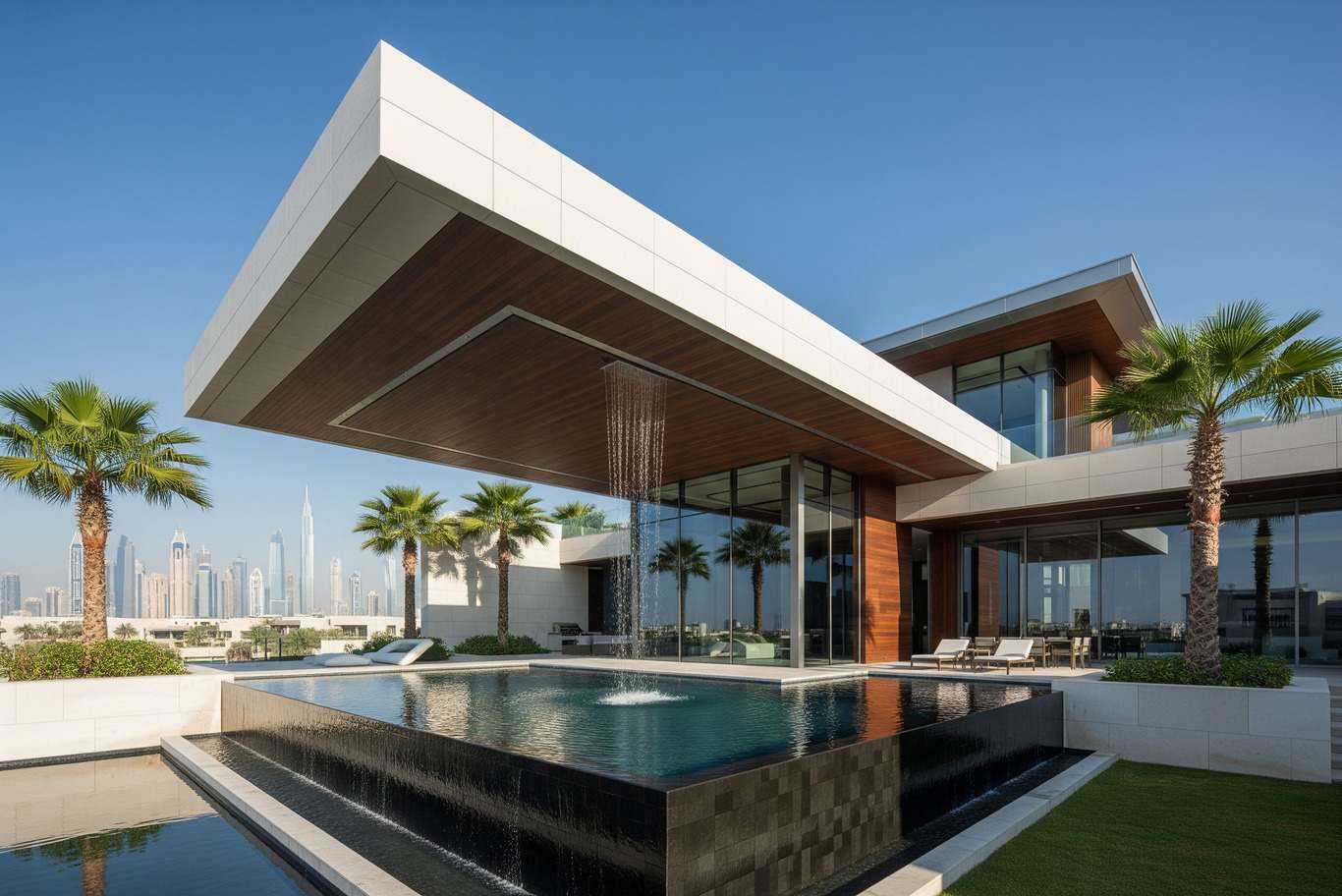
Contemporary architecture, by contrast, is what is happening right this second. It does not belong to a specific era because it is constantly changing. While contemporary design respects the clean lines of modernism, it is much more willing to break the rules. It embraces curves, whimsy, and unconventional materials. In the context of a luxury villa, this freedom allows for custom solutions that fit the specific topography of a site or the unique lifestyle of a client.
2- The Core Understanding: Connection to Nature
If there is one golden rule in contemporary villa design, it is the dissolution of boundaries. The old way of building a house involved creating a box to keep the weather out and the people in. Today, the goal is to make the house feel like an extension of the landscape.
This is achieved through biophilic design. This concept explains putting a potted plant in the corner. It involves structural decisions that prioritize views, natural ventilation, and daylight. In a high-end villa, this often manifests as floor-to-ceiling glass walls. These massive glazing units are transparent skins that allow the garden to become the wallpaper of the living room.
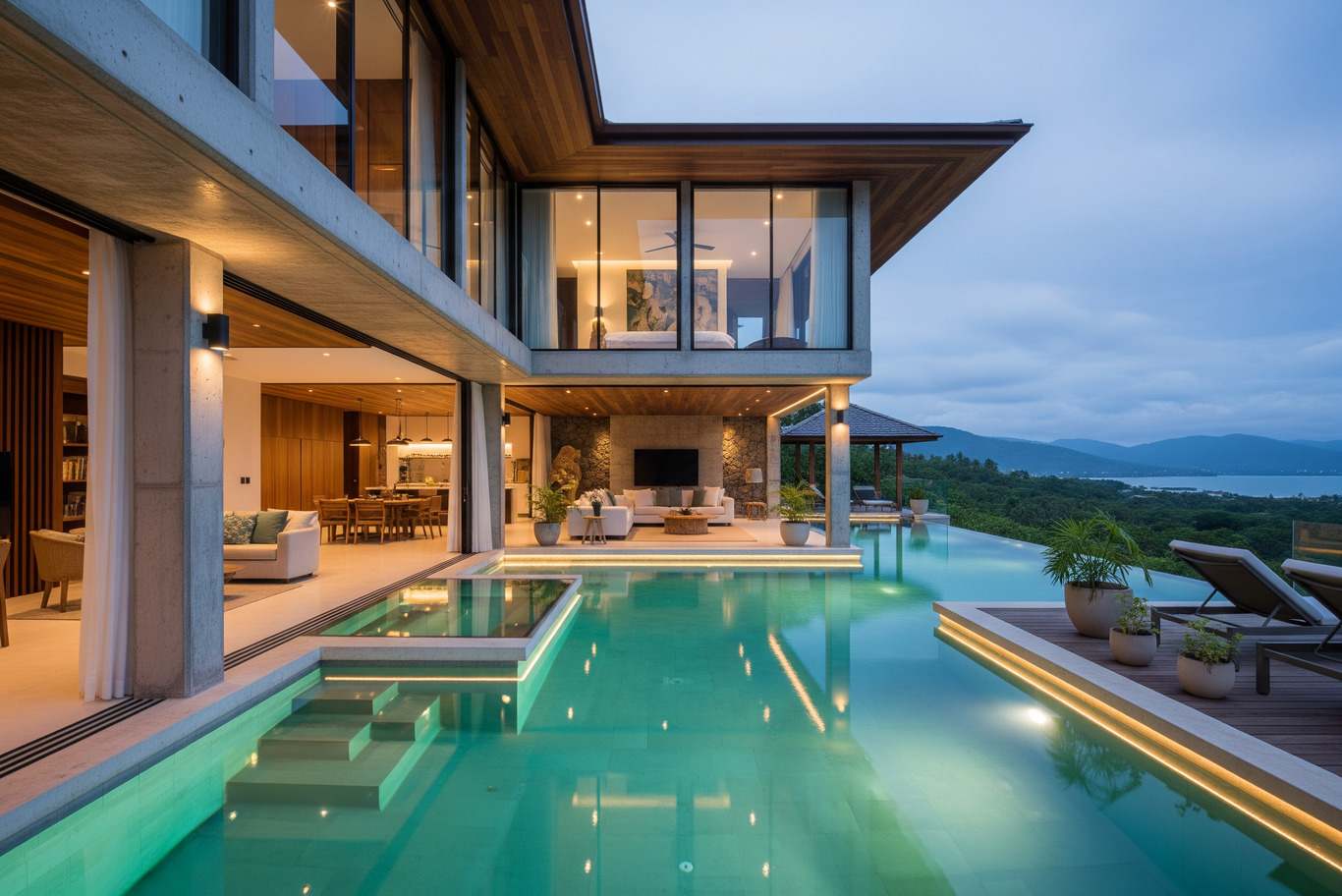
Architects are also using "transitional spaces" to blur these lines. Covered terraces, outdoor kitchens, and sunken conversation pits are treated with the same level of finish as the interior. The flooring material might run continuously from the living room out to the pool deck, visually tricking the eye into believing the space is one vast, uninterrupted plane.
3- Materiality and Texture
Contemporary architecture has moved away from the sterile white boxes of the 1990s. Today, there is a hunger for texture and "honest" materials. The best contemporary villas use a palette that feels grounded and authentic.
Architectural Concrete: Once reserved for industrial basements, concrete is now a luxury finish. Board-formed concrete, where the impression of the wooden shuttering is left visible on the surface, adds a rich, wood-grain texture to a stone-hard wall. It is durable, low maintenance, and possesses a thermal mass that helps regulate indoor temperatures.
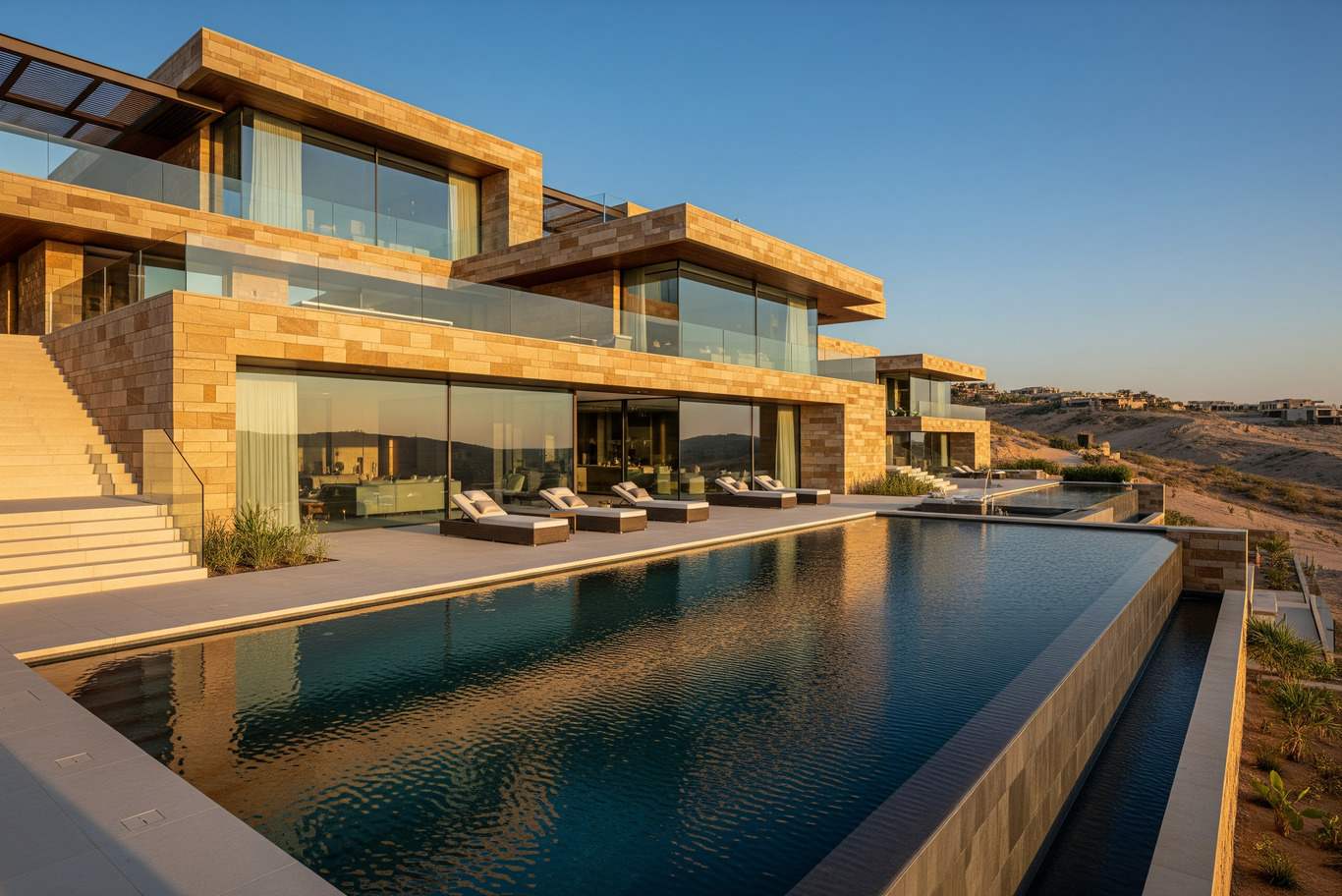
Natural Stone: Rather than polished marble, which can feel dated or overly formal, contemporary designs favor honed or leathered finishes. Local stone is often used to clad exterior walls, rooting the villa in its specific geographic location. A villa in the Mediterranean might use rough-cut limestone, while one in the Pacific Northwest might utilize dark basalt.
Warm Timber: To offset the coolness of glass and concrete, wood is essential. Slatted timber screens are a popular feature in contemporary villas. They serve a dual purpose: they provide privacy from the street while allowing filtered light to enter the home. This creates dynamic shadow patterns that change throughout the day, turning sunlight into a design element.
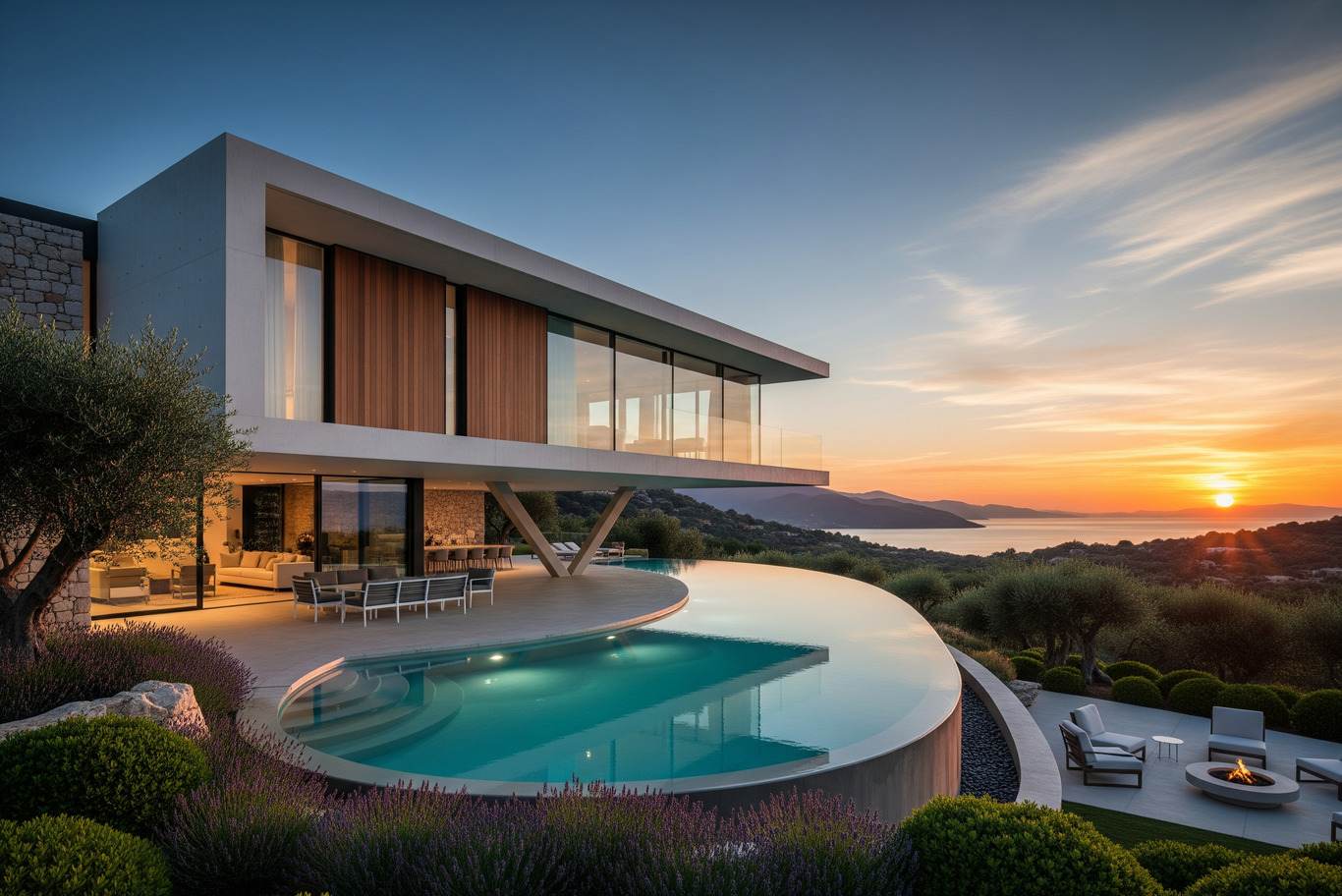
Metal Accents: Blackened steel, copper, and zinc are used for window frames, roof lines, and fascia. These metals patina over time, allowing the house to age gracefully and change color as it is exposed to the elements.
For more inspiration and to see these principles in action, read our Dubai contemporary villa designs selection guide.
4- The Evolution of the Floor Plan
The layout of the home has undergone a radical shift. The formal dining room, the separated kitchen, and the parlor are largely extinct in contemporary villa architecture. In their place is the "open concept," though this too is evolving.
The initial trend of open-concept living—one giant room for everything—proved to be noisy and sometimes chaotic. The current trend in villa design is "broken plan" living. This maintains the sightlines and light of an open plan but uses changes in floor level, partial walls, or double-sided fireplaces to zone the space. You might step down three stairs into the living area, which gives it a sense of enclosure and intimacy without needing a door.
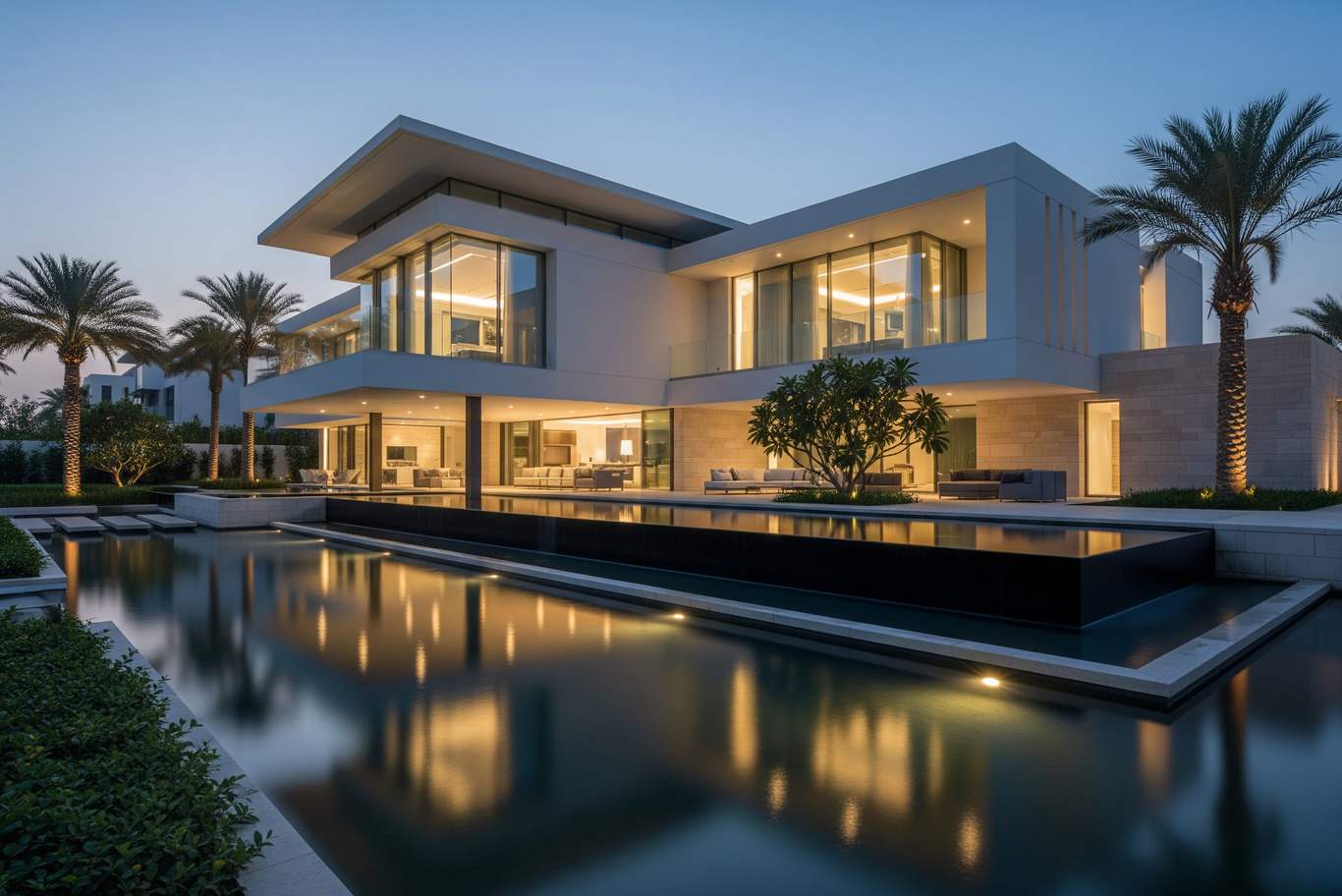
The kitchen remains the heart of the home but has transformed into a sleek, furniture-like element. Appliances are hidden behind cabinetry that matches the living room joinery. The island is less of a workspace and more of a sculptural gathering point, often made of a single block of stone or concrete.
Private spaces, such as bedrooms and bathrooms, are becoming larger and more resort-like. The "primary suite" in a contemporary villa often occupies an entire wing or floor. It acts as a retreat within the retreat, featuring spa-grade bathrooms, massive walk-in closets, and private balconies that are inaccessible from the rest of the house.
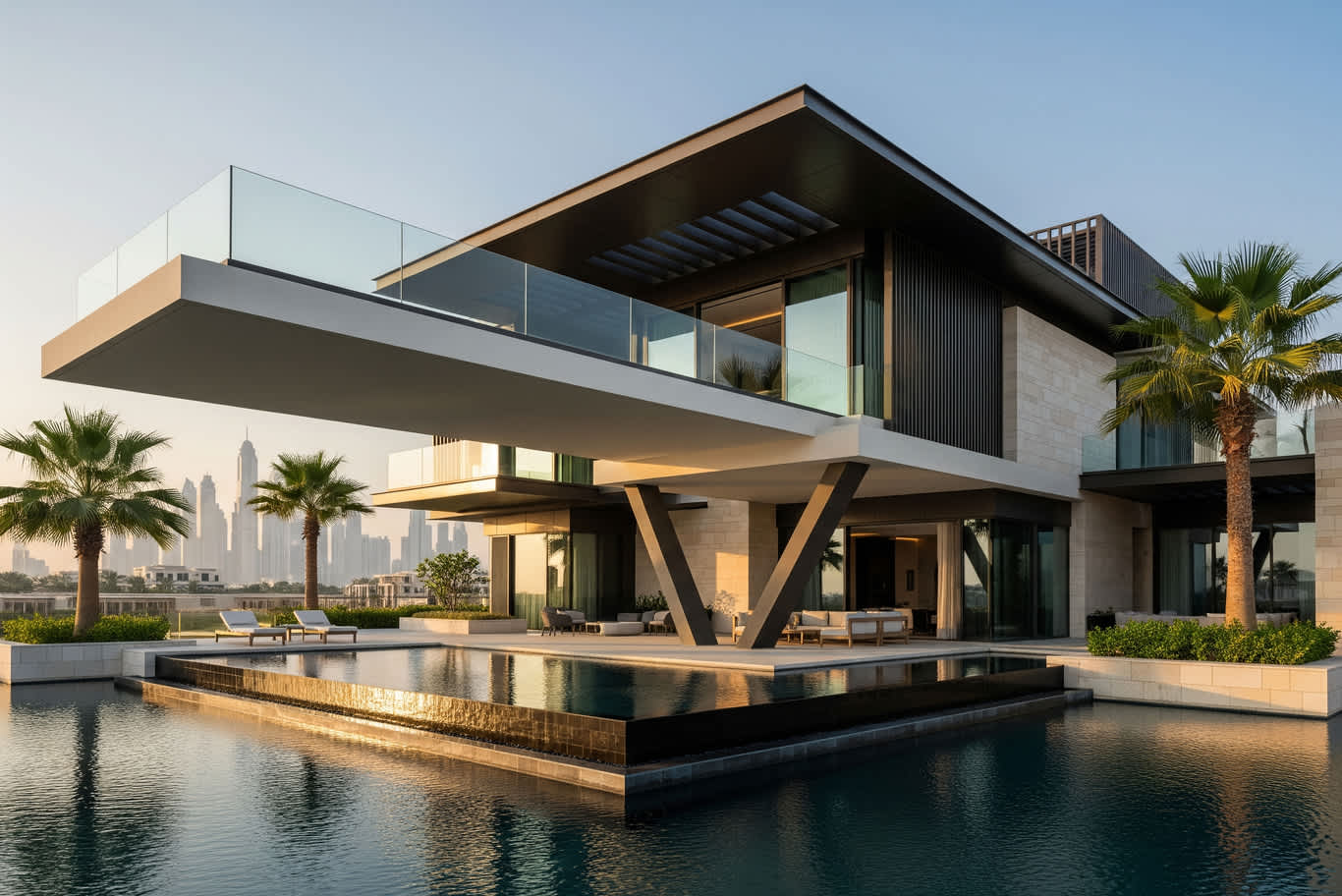
To help you further refine your unique vision, be sure to read our how do I build a villa with my own twist – contemporary exterior blog for expert tips on personalizing your facade and making a bold architectural statement.
5- Sustainable Luxury
A contemporary villa cannot just look good; it must perform well. Sustainability is no longer an optional add-on; it is baked into the design process. However, in the luxury sector, green building does not mean sacrificing comfort. It means smart efficiency.
Passive Solar Design: This is the most effective way to build sustainably. By orienting the villa correctly on the site, architects can capture heat in the winter and exclude it in the summer. Large overhangs and cantilevered roofs are a hallmark of this style. They look dramatic and structural, but their primary job is to shade the glass facades from the high midday sun, reducing the need for air conditioning.
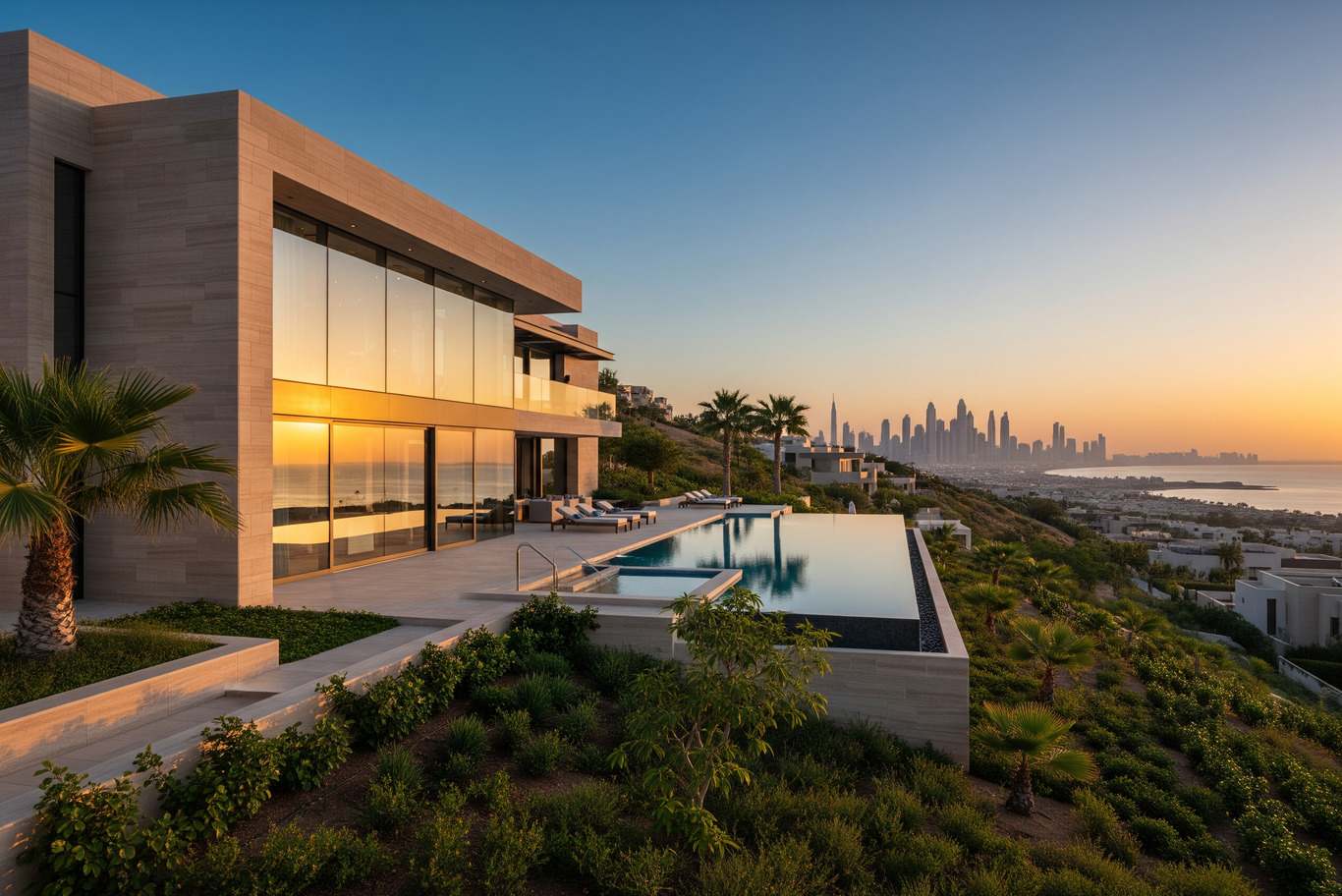
Green Roofs: Flat roofs are common in contemporary design, and they offer an opportunity for planting. A green roof replaces the footprint of the building with vegetation, absorbing rainwater, providing insulation, and reducing the "heat island" effect. Visually, it helps a large villa blend into the hillside when viewed from above.
Water Management: In dry climates, contemporary villas often incorporate greywater recycling systems to irrigate the landscape. Visually, water is used as a calming element. Reflecting pools placed near the entryway bounce light onto the ceilings inside, creating a shimmering, atmospheric effect.
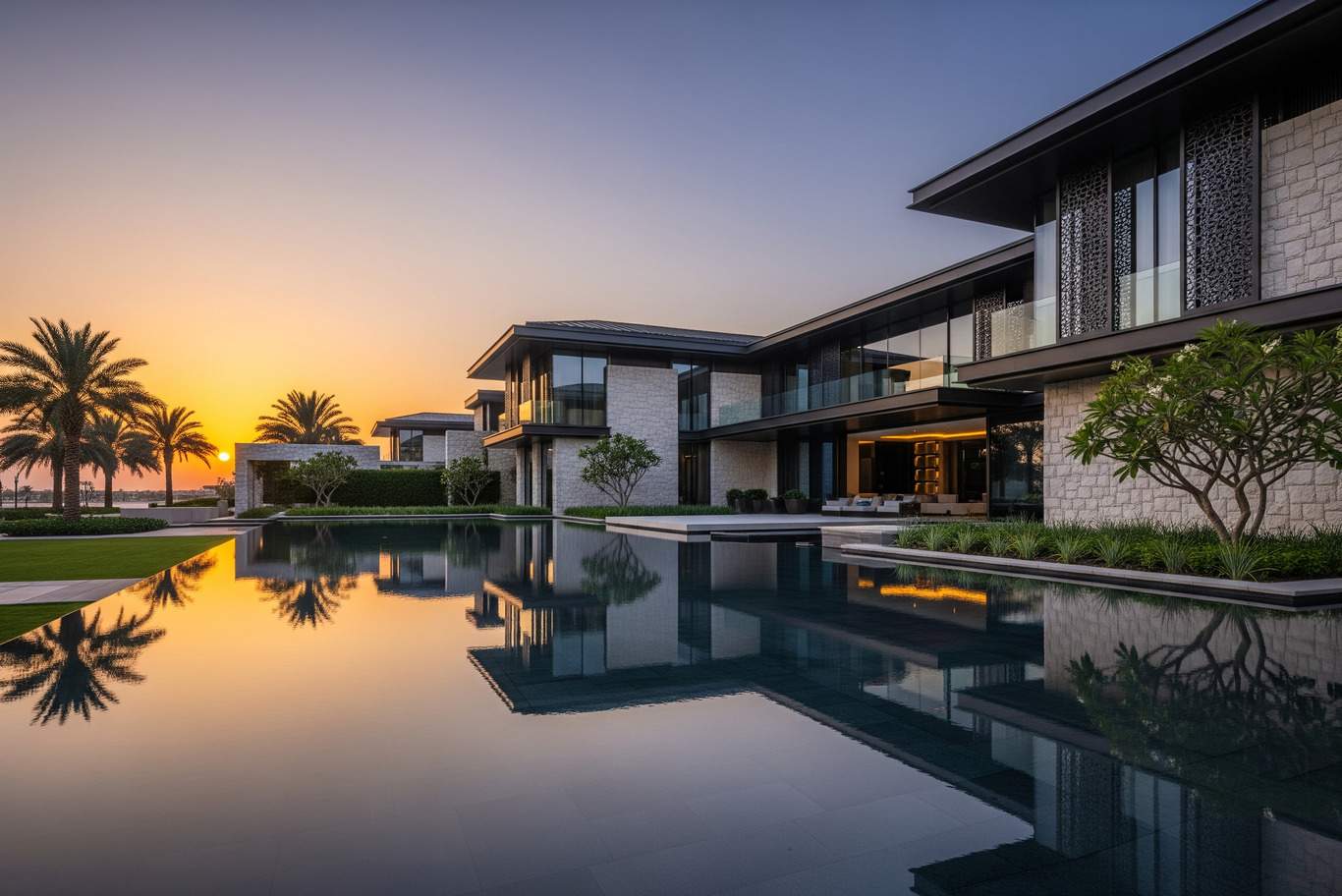
To see how these concepts come together in one of the world's most iconic skylines, check our contemporary luxury villa architecture in Dubai project.
6- The Role of Light
Lighting design is the unsung hero of architecture. In contemporary design, light is treated as a physical material. Architects use "architectural lighting" rather than decorative fixtures. This means you see the light, not the bulb.
LED strips are recessed into coves in the ceiling or along the baseboards to wash walls with light. This emphasizes the texture of the stone or concrete surfaces. Skylights are placed strategically to highlight a staircase or a piece of art.
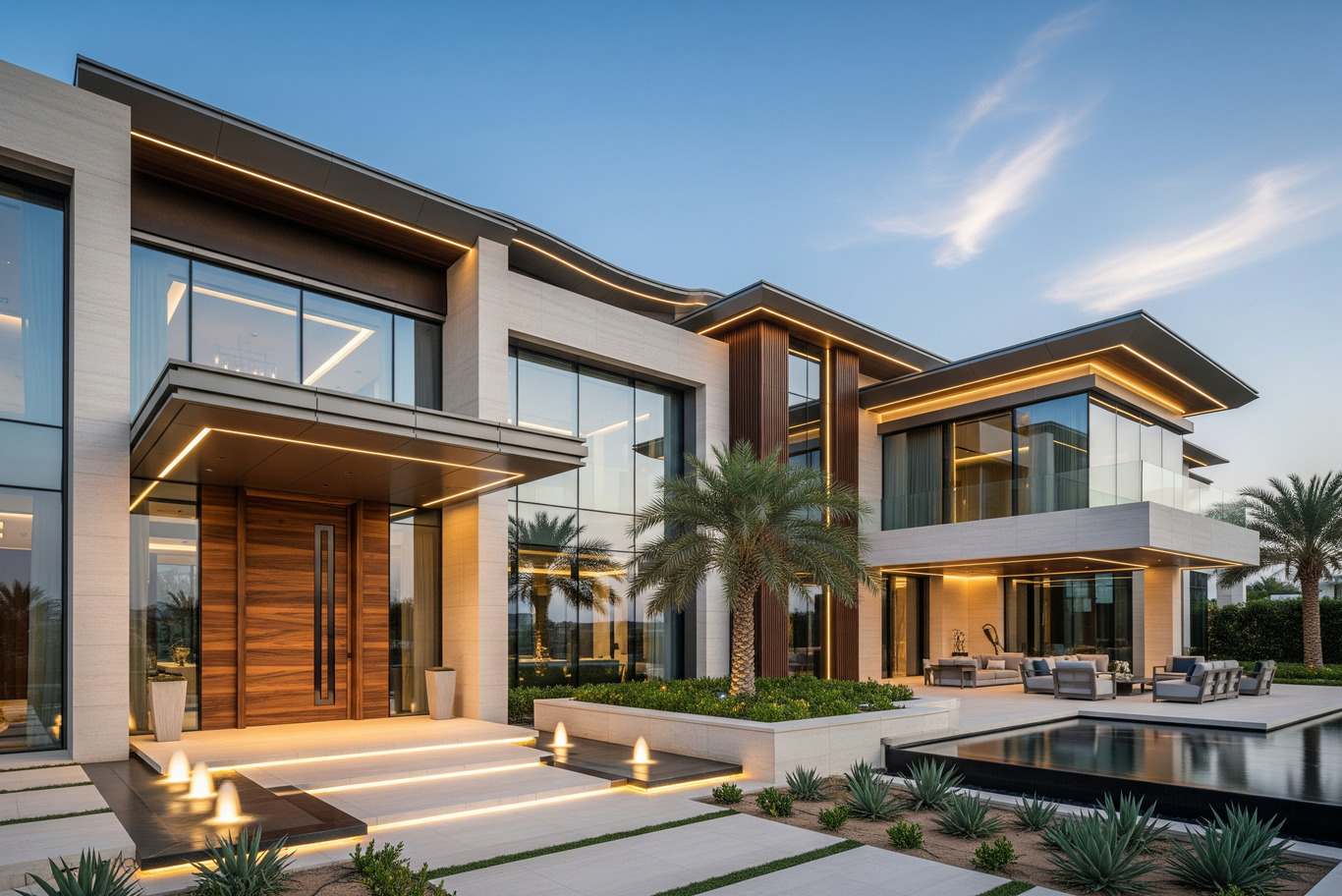
The manipulation of natural light is even more critical. "Clerestory windows"—narrow windows placed high up on a wall near the roofline—allow light to penetrate deep into the center of the house without compromising privacy. They provide a view of the sky and treetops, maintaining that crucial connection to the outdoors even in the most private rooms.
7- Smart Home Integration
A truly contemporary villa is a smart machine. However, unlike the gadget-heavy homes of the early 2000s, today’s technology is invisible. The goal is frictionless living.
Automated shading systems are integrated into the window frames. They track the sun and lower the blinds automatically to protect artwork and furniture from UV rays. Lighting scenes are pre-programmed for different moods (e.g., "Entertaining," "Relaxing," "Morning") and can be controlled via voice or a discreet wall panel.
Climate control is zoned, allowing different rooms to be kept at different temperatures. This is often tied to occupancy sensors, so the system stops heating or cooling a guest wing that isn't being used. This level of automation supports the sustainability goals of the project while enhancing the luxury experience.
Take a closer look at our latest contemporary villa design – architecture project to see how we harmonize bold structural geometry with refined, minimalist interiors.
8- The Exterior Form: Geometry and Gravity
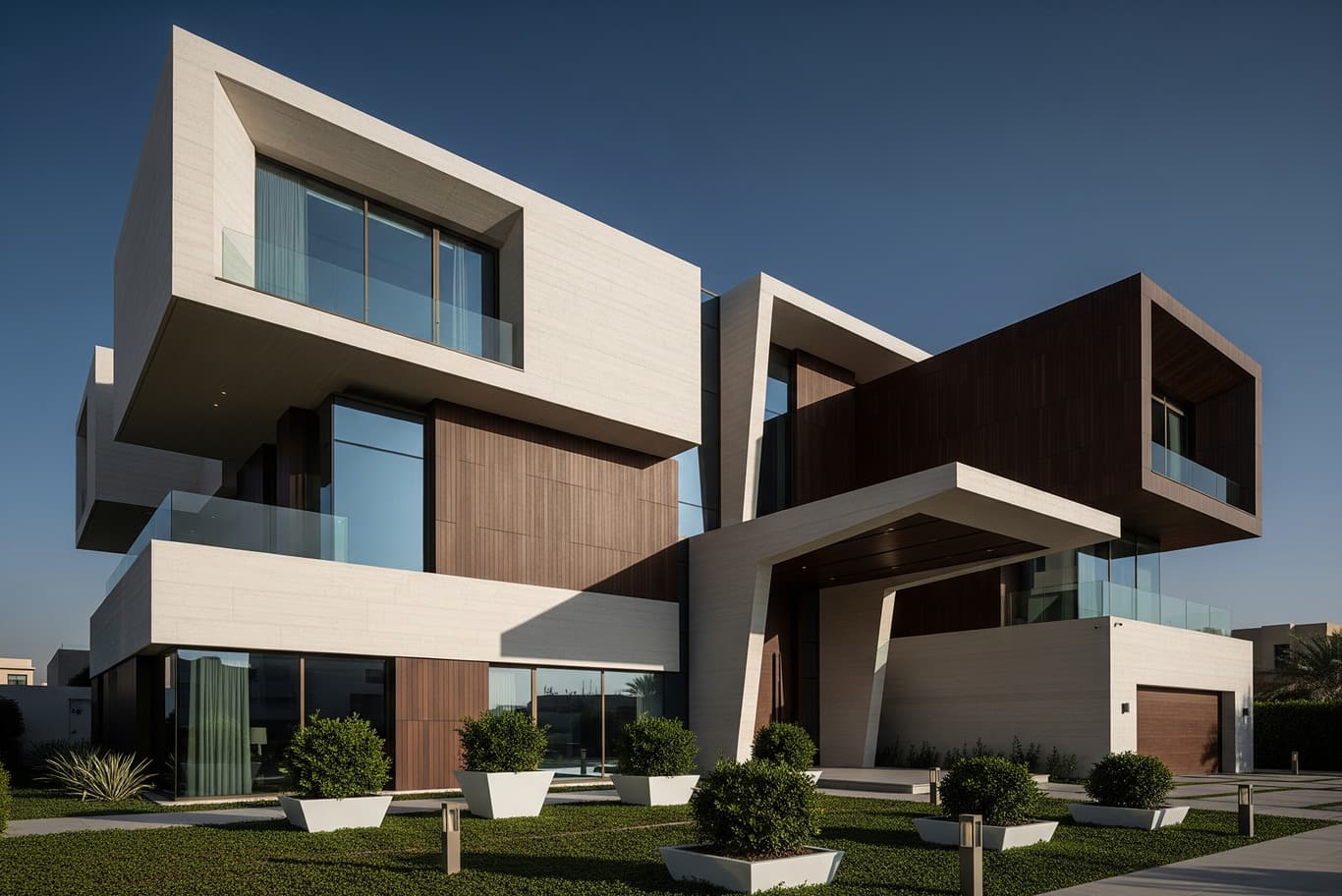
When you look at the images of villas you have, you likely notice a play with gravity. Contemporary architects love to make heavy things look light. This is achieved through cantilevers—where a room or balcony hangs out over open air with no visible support.
This structural daring serves an aesthetic purpose. It makes the building feel dynamic and energetic. It also creates practical covered outdoor spaces underneath the overhangs. The geometry is often simple—stacked boxes, shifting planes, or clean horizontal lines—but the engineering behind it is complex.
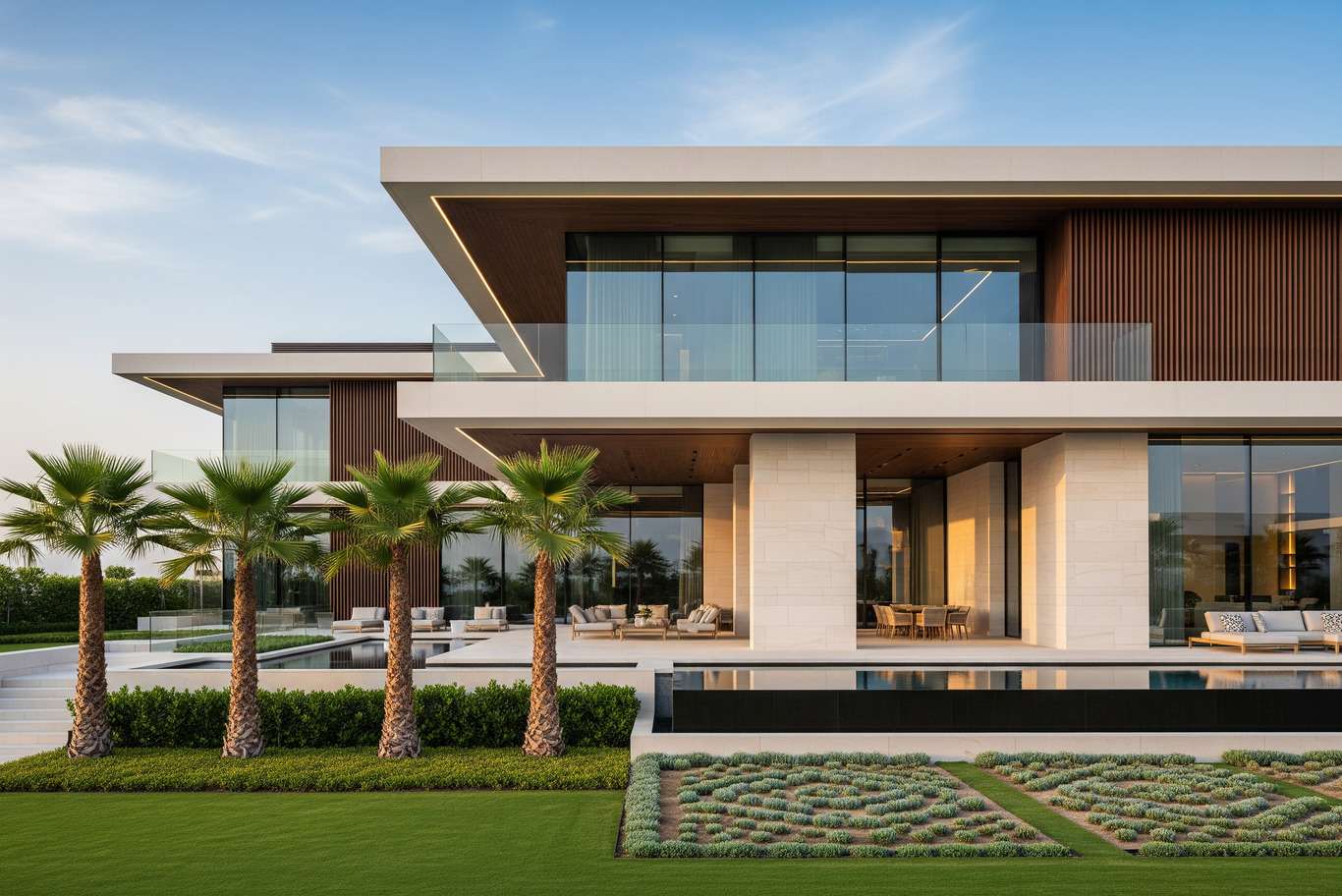
The roofline is another defining feature. While flat roofs are the default, butterfly roofs (which dip in the middle) or shed roofs (which slope in one direction) are used to add height and drama to specific volumes of the house. These angles allow for higher ceilings and larger windows, reinforcing the spacious feel of the interior.
9- Privacy in a Glass House
One of the biggest challenges in contemporary residential architecture is balancing the desire for openness with the need for privacy. If the house is made of glass, how do you keep the neighbors out?
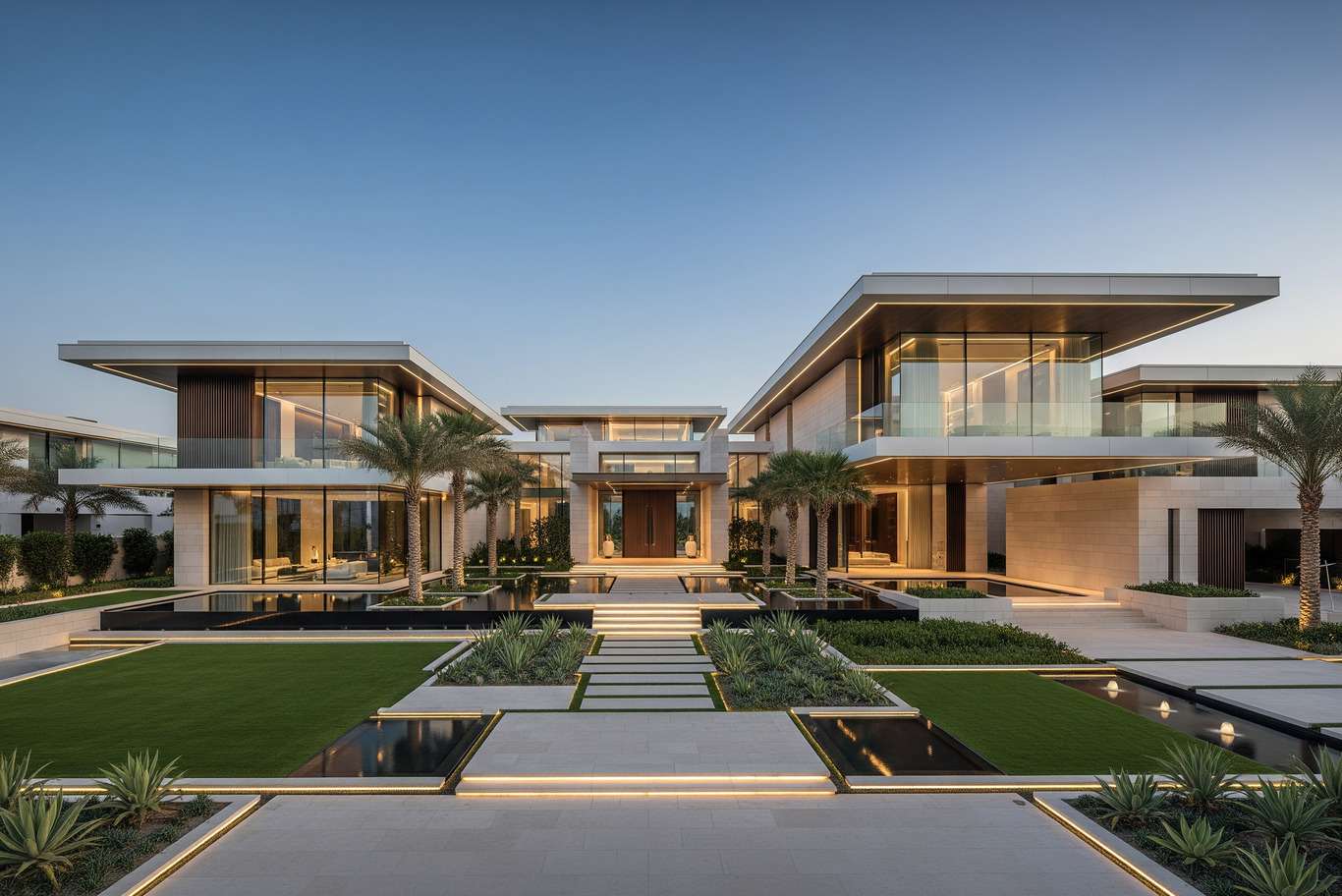
Architects solve this through careful site planning and layering. The front facade of a contemporary villa is often quite closed off. It might be a solid wall of stone or wood with a concealed entry, giving nothing away to the street. As you move through the house, it opens up. The back of the house, facing the private garden or the view, is where the glass dominates.
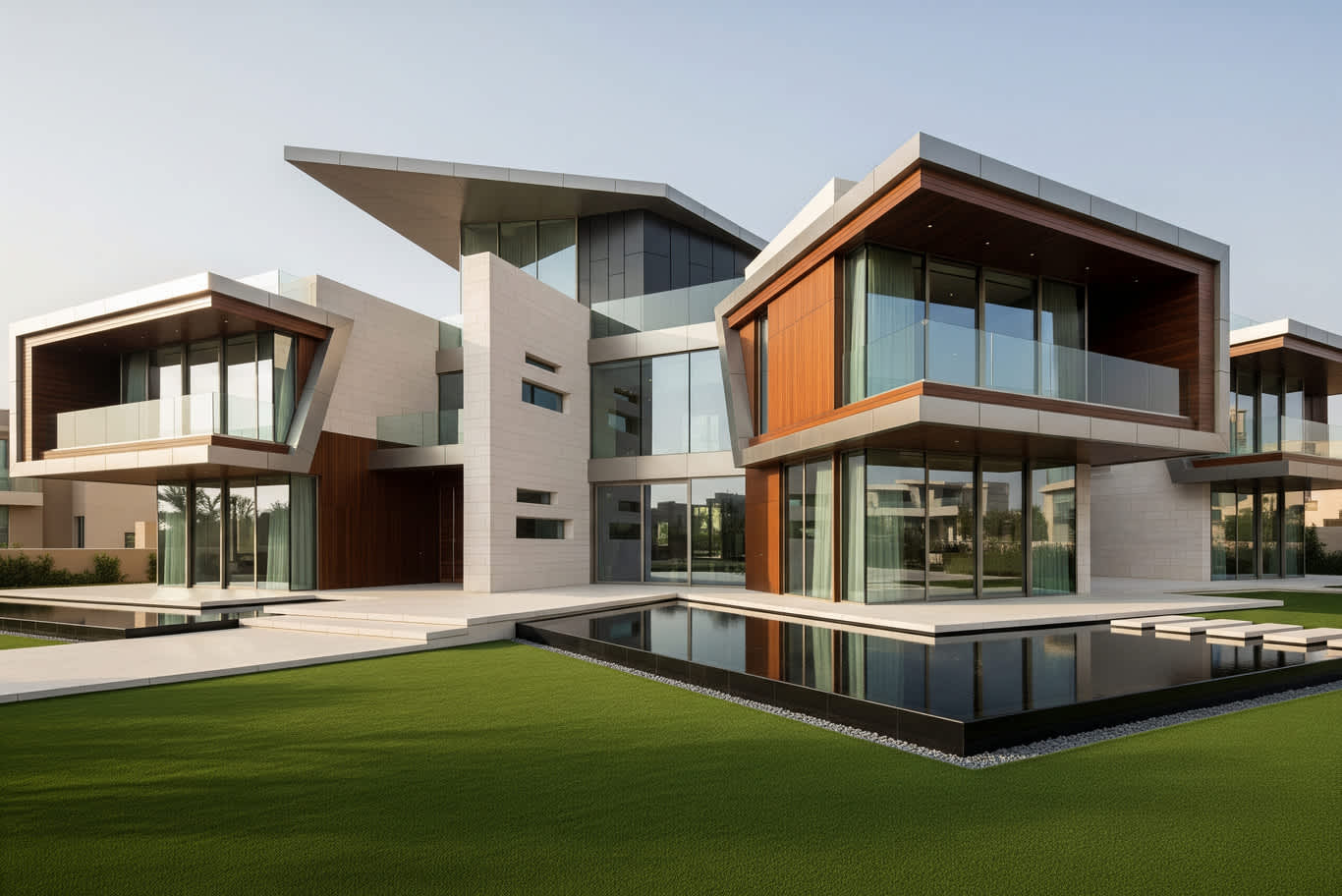
Courtyards are another ancient solution brought back for modern times. By building the house around a central garden, you can have floor-to-ceiling glass on all sides without anyone from the outside seeing in. This creates a private internal world, perfect for dense urban environments or suburban lots where neighbors are close by.
10- The Pool as Architecture
In a villa setting, the swimming pool is not just a hole in the ground filled with water; it is a key architectural feature. It is often aligned with the main axis of the house, drawing the eye out toward the horizon.
Infinity edges are popular because they eliminate the visual barrier between the pool water and the view beyond, whether that is the ocean or a valley. Dark pool finishes (deep blue, grey, or black) are trending over the traditional turquoise. A dark pool looks like a natural pond or a sheet of glass, reflecting the architecture of the house and the sky.
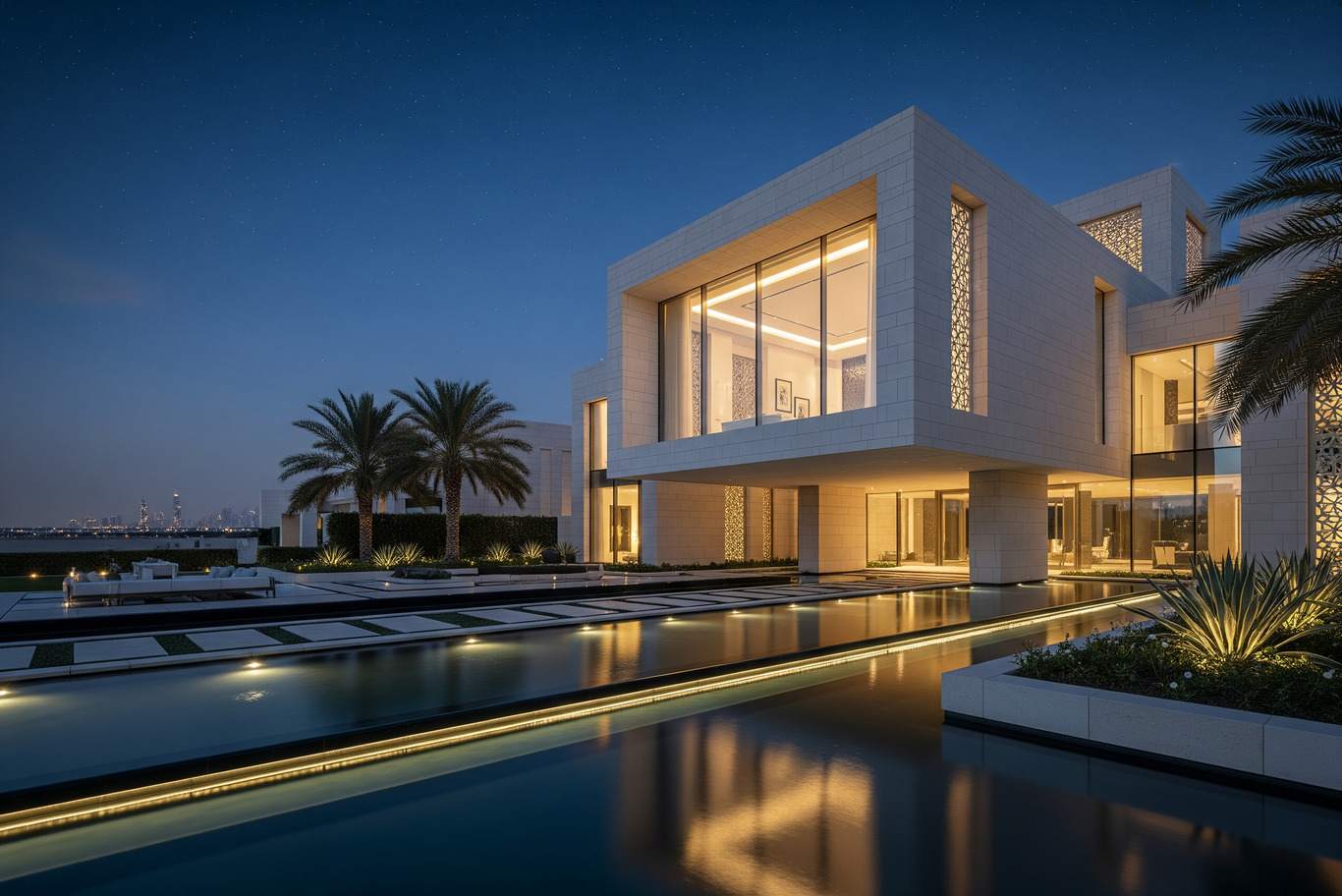
The pool deck is treated as an outdoor living room. It is furnished with weather-resistant sofas and lounge chairs that rival indoor furniture in comfort and style. Fire pits integrated into the pool design allow the space to be used on cooler evenings, extending the functionality of the outdoor areas year-round.
11- Future-Proofing Design
Contemporary architecture is also about looking ahead. Families change, needs change, and a good villa design anticipates this. Modularity is a growing trend. This involves designing spaces that can be easily converted. A home office on the ground floor might be designed with an adjacent full bathroom so it can become a guest suite or an accessible bedroom for aging parents in the future.
There is also a move toward "resilient design." As climate patterns become more unpredictable, architects are designing villas to withstand extreme weather. This includes elevating structures in flood-prone areas, using fire-resistant exterior cladding in dry zones, and reinforcing glass against high winds. This practical durability ensures the investment in a luxury villa remains secure.
Conclusion
Contemporary architecture is a mindset extending beyond being just a style. It reflects a desire to live lightly on the land, to remove the barriers between inside and outside, and to use technology to simplify daily life. For the villa owner, it offers an area of unlimited potential.
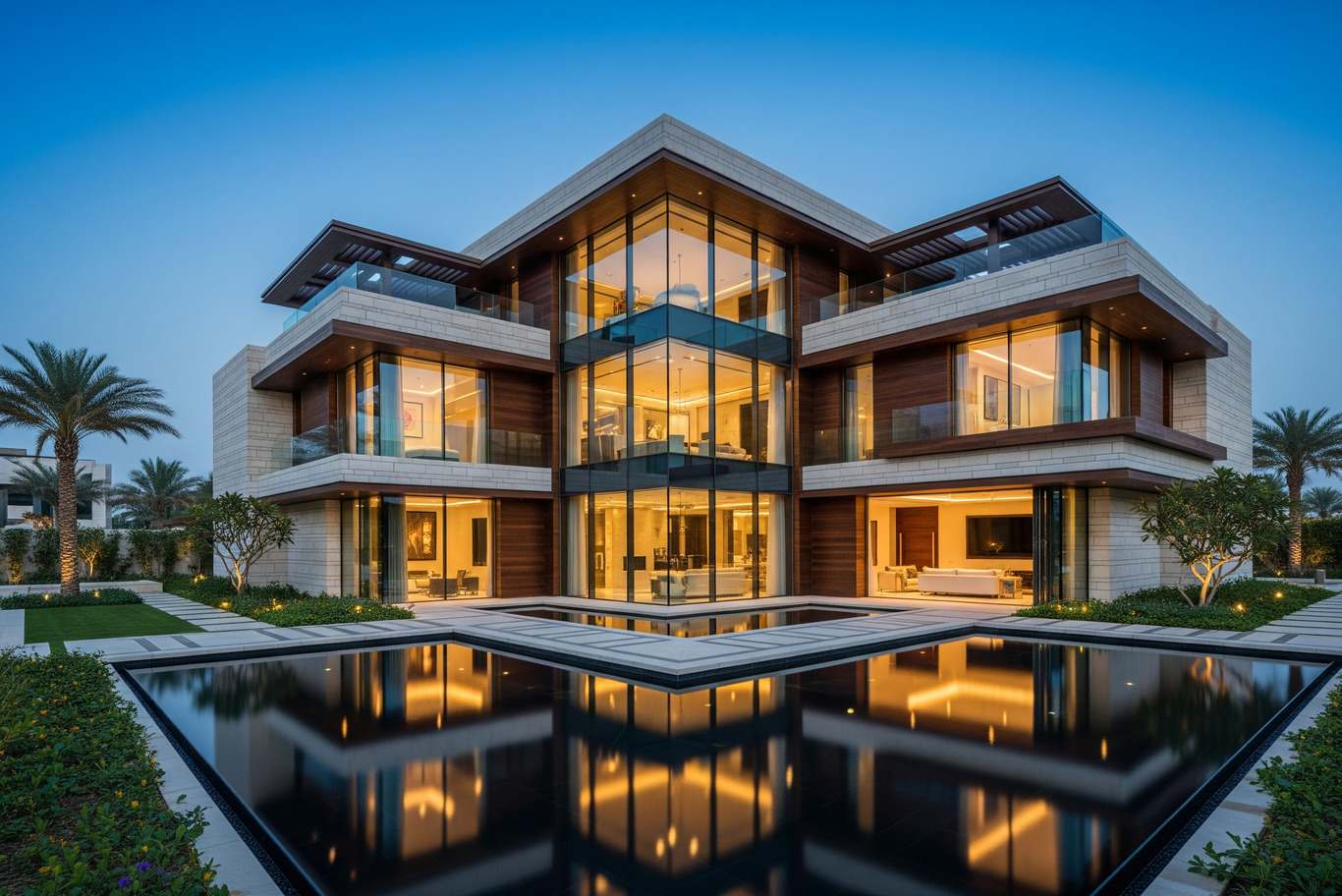
Whether it is through the drama of a cantilevered concrete roof, the warmth of a cedar slat wall, or the tranquility of a private courtyard, these homes are designed to elevate the human experience. They are retreats from the noise of the world, grounded in honest materials and lifted by light. As we move forward, the definition of contemporary will continue to shift, but the core desire—to build a home that is both a shelter and a work of art—will remain the foundation of all great design.
Experience the Vision
Transform the concepts of light, texture, and open-plan living into your personal reality. We invite you to explore our contemporary architecture designs gallery, where you will find a curated selection of villas that embraces the innovative spirit and structural elegance discussed above.
Whether you envision a cantilevered masterpiece or a serene biophilic retreat, our team is ready to bring your vision to life. Contact us today to discuss your project and begin the journey toward your dream home.
FREE CONSULTATION
TELL US ABOUT YOUR PROJECT
WE WOULD LOVE TO HEAR FROM YOU
Feel free to reach us via this contact form and one of our Design Consultants will get back to you at earliest.
OUR BRANCHES
UAE - DUBAI
+971 52 8111106 | hello@algedra.ae
TURKEY - ISTANBUL
+90 533 701 89 71 | info@algedra.com.tr
Leading Interior Design and Decor Company in Dubai and Abu Dhabi.
Algedra is a reputable, internationally recognized, and one of the most successful interior design companies in Dubai, and Abu Dhabi, which specializes in delivering interior design, architectural, and creative space planning projects throughout GCC, MENA, North Africa, Turkey and Russia.
Algedra is a one-stop solution for all your residential interior design and fit-out needs. We have successfully completed numerous villa interior and exterior design projects, where we integrated quality and originality to deliver interior masterpieces.
ALGEDRA, Interior Design Company in Dubai, is specialized in providing elegant and stunning interior design services for both residential and commercial projects. We turn our clients' dreams into reality, trans- lating their tastes and needs into beautiful and functional spaces.
Since the day we were founded, we have designed and built many branded residences, resorts, hotels, multi-purpose social spaces, and palace designs with different functions and concepts by following the ever-changing design trends over the world.
A key element of our work is a fusion of different cultures and designs, combining Greek, Italian, Eastern and Western influences with British innovation.
As a team of highly qualified interior designers and engineers, Algedra offers complete architectural services from mall design to corporate office design as well as the exterior design of any project based on customers' needs.
Our customers include leading names, we have completed diverse projects in hospitality, landscape, commercial, and residential designs. These projects contain cafes, restaurants, gym, villas, family sitting rooms, bedrooms, kitchens; all showcasing our company's exquisite details and high-end designs.
Residential Interior Design in Dubai
Algedra's interior designers and architects have an important mission: building villas, houses, apartments, condos, and anywhere else where you reside that will fulfill your needs while being structurally safe and sound.
Architectural Designs
There are so many details that go into designing an architectural design project. Every step of the project has been carefully considered for safety and daily comfort by Algedra's experts.
Commercial Design
Conceptualizing spaces for business, to elevate style, and to increase functionality to help enhance the bottom line of a company is vital, as well as employee comfort and interior design too. Our commercial interior designers translate client's concept in ways that are efficient, attractive and provide professional workspaces.
Fit-out Projects
Algedra Interiors delivering high-quality tailored fit-out projects that transform your villas, palaces and commercial spaces.
We're a passionate team of interior designers, architects and engineers. Every day we help clients to solve interior design problems and create engaging spaces!
Wherever you are in Kuwait, Saudi Arabia, Azerbaijan, Qatar, Morocco, Algeria, Tunisia, Libya, Egypt; don't hesitate, contact us to find out more about why we are one of the best interior design companies in Dubai and Abu Dhabi!