Home Page | Blog | Architect vs Interior Designer: Which One Does Your Project Need?
Architect vs Interior Designer: Which One Does Your Project Need?
9/23/2026
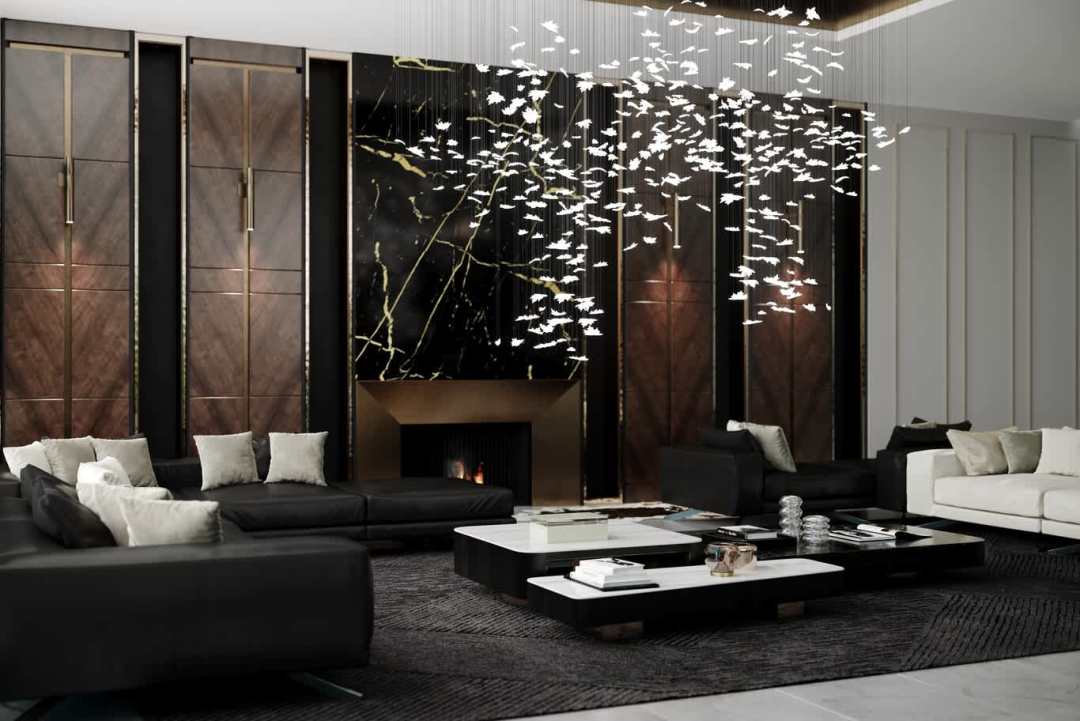
Every major home project in the Emirates reaches the same crossroads early on. The owner of a new villa wants to open the ground floor into one generous reception space, add a majlis wing and lift the ceilings in the family room. Then come the marble, the joinery, the lighting and the furniture. Somewhere between those two lists sits the question this guide answers: is this a job for an architect, an interior designer, or both?
The answer matters more than most owners expect. It decides who is legally allowed to sign your drawings, which approvals your project needs, how the fees are structured, and whether the finished rooms match the renders. Choose the wrong professional and you may pay twice: once for drawings the authority rejects, and again for someone qualified to redraw them.
Owners searching for an interior designer in Dubai often discover midway through a project that it needs an architect too, and the reverse happens just as often. Our company works across both disciplines, with licensed architects, engineers and interior designers on the same team, so we see the decision from both sides every week. The guide below sets out what each profession does, what each one produces, what the rules in the UAE require, and which combination suits each kind of project.
Two Disciplines, Two Starting Points
Architecture and interior design share a drawing board and a love of good rooms, but they begin from opposite ends of a building.
An architect starts with the plot, the climate and the structure. The first questions concern orientation, massing, setbacks, structure, circulation and the building's relationship to its street and garden. Rooms emerge from that framework.
An interior designer starts with the people inside. The first questions concern how a family gathers, hosts, cooks, works and rests, and how light, material, furniture and colour will shape each of those moments. The framework is usually given, and the designer's craft works within it and draws the best from it.
On a large residential project both starting points matter, and the most successful homes are those where the two meet early. Understanding where each discipline leads is the first step to hiring well.
What an Architect Designs
An architect is responsible for the building as a whole: its form, its structure, its envelope and the way it sits on its plot. On a residential project, that includes:
● the site plan and the overall layout of floors and rooms
● elevations, façades and roof design
● window and door openings, staircases and double-height volumes
● the relationship between inside and outside spaces such as terraces, courtyards and pool decks
Architects also coordinate the engineering that keeps a building standing and running. Structural engineers size the slabs, beams and columns. MEP engineers design the air conditioning, electrical supply, drainage and water systems. The architect brings those disciplines together so that ducts, beams and ceilings work in harmony with the design.
In the Emirates, climate shapes every architectural decision. Deep overhangs, mashrabiya screens and carefully placed glazing reduce solar gain. Courtyards draw breezes through the plan. Insulated walls and high-performance glass cut the cooling load. Our residential architecture services cover villas, palaces, towers and residential buildings, and apply those principles from the first sketch.
An architect is essential whenever a project changes the building itself. That includes a new villa, an extension, an added floor, a new façade, relocated structural walls, new openings in external walls, or any work that alters the building's footprint or height.
Training, Licensing and Who Signs the Drawings in the UAE
The two professions follow different paths into practice, and the difference carries real legal weight in the Emirates.
Architects typically complete a five-year professional degree followed by supervised practice. In Dubai, a building submission must be lodged by a consultant registered with Dubai Municipality, and the drawings are certified by an architect or engineer holding the relevant approval. Individual engineers within approved consultancies are required to:
● pass the Dubai Engineering Qualification System (DEQS) assessment
● hold a minimum of three years of post-graduation experience
● register with the UAE Society of Engineers
Where work affects load-bearing walls, slabs, beams, staircases or foundations, the structural drawings and calculations must also be stamped by a licensed structural engineer with Dubai Municipality approval.
Interior designers typically train through a degree or diploma in interior design, followed by professional practice. In the UAE, interior design consultancy is a licensed activity covering concepts, drawings and specifications. Carrying out the work on site is a separate regulated activity that requires a fit-out contracting licence. Interior-only works within an existing structure usually move through a fit-out permit or building management NOC, and any change that reaches the structure calls for a registered consultant.
For owners, the practical rule is simple:
● The work changes the structure, the envelope or the footprint: a registered architect or consultant must prepare and submit the drawings.
● The work stays within the finished surfaces, joinery, lighting, furniture and non-structural layout: an interior designer can lead, with the fit-out contractor handling the permit.
The same principle holds across the Gulf, where every market adds its own climate demands and building regulations, as our guide to choosing the right architect in Kuwait sets out.
What an Interior Designer Designs
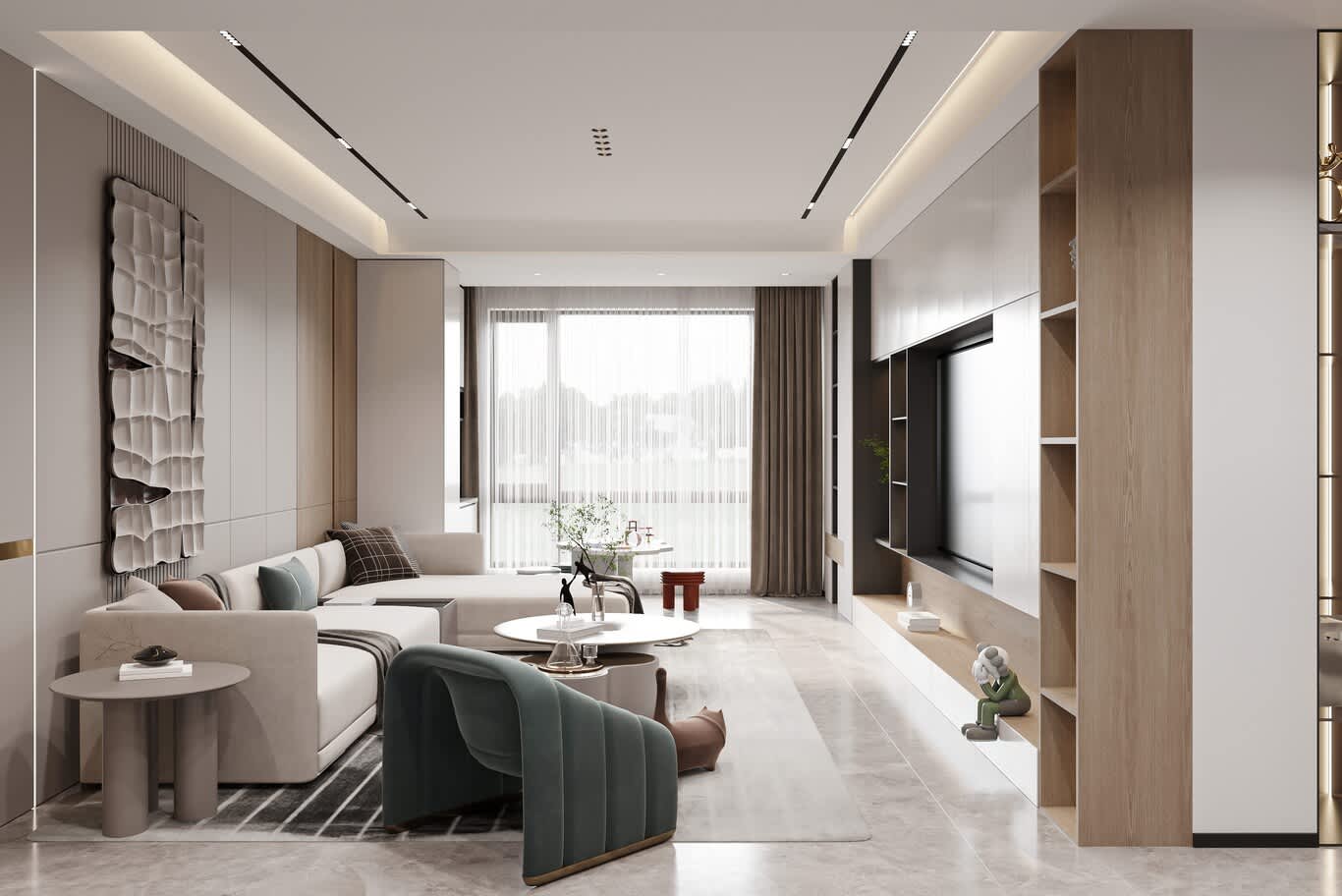
An interior designer shapes everything inside the building envelope that people see, touch and use every day. That covers space planning within rooms, furniture layouts, lighting design, ceiling design, wall treatments, flooring, joinery and bespoke furniture, kitchens and bathrooms, material and colour palettes, fabrics, art and accessories.
The interior designer's work is intensely practical. A good designer plans circulation so a family of six moves through the kitchen at breakfast with room to spare, sizes a majlis so forty guests sit comfortably along its perimeter, and places every socket, switch and data point where the furniture layout needs it. Lighting is designed in layers (ambient, task, accent and decorative), with colour temperatures chosen room by room. Living rooms and bedrooms typically sit at 2700K, and kitchens and dressing rooms at 3000K.
Material knowledge is the other half of the craft. Interior designers specify stone by name and finish, such as honed Calacatta for a bathroom or polished Nero Marquina for a feature wall. They specify timber by species and cut, fabric by weight and rub count, and hardware by brand and finish. That precision is what turns a well-planned room into one that feels calm, ordered and personal.
An interior designer is the right lead for projects that transform how a home looks, feels and works within its existing structure. Typical examples include:
● a new apartment finished from developer handover
● a villa refurbishment
● a kitchen and bathroom renewal
● a majlis redesign
● a full furnishing and styling package
The Drawings Each One Produces
The clearest way to understand the two professions is to look at what each hands over.
An architect's drawing set typically includes:
● site plans and floor plans at each level
● elevations and building sections
● roof plans and façade details
● door and window schedules
● staircase details
● coordinated structural and MEP drawings from the engineers
● authority submission sets prepared to the relevant municipality's format
Those drawings define what the building is and how it stands.
An interior designer's drawing set typically includes:
● furniture layouts
● reflected ceiling plans showing lighting, air-conditioning grilles and ceiling levels
● lighting layouts with circuit and scene notes
● wall elevations for every room
● joinery drawings for wardrobes, kitchens, vanities and panelling
● stone layout drawings showing vein direction and joint positions
● flooring patterns
● a finishes schedule
● an FF&E schedule listing every piece of furniture, fixture and equipment with supplier, finish and quantity
Those drawings define what the interior is and how it is built and furnished.
On a well-run project, the two sets are coordinated. The architect's ceiling heights leave room for the designer's coves. The designer's joinery sits where the architect's walls can carry it. The MEP engineer's ducts avoid the designer's feature ceilings. When the two sets are drawn in isolation, the gaps show up on site as clashes, rework and variations.
The Benefits of Hiring an Architect
Structural and spatial confidence. An architect can reshape a building safely, whether that means removing walls, adding volumes, raising ceilings, cantilevering terraces or creating double-height halls. Engineering stands behind every decision. Owners gain the freedom to change the plan fundamentally, with the assurance that the result is sound.
Regulatory compliance and approvals. Registered architects and consultants prepare submission drawings to the authority's format, answer technical comments and manage the approval process. For extensions, new builds and structural changes, that work is legally essential.
Climate and envelope performance. Architects design the shell that protects every interior: orientation, shading, insulation, glazing and ventilation. A well-designed envelope keeps rooms cooler, reduces energy bills and protects finishes from sun damage.
Long-term value. A coherent architectural plan, with good proportions, generous light and a logical flow between spaces, adds lasting value to a property. It shapes how the home feels for decades and how it performs at resale.
Architecture at its strongest joins beauty with performance. On a contemporary luxury villa we designed and fitted out in Dubai, the envelope does much of the work. Floor-to-ceiling curtain wall glazing in dark-tinted, UV-coated glass sits in thermal-break frames with concealed drainage, bringing in daylight while holding back heat and noise. Natural grey stone clads the structural columns, and walnut-grain veneer panels wrap the walls and soffits. Graphite aluminium frames the rooflines and balconies, where frameless glass balustrades are fixed into the edge beams. Inside, a curved helical staircase called for precision-engineered formwork, with architecture and structure working as one.
The Benefits of Hiring an Interior Designer
Rooms planned around real life. Interior designers translate a family's routines into layouts that work at every hour. That means a kitchen suited to both daily cooking and a Ramadan iftar, a dressing room sized to an actual wardrobe, and a family room arranged for conversation instead of a view of the television.
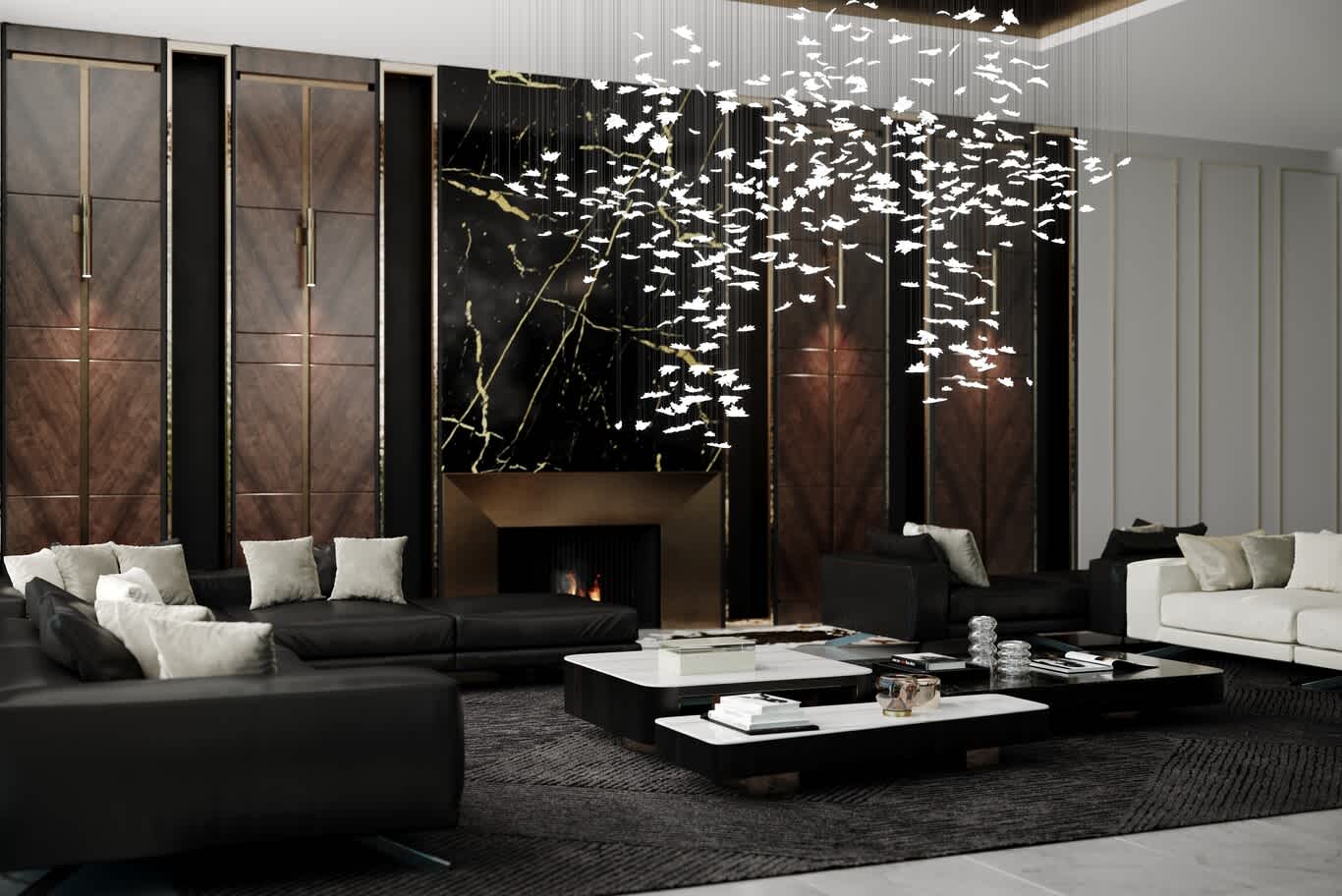
Material and finish expertise. Designers know how stone, timber, lacquer, fabric and metal behave in the Emirates' climate. They know which marbles etch, which veneers stay stable under constant air conditioning and which fabrics resist UV fading beside west-facing glass, and they specify accordingly.
Access to makers and suppliers. Established interior designers work with joinery workshops, stone yards, upholsterers, lighting specialists and furniture houses. Owners gain access to bespoke pieces, trade pricing and craftsmen who would otherwise be hard to reach.
Coherence from entrance to bedroom. An interior designer holds a single vision across every room. The entrance hall, reception rooms, family spaces and private suites read as one home with a consistent level of detail, instead of a series of separate decisions.
Faster, lighter projects. For work that stays within the existing structure, an interior designer can deliver a transformation with fewer approvals, shorter programmes and lower fees than a full architectural commission.
Where the Roles Overlap: Interior Architecture
Between the two professions sits a field often called interior architecture. It covers work inside the building that changes its spatial character while leaving the structure intact, including:
● new non-load-bearing partitions and reconfigured room layouts
● dropped and coffered ceilings
● feature staircases within an existing opening
● built-in joinery that defines spaces
● detailed wall systems such as panelling, mouldings and gypsum work
Staircases, voids and ceilings are where interior architecture shows its value most clearly. Case in point: in a villa fit-out we designed in Dubai with a double-curved staircase, the whole ground floor is organised around the staircase itself. It curves upward on both sides, framed in warm marble, and draws sightlines from the entrance straight to the main living area and the upper walkways. A skylight with suspended rings lights the vertical volume, and an upper lounge looks down into the central void. The staircase position was fixed in the design phase, because moving it once construction had begun would have meant removing structural work and starting again.
Many experienced interior designers handle interior architecture with confidence, and many architects design interiors with real sensitivity. The practical test is whether the work stays within the existing structure. If it does, an interior designer with strong technical skills can lead. If any wall, slab or opening in the structure will change, an architect and a structural engineer must be involved.
Which Professional Your Project Needs
Most residential projects in the Emirates fall into one of a handful of scenarios.
Furnishing and styling a finished home. An interior designer leads. The work covers furniture, lighting, soft furnishings, art and accessories, all handled outside the authority approval process.
Finishing an apartment from developer handover. An interior designer leads, working within the tower's fixed structure and plumbing risers. The fit-out contractor secures the building management NOC, and any change to fire systems goes through Civil Defence.
Refurbishing a villa without structural change. An interior designer leads, with an MEP engineer where lighting, air conditioning or plumbing are reworked. New kitchens, bathrooms, ceilings, joinery and finishes all fall within this scope.
Opening up a villa's layout. An architect or registered consultant and a structural engineer become essential as soon as load-bearing walls move. The interior designer then shapes the new spaces. Both should be involved from the start, so the structural solution suits the intended interiors.
Extending a villa or adding a floor. An architect leads, with structural and MEP engineers, a community NOC and authority permits. The interior designer joins during design development so the new rooms connect gracefully to the existing house.
Building a new villa or palace. Both professions are needed from the concept stage. The architect shapes the building, the interior designer shapes the life inside it, and the engineers make both work.
Renovating a façade or exterior. An architect leads, since façades, openings and external finishes fall under community guidelines and authority approvals.
Fees and Budget: How Each Profession Charges
Fee structures differ between the two professions, and knowing the market benchmarks helps owners compare proposals fairly.
Architectural fees are usually calculated as a percentage of construction value:
● Standalone architectural design (concept and drawings): around 4 to 7 per cent, based on market benchmarks.
● Full multi-discipline packages covering architecture, structure and MEP: typically 6 to 12 per cent, depending on the project's size and complexity.
Site supervision may be priced separately.
Interior design fees follow three broad models:
● a percentage of the total project cost, commonly 10 to 20 per cent
● a rate per square foot for design-only engagements, typically AED 175 to AED 550 depending on the depth of the drawing package
● a fixed fee for a defined scope
Procurement of furniture and fittings may carry a separate margin, which should be shown clearly on invoices.
Comparing fees only works when the scopes match. Owners reviewing proposals can check each one against what to compare in an interior design company's proposal, from the drawing package to the approvals it should manage.
Bringing Both in at the Right Time
Timing shapes the value of both professions. The most expensive moment to involve an interior designer is after the architecture is frozen and the MEP is installed. At that point, a feature ceiling may clash with a duct, a chandelier may land off-centre because the ceiling point was fixed early, and a wall of joinery may need an electrical point moved after the walls are plastered.
On new builds and major renovations, the interior designer should join during the architect's design development stage, before ceiling heights, ceiling voids, window positions and MEP routes are finalised. At that stage, the designer can ask for:
● a deeper ceiling void where a cove is planned
● a wider opening where a double door will frame the majlis
● a structural beam moved clear of the chandelier's position
The architect benefits in turn. Knowing the furniture layout early lets the architect size rooms correctly, place windows to frame views instead of fighting furniture, and route services where they will stay invisible. Early collaboration costs little and saves a great deal.
One Team or Two Firms
Owners can appoint an architect and an interior designer separately, or appoint one company that covers both disciplines.
Separate appointments suit owners who already have a trusted architect or designer, or who want a specific specialist for one part of the work. The owner then coordinates between the two, or appoints a project manager to do so. The risk lies in the gaps: two drawing sets, two sets of assumptions, and the possibility of disputes over who is responsible when something clashes on site.
A single integrated team draws the architecture, interiors and engineering under one roof, with one programme and one point of accountability. Coordination happens at the desk instead of on site, and the owner deals with one contract. Owners considering that route can read how our team manages architecture and interiors as one villa commission, from the first concept to the final handover.
Mistakes Owners Make When Choosing
Several missteps recur across residential projects:
● Hiring an interior designer for structural work. Beautiful concepts for an opened-up ground floor move through the authority smoothly only when a registered consultant and a structural engineer prepare the submission.
● Leaving interior design until construction ends. Ceilings, openings and services fixed before the interior layout is known often need expensive changes later.
● Assuming the architect will design the interiors in detail. Many architectural scopes stop at walls, floors and ceilings. Joinery, lighting design, stone layouts and FF&E schedules may sit outside the fee unless they are written into it.
● Comparing fees without comparing scope. An architectural fee that excludes supervision, or an interior design fee that excludes technical joinery drawings, can look competitive until the missing work is added.
● Skipping licence checks. Owners should confirm that the architect or consultant is registered with the relevant authority, and that the designer's company holds the licence activities for the work proposed.
Choosing With Clarity
The decision between an architect and an interior designer comes down to one question: will the project change the building, or the life inside it?
● When the structure, envelope or footprint will change, an architect and engineers lead.
● When the work shapes rooms, finishes, joinery, lighting and furniture within the existing structure, an interior designer leads.
● When a project does both, as most new villas and major renovations do, the best results come from both professions working together from the start.
Owners who make that decision early, with the right professionals in the right order, spend less on rework, move faster through approvals and end up with homes that feel resolved from the front door to the last bedroom. Before the first meeting, it helps to work through the ten things to consider before hiring an interior designer, from budget and style to communication.
Frequently Asked Questions
What is the main difference between an architect and an interior designer?
An architect designs the building itself: its structure, layout, envelope, façades and relationship to the site. An interior designer shapes the spaces inside: layouts within rooms, lighting, finishes, joinery, furniture and materials. Architects work from the outside in, and interior designers work from the inside out.
Do I need an architect to renovate my villa in Dubai?
You need an architect or registered consultant whenever the renovation changes the structure, the façade or the footprint. That includes removing load-bearing walls, adding an extension or creating new openings in external walls. Dubai Municipality requires those submissions to be lodged by a registered consultant, with structural drawings stamped by a licensed structural engineer. Interior-only refurbishments can usually be led by an interior designer.
Can an interior designer move walls?
An interior designer can reposition non-load-bearing partitions and reconfigure layouts within the existing structure. Any change to load-bearing walls, slabs, beams or columns requires an architect or registered consultant and a structural engineer.
Who should I hire first, an architect or an interior designer?
For new builds, extensions and structural renovations, appoint the architect first. Bring the interior designer in during design development, before ceilings, openings and services are finalised. For interior-only projects, the interior designer can lead from the start.
Is it better to hire one company for both architecture and interior design?
An integrated company offers one contract, one programme and coordination between disciplines at the drawing stage, which reduces clashes and rework on site. Separate appointments suit owners with an established relationship with a particular architect or designer, provided someone takes responsibility for coordinating the two.
How much does an architect cost compared with an interior designer?
Market benchmarks for architectural design run around 4 to 7 per cent of construction value for design and drawings, and 6 to 12 per cent for full multi-discipline packages. Interior design fees commonly range from 10 to 20 per cent of project cost, or AED 175 to AED 550 per square foot for design-only work. The right comparison always depends on what each fee includes.
What is an interior architect?
Interior architecture covers work inside a building that reshapes its spatial character within the existing structure. That includes partitions, ceiling design, built-in joinery, staircases within existing openings, and detailed wall systems such as panelling and mouldings. Both architects and technically skilled interior designers practise it.
Do I need approvals for interior design work in an apartment?
Most apartment interior works need a building management NOC. Changes to fire systems, electrical loads or plumbing may also need Civil Defence or DEWA approval, and the fit-out contractor usually handles those permits. Structural changes in an apartment are rarely permitted and always require a registered consultant.
Start Your Project With Algedra
Algedra brings licensed architects, engineers and interior designers together in one company, designing and delivering villas, palaces, penthouses and apartments across the Emirates.
Arrange a consultation with our team to discuss your property and which disciplines your project needs.
FREE CONSULTATION
TELL US ABOUT YOUR PROJECT
WE WOULD LOVE TO HEAR FROM YOU
Feel free to reach us via this contact form and one of our Design Consultants will get back to you at earliest.
OUR BRANCHES
UAE - DUBAI
+971 52 8111106 | hello@algedra.ae
TURKEY - ISTANBUL
+90 533 701 89 71 | info@algedra.com.tr
Leading Interior Design and Decor Company in Dubai and Abu Dhabi.
Algedra is a reputable, internationally recognized, and one of the most successful interior design companies in Dubai, and Abu Dhabi, which specializes in delivering interior design, architectural, and creative space planning projects throughout GCC, MENA, North Africa, Turkey and Russia.
Algedra is a one-stop solution for all your residential interior design and fit-out needs. We have successfully completed numerous villa interior and exterior design projects, where we integrated quality and originality to deliver interior masterpieces.
ALGEDRA, Interior Design Company in Dubai, is specialized in providing elegant and stunning interior design services for both residential and commercial projects. We turn our clients' dreams into reality, trans- lating their tastes and needs into beautiful and functional spaces.
Since the day we were founded, we have designed and built many branded residences, resorts, hotels, multi-purpose social spaces, and palace designs with different functions and concepts by following the ever-changing design trends over the world.
A key element of our work is a fusion of different cultures and designs, combining Greek, Italian, Eastern and Western influences with British innovation.
As a team of highly qualified interior designers and engineers, Algedra offers complete architectural services from mall design to corporate office design as well as the exterior design of any project based on customers' needs.
Our customers include leading names, we have completed diverse projects in hospitality, landscape, commercial, and residential designs. These projects contain cafes, restaurants, gym, villas, family sitting rooms, bedrooms, kitchens; all showcasing our company's exquisite details and high-end designs.
Residential Interior Design in Dubai
Algedra's interior designers and architects have an important mission: building villas, houses, apartments, condos, and anywhere else where you reside that will fulfill your needs while being structurally safe and sound.
Architectural Designs
There are so many details that go into designing an architectural design project. Every step of the project has been carefully considered for safety and daily comfort by Algedra's experts.
Commercial Design
Conceptualizing spaces for business, to elevate style, and to increase functionality to help enhance the bottom line of a company is vital, as well as employee comfort and interior design too. Our commercial interior designers translate client's concept in ways that are efficient, attractive and provide professional workspaces.
Fit-out Projects
Algedra Interiors delivering high-quality tailored fit-out projects that transform your villas, palaces and commercial spaces.
We're a passionate team of interior designers, architects and engineers. Every day we help clients to solve interior design problems and create engaging spaces!
Wherever you are in Kuwait, Saudi Arabia, Azerbaijan, Qatar, Morocco, Algeria, Tunisia, Libya, Egypt; don't hesitate, contact us to find out more about why we are one of the best interior design companies in Dubai and Abu Dhabi!