Home Page | Blog | How Five Gulf Capitals Furnish a Formal Dining Room
How Five Gulf Capitals Furnish a Formal Dining Room
8/29/2026
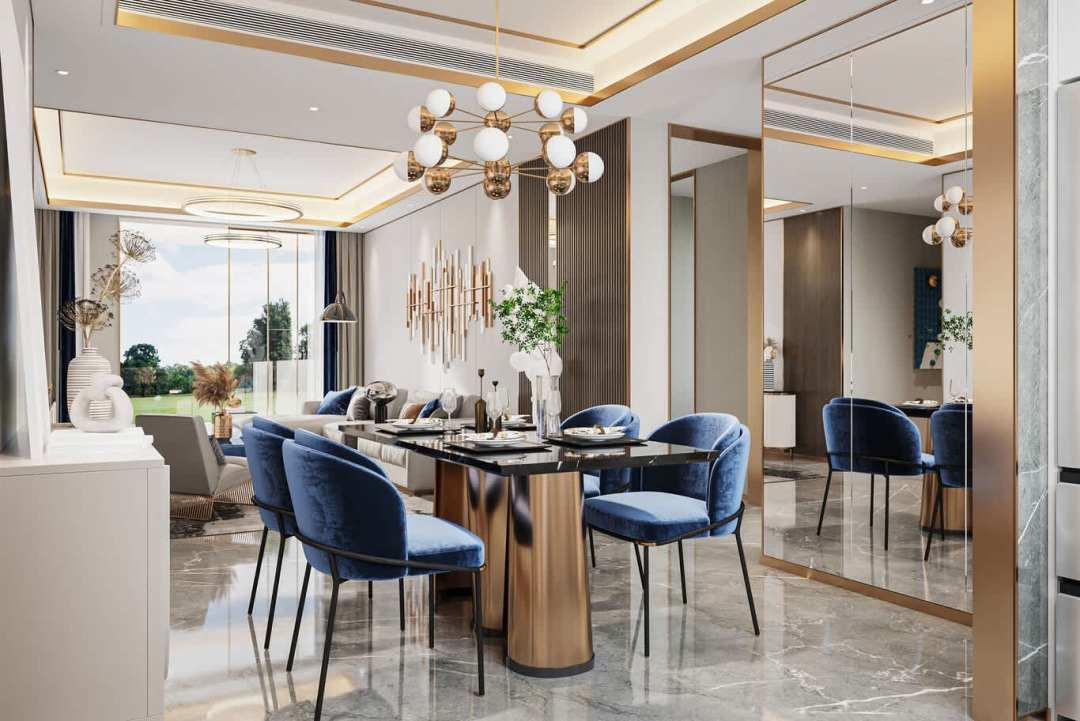
Ask a designer in Abu Dhabi and one in Manama to specify a formal dining room for the same family, and two entirely different rooms come back. The table lengths differ. The seating counts differ. The relationship to the kitchen, to the majlis, to the family's private wing — each one shifts by a few metres and a few degrees of formality, and those small shifts add up to rooms that feel unmistakably of their city.
Our studio works across all five capitals, and the pattern has become one of the more interesting things we notice on a first site visit. Gulf hospitality shares a foundation everywhere: generosity, ceremony, the assumption that guests will arrive and be fed properly. What varies is the choreography around that foundation, and the choreography is what the furniture has to serve. Our approach to dining room interior design begins with reading that choreography before a single dimension is fixed.
The one thing every Gulf capital agrees on
Seating count leads the brief everywhere in the region, and it usually lands higher than newcomers expect.
A European formal dining room is specified for eight, occasionally ten. A Gulf formal dining room begins at twelve and frequently reaches sixteen or twenty, because the room exists for extended family, for Ramadan iftar, for the evening when a business relationship becomes a personal one. Our designers plan the table first, then the circulation around it — 110 centimetres clear behind each chair so a served guest is passed comfortably — and only afterward do we consider the walls.
Serving infrastructure follows the same logic. A concealed pantry adjoining the room, generous enough for plated courses to be assembled away from the guests, appears in almost every serious Gulf brief. Service that arrives silently and finished is the regional standard.
Abu Dhabi: restraint carried at scale
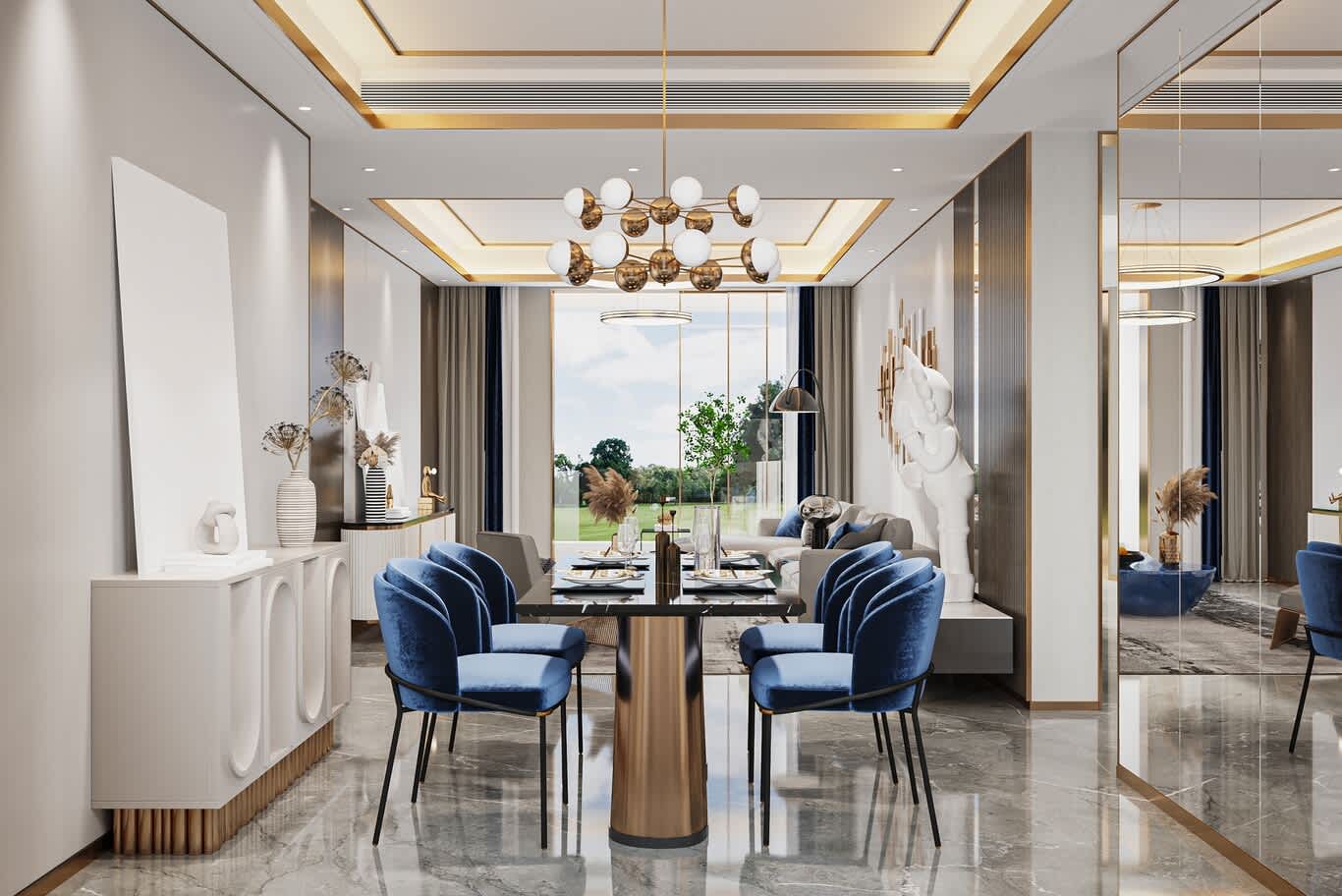
Abu Dhabi dining rooms hold a particular composure. The city's taste runs formal and quiet — heavy joinery, deep colour, a preference for materials that read as substantial rather than showy.
The typical arrangement gives the formal dining room its own enclosed volume, separated from the family sitting area by a solid wall and a proper door. The table is long and rectangular, often in a dark timber with a hand-rubbed finish, and the chairs are upholstered fully to the floor. Ceiling treatment carries much of the design weight: a coffered plaster field or a shallow dome above the table, lit indirectly, with a single substantial chandelier positioned at the centre.
Emirati family homes in the capital tend to run two dining arrangements in parallel — one formal, one for daily family use — and our teams handling interior design in Abu Dhabi plan both from the outset, since retrofitting the second one later rarely produces a satisfying result.
Riyadh: ceremony, symmetry and the Najdi line
Riyadh asks for the most formal room of the five, and it asks with confidence.
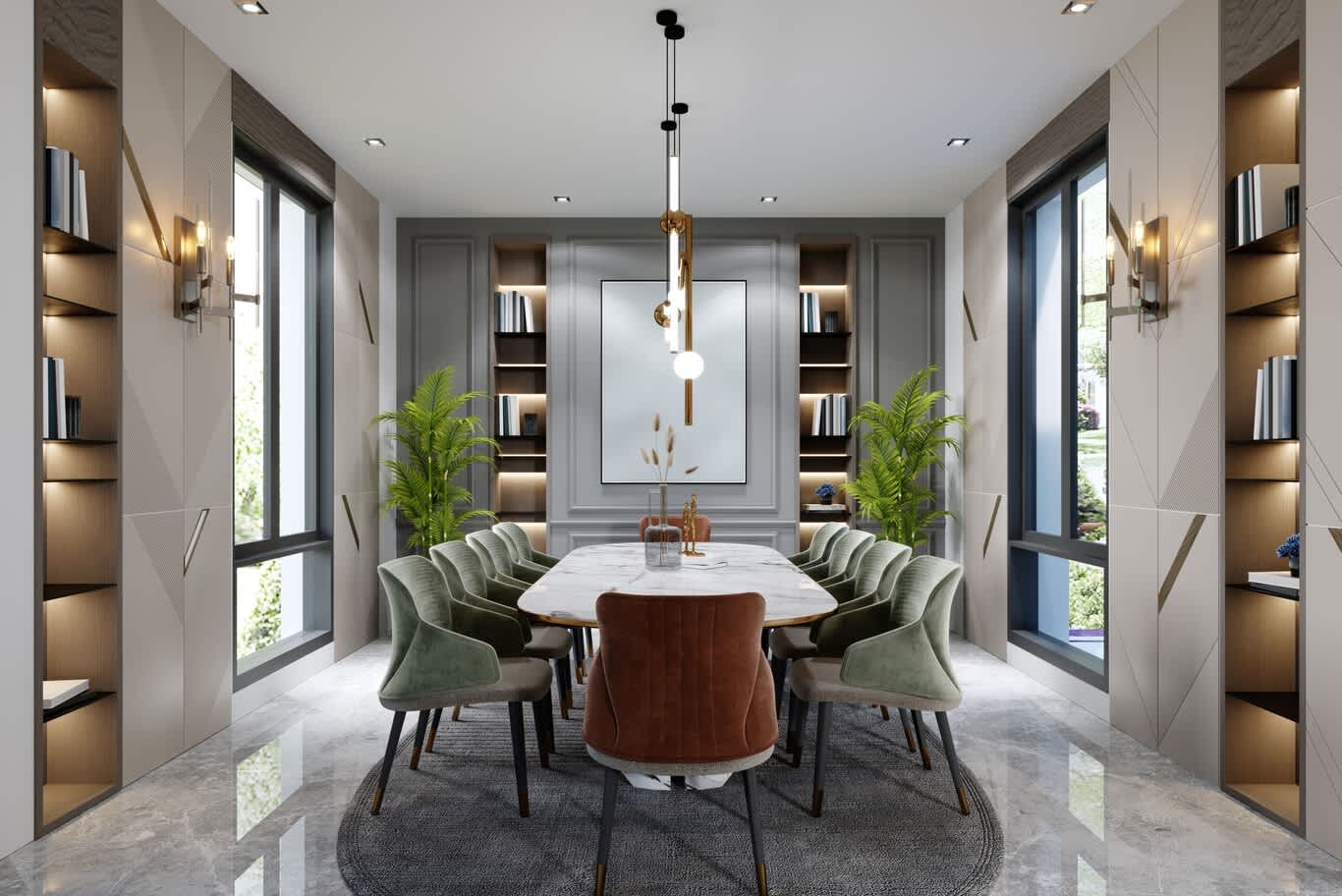
Saudi entertaining separates men's and women's hospitality, so a Riyadh villa frequently contains two complete formal dining rooms, each attached to its own majlis and its own entrance. Each room is planned for full ceremony: a long table seating sixteen or more, symmetrical arrangement about a central axis, matched consoles or buffets on the flanking walls, and a chandelier scaled generously to the ceiling height.
The current Riyadh register draws heavily on the Najdi and Salmani revival — triangular geometry cut into plaster, warm limestone tones, palm-timber ceilings reinterpreted in contemporary joinery. The result reads as recognisably Saudi while remaining thoroughly modern, and it has changed the material palette our interior design company in Riyadh specifies most often. Gilding has receded in favour of stone, bronze and carved plaster.
Long-table lighting deserves a technical note here. A sixteen-seat table needs two or three fittings rather than one, spaced to give every seat even light, and each one dimmable to a warm evening level.
Doha: gallery formality and imported precision
Doha dining rooms carry a different confidence — cooler, more international, closely tied to the city's appetite for contemporary art and architecture.
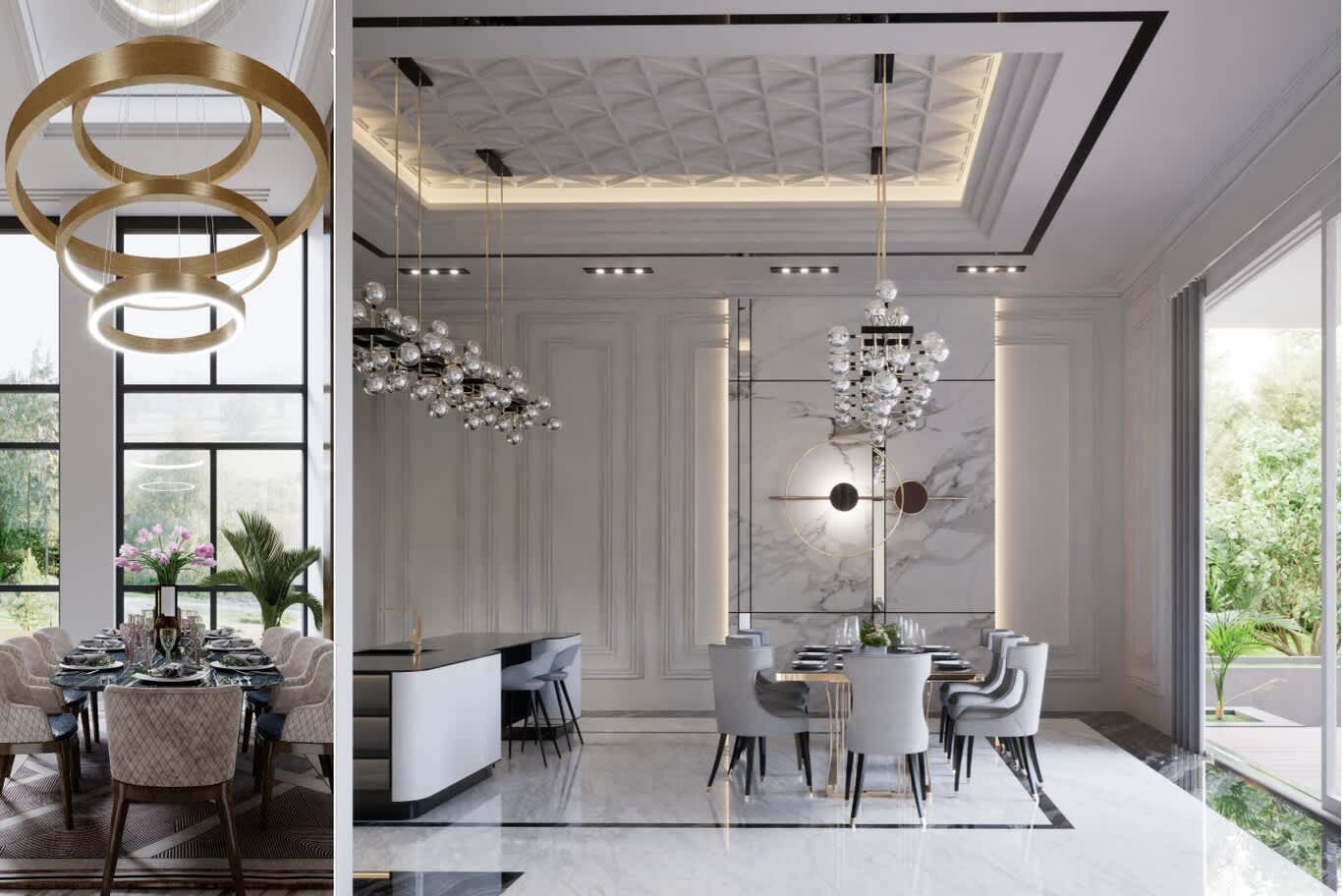
The characteristic Doha room treats itself as a gallery. Pale stone or large-format porcelain floors, walls held quiet in warm neutrals to serve as a backdrop for a significant artwork, and a table that reads as a sculptural object: a single slab of marble on a bronze base, or a solid timber plank finished to show its grain. Chairs are frequently a designer piece rather than a bespoke commission, and the room is planned around them.
Ceiling height is the resource Doha villas hold in abundance, and our interior design and decor in Doha work uses it deliberately — tall doors, full-height glazing onto a courtyard, and a light fitting with real vertical presence rather than a shallow horizontal one.
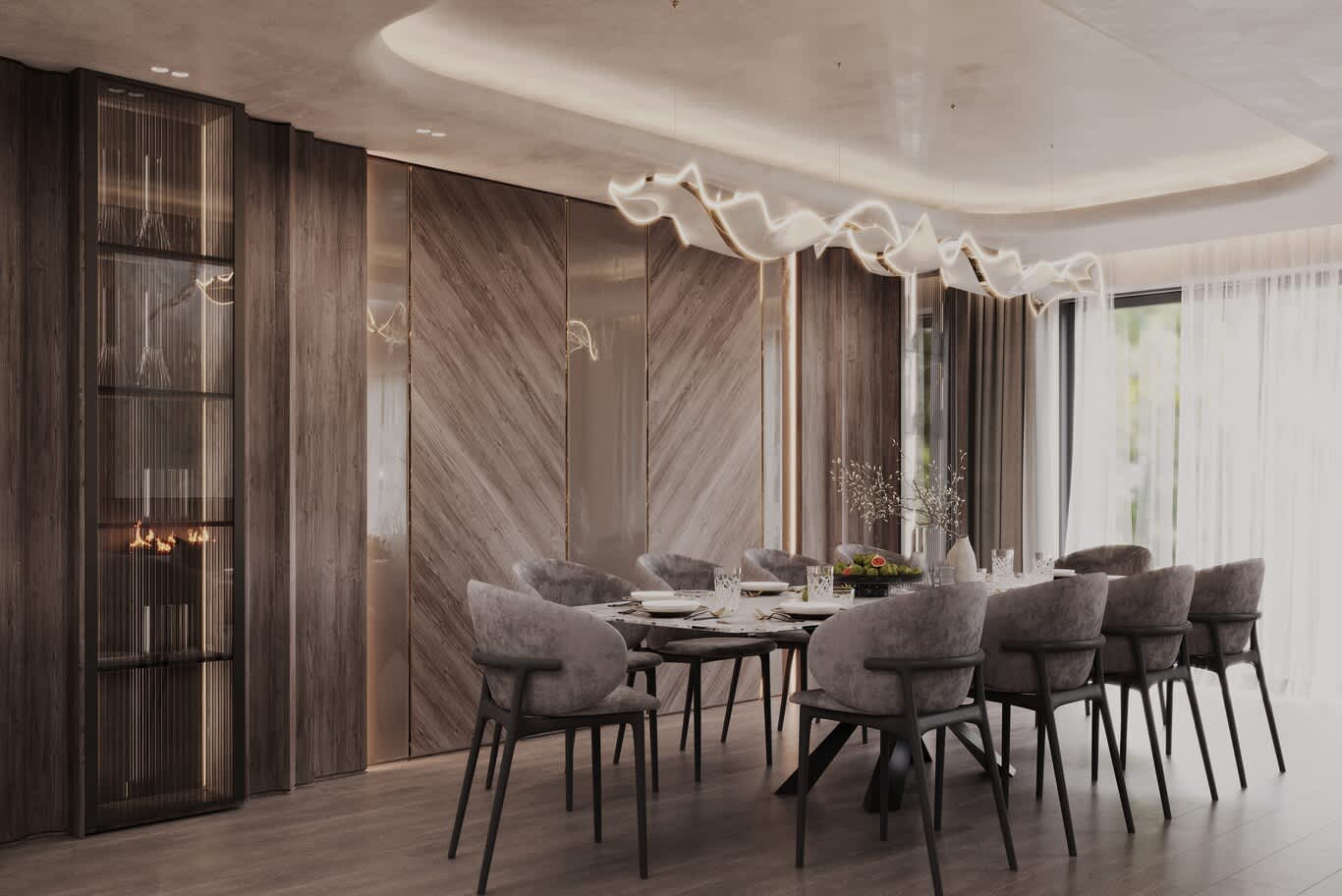
Kuwait City: the classical register, held with conviction
Kuwait retains an affection for the classical European dining room that the other capitals have partly moved past, and it holds that position with real conviction rather than nostalgia.
The Kuwait City formal room typically contains a carved timber table with turned or cabriole legs, chairs upholstered in silk or damask, a crystal chandelier of genuine weight, and full-height panelled joinery running around the room. Mirrors appear frequently, positioned to extend the table's apparent length. Colour runs warmer than in Abu Dhabi — creams, soft golds, deep reds in the upholstery.
Villa plots in Salmiya and the surrounding districts often place the formal dining room on the ground floor beside the main reception, connected by wide double doors that open for larger gatherings. Our luxury interior design services in Kuwait frequently begin with resolving that connection, since the two rooms have to read as one composition when the doors stand open.
For clients drawn to the same register, the principles behind assembling a properly classical dining arrangement apply directly here — proportion, symmetry and material weight doing the work that ornament alone attempts.
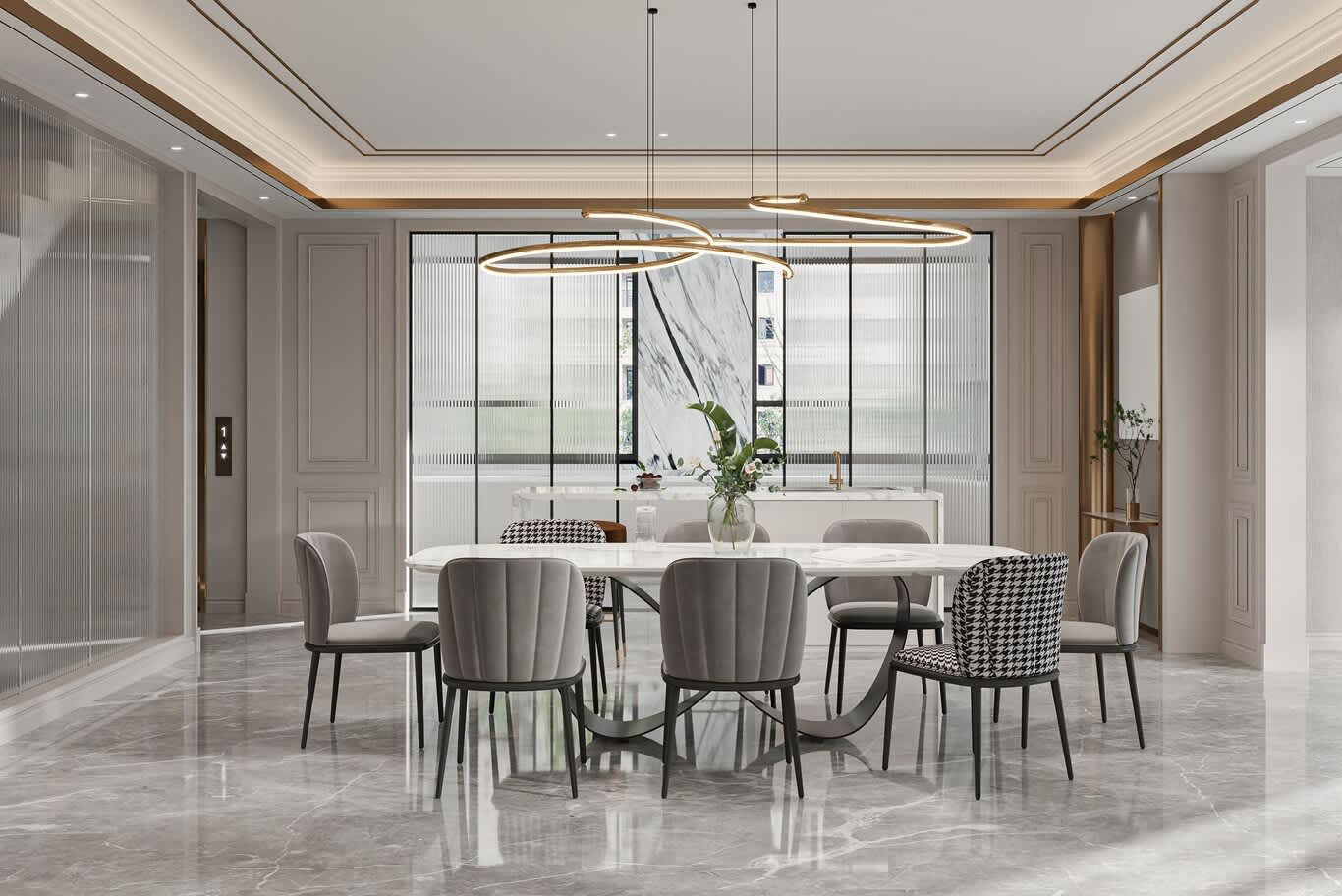
Manama: island light and a lighter formality
Bahrain runs the most relaxed of the five, and the reason sits partly in the geography.
Manama villas and the island's coastal developments receive softer, more reflected light than the inland capitals, and the interiors respond with paler palettes, lighter timbers and a greater willingness to open the dining room to a terrace or garden. Formality remains, though it arrives through good tableware and considered lighting rather than through heavy architecture.
The typical Manama formal room seats twelve, sits adjacent to the living area with a partial rather than solid separation, and uses glazing generously. Our interior design services in Bahrain frequently pair a pale stone floor with a warm timber table, which keeps the room grounded while the surrounding surfaces stay light.
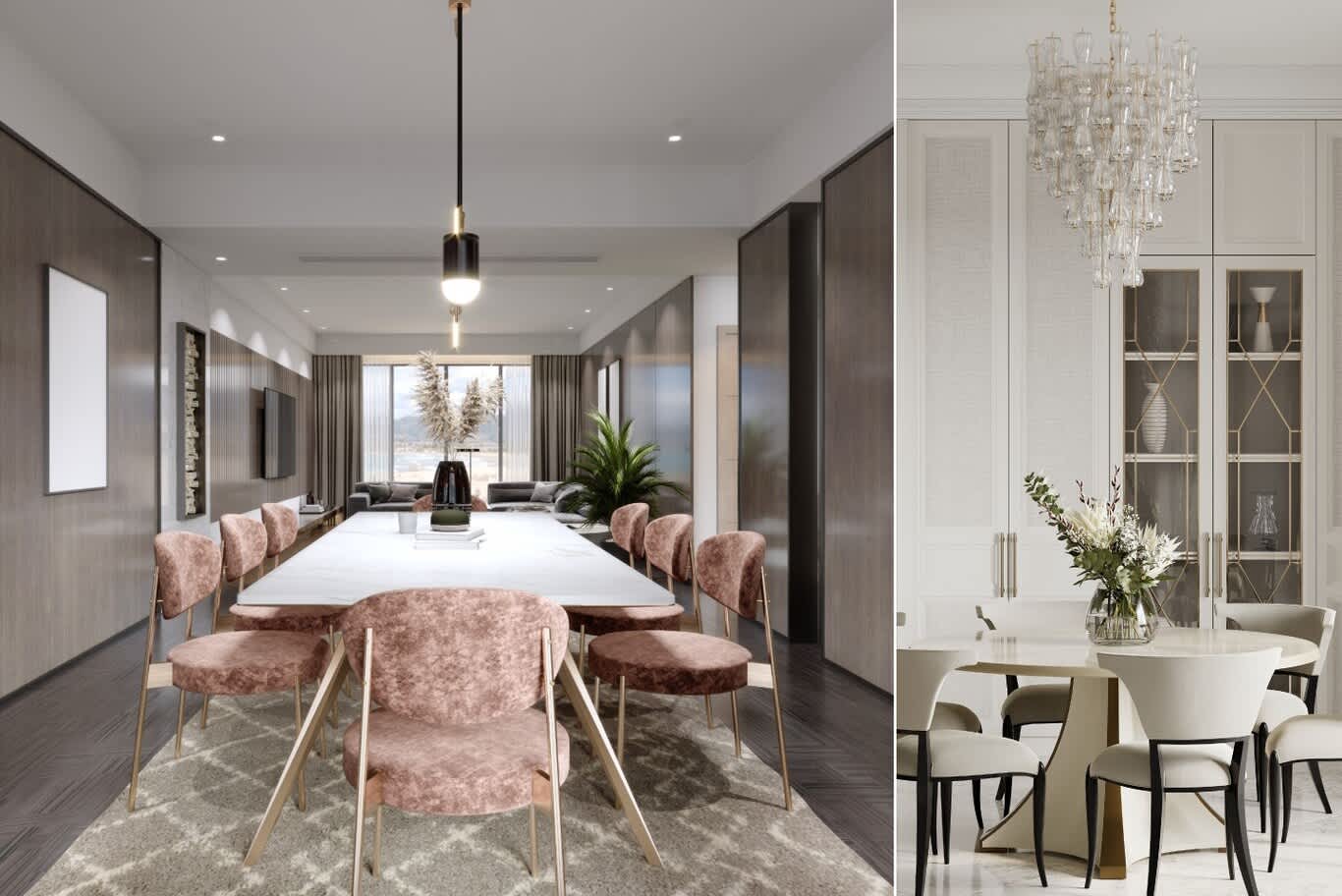
The table is the decision everything else follows
Across all five capitals, the table sets the terms.
Rectangular tables suit ceremony and long rooms, and they dominate Riyadh and Abu Dhabi briefs. Oval tables soften the geometry and improve sightlines across a wide table, which appeals in Doha and Manama. Round tables work beautifully up to about eight seats and lose their advantage past that point.
Material choice carries the room's register: dark walnut and mahogany read as formal and traditional, pale oak and ash read as contemporary, and a single marble slab reads as architectural. Our surveys of contemporary dining arrangements cover the modern end of that range in detail, and the choices there translate across every capital in the region.
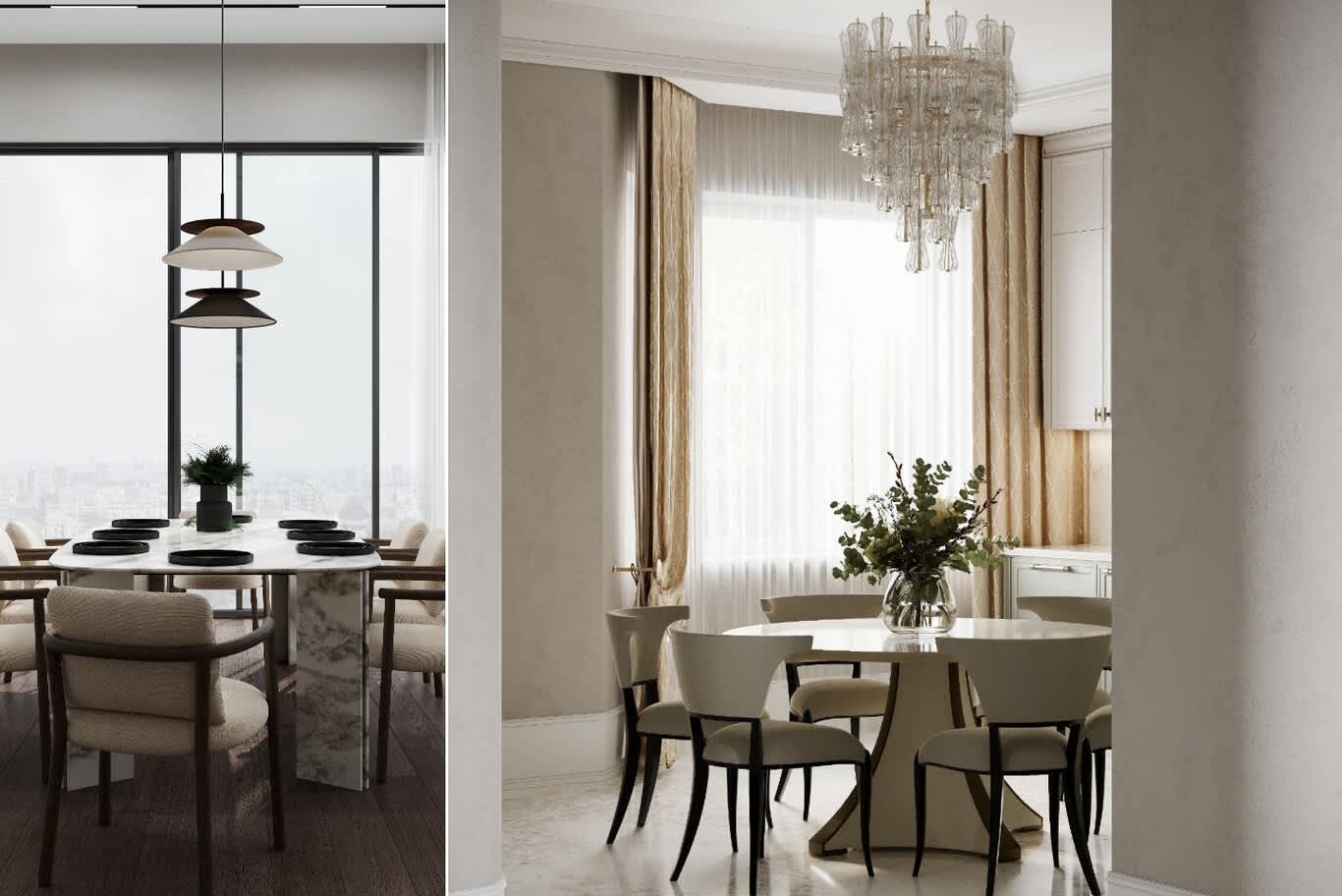
Lighting, and the mistake we correct most often
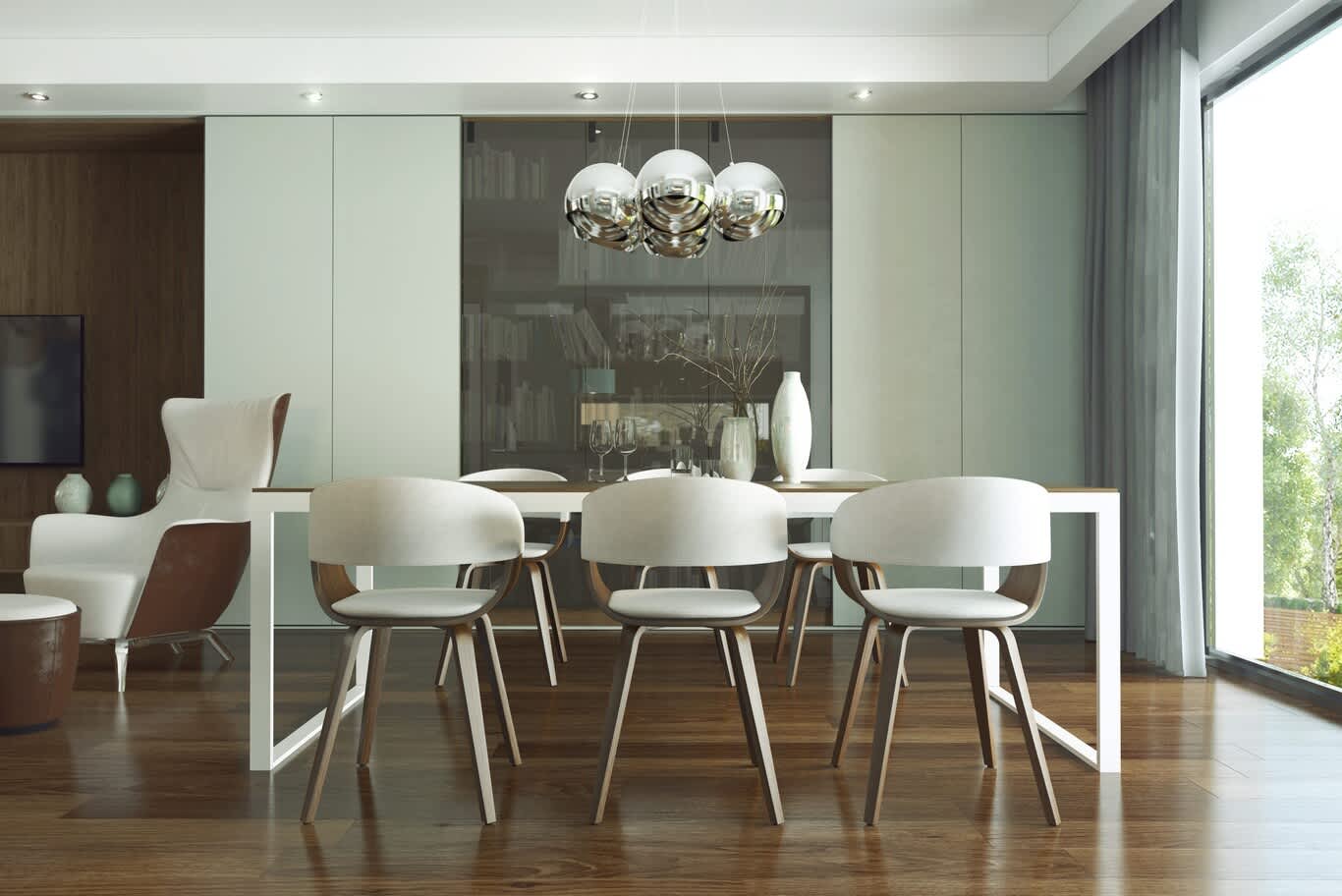
The single most common error we find in existing Gulf dining rooms concerns the chandelier: hung too high, sized too small, and wired to a switch rather than a dimmer.
The working rules are straightforward. A chandelier hangs 75 to 85 centimetres above the tabletop. Its diameter measures roughly half to two-thirds the table width. Every fitting in the room runs on a dimmer, warmed to 2700K, so the evening light can drop as the meal progresses. Wall lighting supplements the centre — sconces flanking a buffet, or a picture light above the room's main artwork — because a table lit from directly overhead alone flattens every face around it.
The relationship to the majlis governs the plan
In four of the five capitals, the formal dining room exists in direct service of the majlis, and the connection between them determines the floor plan.
Guests receive coffee and dates in the majlis, move to the dining room for the meal, then return. The route between the two spaces should stay short, private from the family areas, and free of any need to pass through a kitchen or service corridor. Riyadh and Abu Dhabi plans handle the sequence most rigorously, frequently duplicating it entirely for men's and women's hospitality.
Doha and Manama treat the connection more loosely, with the reception and dining areas often reading as one flowing volume divided by level changes and joinery rather than by walls.
Style choices that travel well across the region
Certain directions perform reliably in every capital, and knowing them shortens the early conversation considerably.
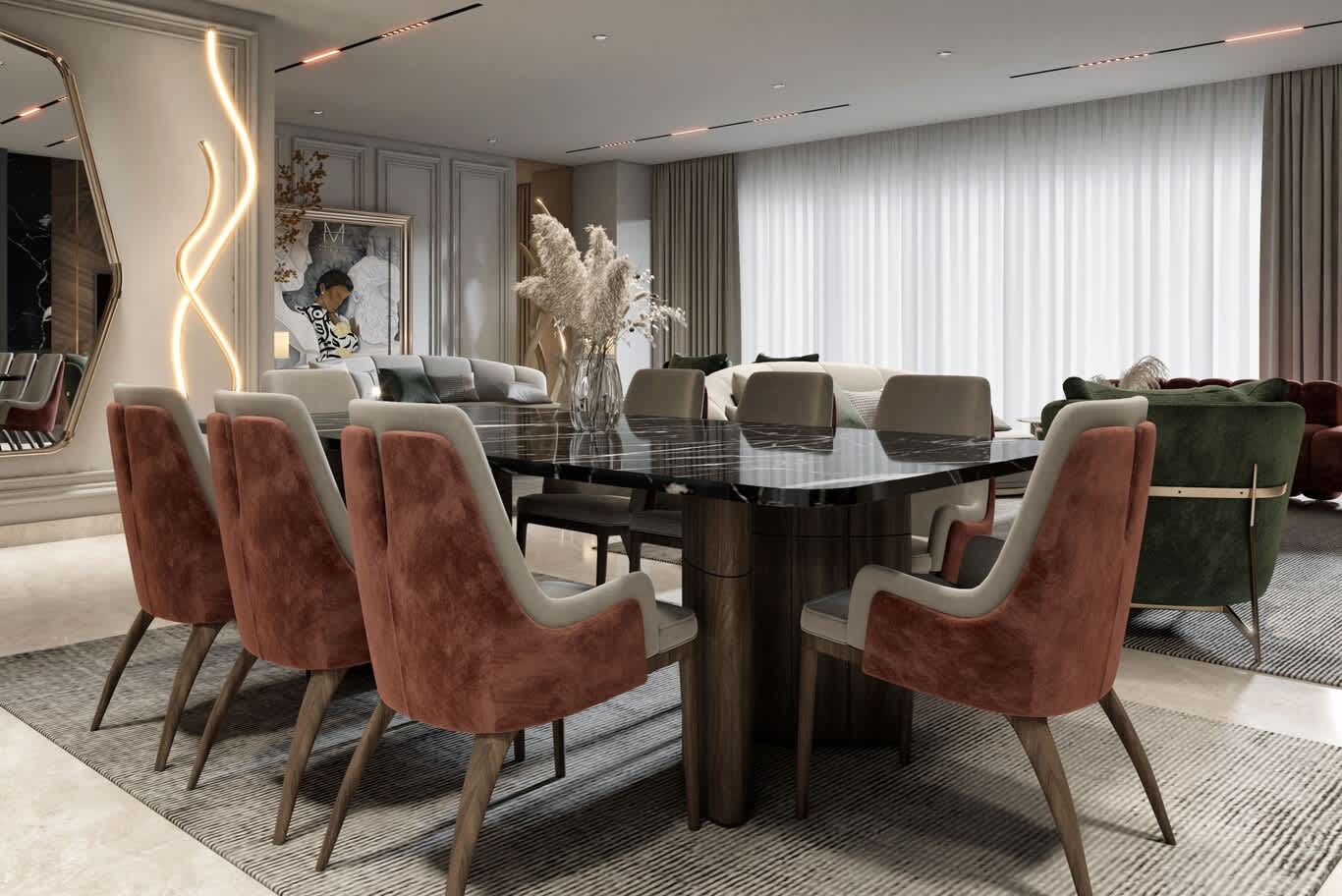
Modern classic remains the safest register for a formal Gulf dining room: panelled walls, a substantial table, restrained mouldings and contemporary lighting. Contemporary Arabic — geometric plaster, mashrabiya screening, warm stone — has grown strongly and satisfies clients seeking something regionally rooted. The mid-century direction appeals to younger clients across Doha and Manama particularly, and the warmth of mid-century dining pieces sits comfortably alongside regional materials.
The full English register, with its heavy panelling and deep colour, retains a following in Kuwait and Abu Dhabi, and the elements that define an English dining room adapt well to Gulf proportions when the scale is adjusted upward.
The rooms our designers return to
Reviewing our own work across the region, the successful formal dining rooms share three qualities regardless of city.
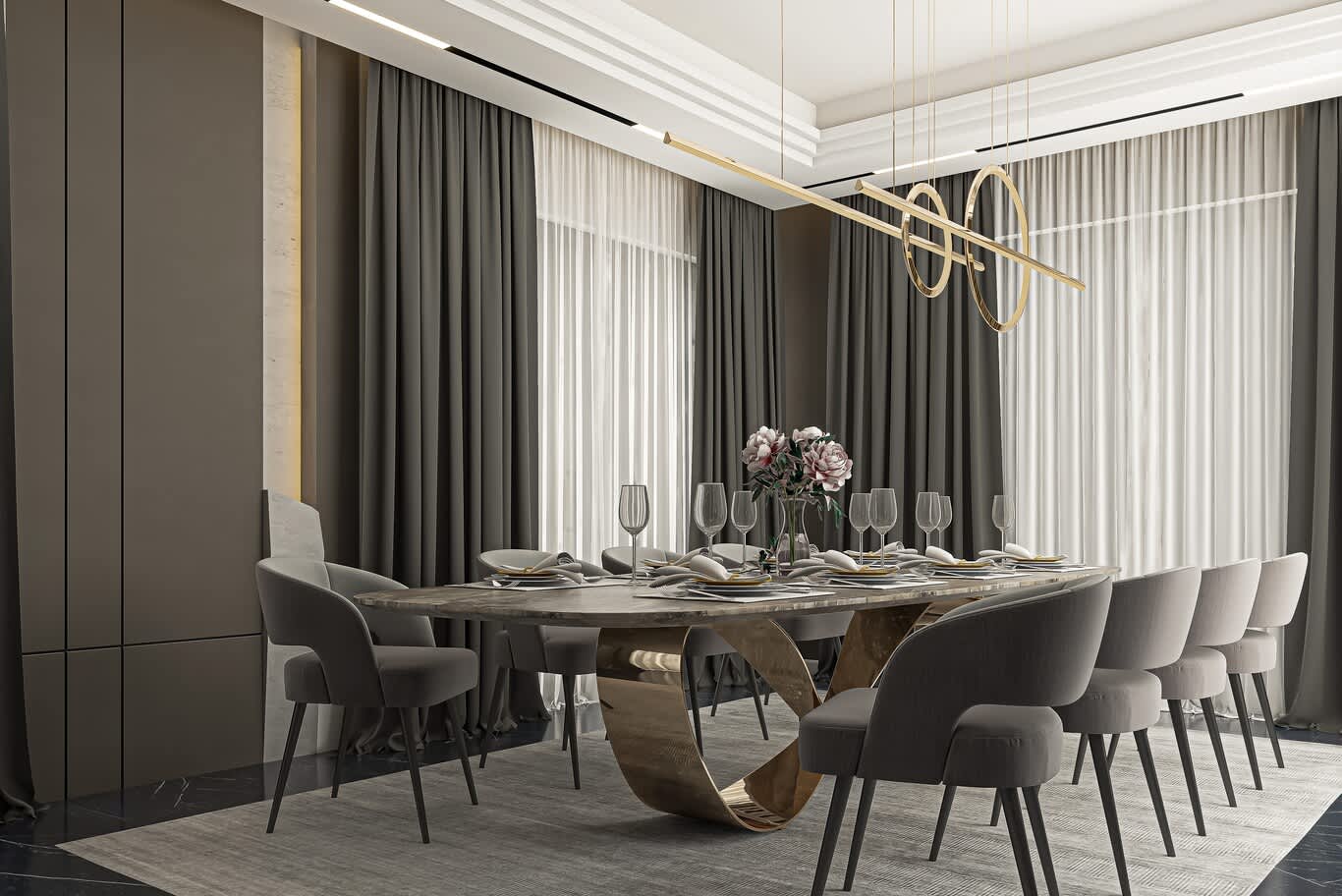
They seat more people than the client initially requested. They separate service from ceremony completely, so plates arrive finished and glasses are refilled without a sound. And they hold one element of genuine substance — a stone table, a commissioned chandelier, a single significant artwork — rather than distributing the budget evenly across many lesser pieces. Browsing our dining room designs in Dubai shows the principle applied across a range of registers and budgets.
Design your formal dining room with Algedra Interior Design
Our designers, architects and fit-out teams deliver formal dining rooms across Abu Dhabi, Riyadh, Doha, Kuwait City and Manama — planned around how your family actually hosts, detailed to the millimetre, and lit for the evening rather than for the photograph. Speak with a design consultant about your project.
FREE CONSULTATION
TELL US ABOUT YOUR PROJECT
WE WOULD LOVE TO HEAR FROM YOU
Feel free to reach us via this contact form and one of our Design Consultants will get back to you at earliest.
OUR BRANCHES
UAE - DUBAI
+971 52 8111106 | hello@algedra.ae
TURKEY - ISTANBUL
+90 533 701 89 71 | info@algedra.com.tr
Leading Interior Design and Decor Company in Dubai and Abu Dhabi.
Algedra is a reputable, internationally recognized, and one of the most successful interior design companies in Dubai, and Abu Dhabi, which specializes in delivering interior design, architectural, and creative space planning projects throughout GCC, MENA, North Africa, Turkey and Russia.
Algedra is a one-stop solution for all your residential interior design and fit-out needs. We have successfully completed numerous villa interior and exterior design projects, where we integrated quality and originality to deliver interior masterpieces.
ALGEDRA, Interior Design Company in Dubai, is specialized in providing elegant and stunning interior design services for both residential and commercial projects. We turn our clients' dreams into reality, trans- lating their tastes and needs into beautiful and functional spaces.
Since the day we were founded, we have designed and built many branded residences, resorts, hotels, multi-purpose social spaces, and palace designs with different functions and concepts by following the ever-changing design trends over the world.
A key element of our work is a fusion of different cultures and designs, combining Greek, Italian, Eastern and Western influences with British innovation.
As a team of highly qualified interior designers and engineers, Algedra offers complete architectural services from mall design to corporate office design as well as the exterior design of any project based on customers' needs.
Our customers include leading names, we have completed diverse projects in hospitality, landscape, commercial, and residential designs. These projects contain cafes, restaurants, gym, villas, family sitting rooms, bedrooms, kitchens; all showcasing our company's exquisite details and high-end designs.
Residential Interior Design in Dubai
Algedra's interior designers and architects have an important mission: building villas, houses, apartments, condos, and anywhere else where you reside that will fulfill your needs while being structurally safe and sound.
Architectural Designs
There are so many details that go into designing an architectural design project. Every step of the project has been carefully considered for safety and daily comfort by Algedra's experts.
Commercial Design
Conceptualizing spaces for business, to elevate style, and to increase functionality to help enhance the bottom line of a company is vital, as well as employee comfort and interior design too. Our commercial interior designers translate client's concept in ways that are efficient, attractive and provide professional workspaces.
Fit-out Projects
Algedra Interiors delivering high-quality tailored fit-out projects that transform your villas, palaces and commercial spaces.
We're a passionate team of interior designers, architects and engineers. Every day we help clients to solve interior design problems and create engaging spaces!
Wherever you are in Kuwait, Saudi Arabia, Azerbaijan, Qatar, Morocco, Algeria, Tunisia, Libya, Egypt; don't hesitate, contact us to find out more about why we are one of the best interior design companies in Dubai and Abu Dhabi!