Home Page | Blog | How to Choose a Fit-Out Company in Dubai: An Owner's Guide to Licences, Contracts and Craft
How to Choose a Fit-Out Company in Dubai: An Owner's Guide to Licences, Contracts and Craft
9/21/2026
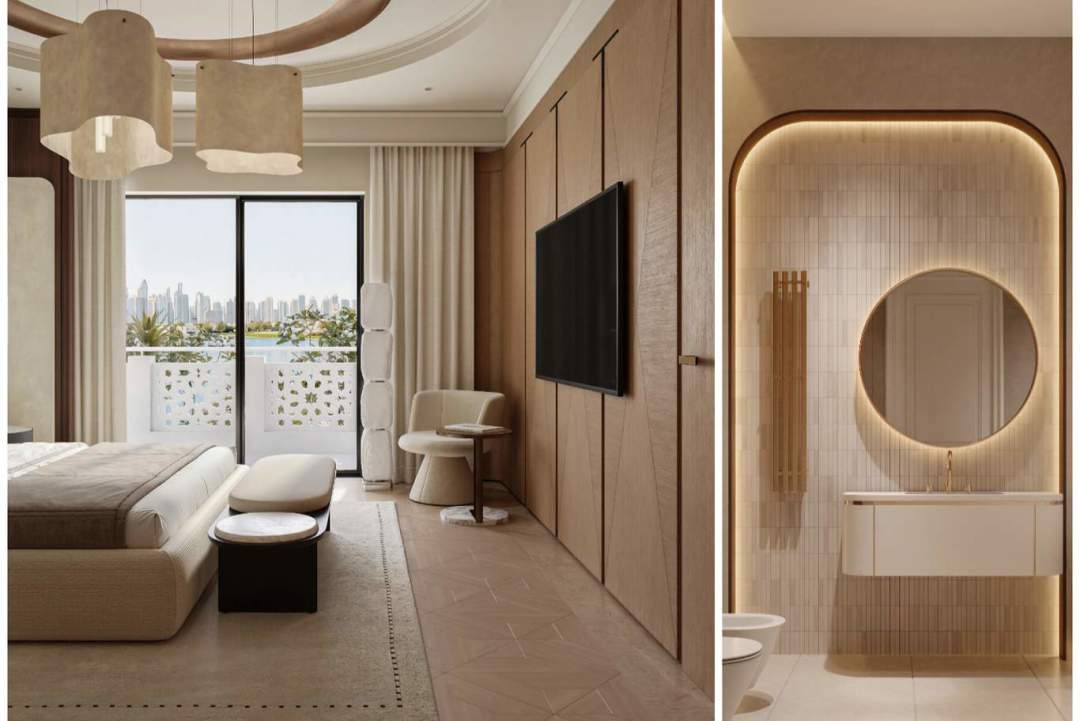
The drawings are signed, the marble is chosen and the mood boards are approved, so now someone has to build it. In Dubai that means a stripped villa ringing with core drills, a tower apartment with a lift booked for six in the morning, and a crew of joiners, stone masons, electricians and gypsum craftsmen who will spend the next several months inside your home. The company you appoint for that stage decides whether the design on paper becomes the room you live in, or a close approximation of it.
Our engineers and site teams carry out every project we take on in-house, from penthouse renovations in Downtown to full palace build-outs in MBR City. That work has shown us exactly where fit-out projects succeed and where they come apart. The difference rarely lies in the price or the portfolio. It sits in licences, classifications, contract clauses, site discipline and the skill of the craftsmen, which are the parts most owners overlook. Whether you are comparing a build-only contractor or a design-and-build fit-out company in Dubai, the questions below will show you which one can carry the risk.
The guide follows the order in which those questions arise. It starts with the legal checks that come before any quote, moves through tendering and the contract, and then follows the project onto site, through handover and into the year after.
Design Licence or Contracting Licence: What the Company Is Allowed to Build
Every company in Dubai operates under a trade licence that lists its permitted activities, and the line between designing and building is written into those activities. An interior design consultancy licence covers concepts, drawings and specifications. Work on site (demolition, partitions, ceilings, MEP modifications, wet areas, joinery installation) calls for a contracting licence with the appropriate activities attached.
The distinction matters more than most owners realise. A firm that builds while holding only a design licence can leave its client with contracts that are hard to enforce and permit applications that stall, because the authorities expect a properly licensed contractor on every fit-out submission. If something goes wrong on site, the owner may discover that the company responsible was operating outside its licence from the first day.
The check takes about a minute. Ask for a copy of the trade licence, read the activity lines printed on it, and confirm the expiry date. A company offering design and build should hold both design and contracting activities, or clearly name the licensed contractor that will carry out the works under its supervision. The legal name on the licence should also match the name on the quotation, the contract and the bank account receiving your payments.
The Contractor Register: The Owner's Duty to Check
Dubai now runs a unified Contractor Register managed by Dubai Municipality and linked to the Invest in Dubai platform. Under Law No. 7, the emirate's law regulating contracting activities, every contractor working in Dubai must be registered and classified, including those operating in free zones and the DIFC. Classification reflects each company's financial, technical and administrative capacity, and a contractor may only take on work within the category assigned to it.
The law places a clear duty on the client too. Owners are prohibited from engaging contractors who are unregistered or unclassified, so checking a company's status now forms part of the owner's own compliance, as well as sensible due diligence. Technical staff must hold Professional Competency Certificates, and subcontracting requires prior approval. Penalties for breaches start at AED 1,000 and can reach AED 100,000, doubling to AED 200,000 for repeat violations. More serious cases can lead to suspension, downgraded classification or removal from the register.
In practice the steps are simple. Ask each shortlisted company for its registration details and classification category, and confirm that the category covers the size and type of your project. Ask which engineers and supervisors on your project hold Professional Competency Certificates. A company that answers immediately, with documents, is showing the administrative discipline your project will depend on. Existing contractors were given a transition period to comply, so any hesitation on these questions deserves a follow-up.
In-House Teams or Subcontractors: Who Will Actually Build Your Home
Most fit-out companies in Dubai subcontract at least part of the work. Some run their own teams for joinery, gypsum and finishes and bring in specialists for MEP. Others hold the contract and pass almost everything to subcontractors. Either model can work, but owners should know exactly which one they are buying, because it shapes quality, programme and accountability.
The questions worth asking are direct:
● Which trades does the company employ on its own payroll?
● Does it operate its own joinery workshop?
● Who are its regular subcontractors for MEP, stone and specialist finishes, and how long has it worked with them?
Under Dubai's contracting law, subcontractors must be approved before they work on a project, so a well-run company can name every one of them in advance and show that each is registered.
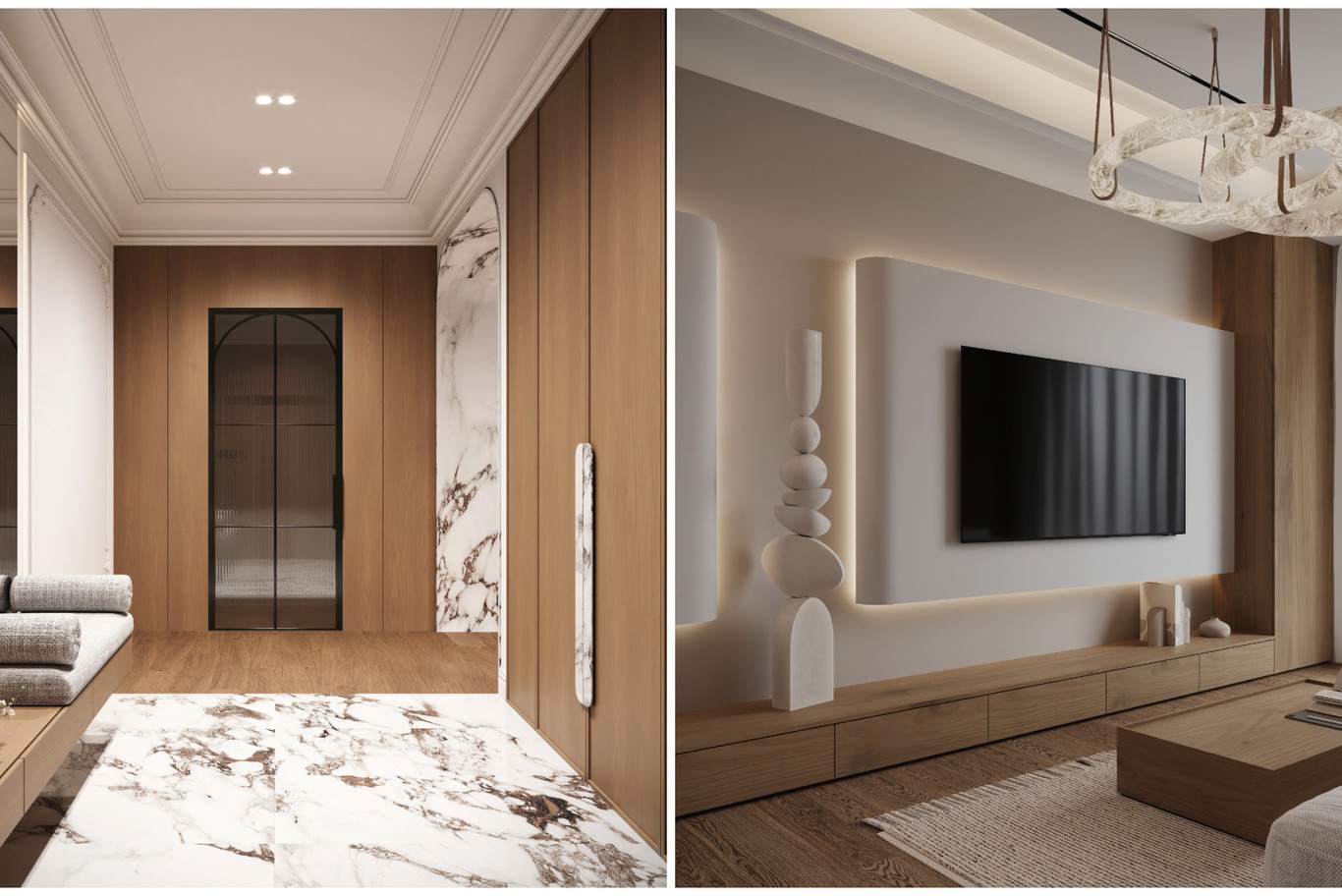
In-house delivery earns its value as complexity rises. Case in point: a contemporary villa we designed in Dubai Hills Estate called for 300 hours of design development by three lead designers. A dedicated fit-out team of three engineers and ten craftsmen then delivered the home in four months, ahead of schedule. With designers, engineers and craftsmen inside one organisation, every question on site went straight to the person who drew the detail, and the precise gypsum mouldings of the neo-classic scheme came out exactly as drawn.
Ask each company for the site team it will assign to your project, by name and trade, and for the number of other projects those people are running at the same time. The answers tell you whether your home will receive dedicated attention or a share of a crowded schedule.
Approval Packages: DM, Trakhees, DDA, Civil Defence and DEWA
Every fit-out in Dubai passes through at least one approval route, and a capable contractor manages the full package on your behalf.
● Dubai Municipality governs most mainland villas and apartments, with permits handled through the Build in Dubai platform.
● Trakhees covers Palm Jumeirah and several freehold communities, and reviews submissions through both its civil engineering and its environment, health and safety divisions.
● The Dubai Development Authority oversees free zone districts such as Dubai Design District, Dubai Internet City and Dubai Media City.
Specialist approvals sit alongside the main permit. Dubai Civil Defence reviews fire safety, including sprinkler relocation, fire-rated doors, escape routes and alarm modifications. DEWA approves changes to electrical loads and water connections. Master communities and residential towers issue their own NOCs, set rules on working hours and lift bookings, and ask for insurance certificates before a contractor can start. Commercial projects add further layers: a restaurant fit-out needs food safety and Civil Defence sign-off, and mall locations bring landlord design criteria and night-time working windows.
Timelines depend on scope and completeness. On the villa projects we manage, an NOC for interior-only work typically takes two to four weeks, and three to six weeks when exterior modifications are involved. Incomplete documentation causes most delays: missing structural calculations, unsigned MEP drawings, fire details left off the set, or a contractor licence that fails to cover the scope described.
Ask each company which authorities it has submitted to recently, how long those approvals took, and who prepares and signs the drawings. A company with a strong approvals record can describe each portal, drawing format and inspection stage from memory.

Design and Build or Build Only: How Complete the Drawings Must Be
Owners can buy fit-out in two broad ways, and the choice decides what the contractor is pricing.
Build only means the owner appoints a designer separately, completes a full set of technical drawings and specifications, and then tenders those documents to contractors. The approach works well when the design package is thorough. That means dimensioned plans, reflected ceiling plans, joinery elevations and sections, stone layouts, MEP coordination drawings and a complete finishes schedule. When drawings are incomplete, each contractor fills the gaps with its own assumptions, the quotes become impossible to compare, and the gaps return later as variations.
Design and build places design and construction under one contract and one team. Responsibility for coordination stays with a single company, and the drawings evolve with the builder's input, so buildability questions are solved at the desk before they cost money on site. The owner gains one point of contact and one programme, and avoids disputes between designer and contractor over who caused a problem.
Whichever route you choose, the quality of the design stage sets the ceiling for everything that follows. Owners still selecting the design side of their project will find the right questions in our twelve tips for hiring a design firm in Dubai, from approval routes to climate-ready specification.
Reading a BOQ and Levelling Three Quotes
A fit-out quotation is only as reliable as the scope behind it. The strongest quotes arrive as an itemised bill of quantities (BOQ), listing every element of the work with its measured quantity, unit rate and specification. A lump-sum figure on a single page gives owners nothing to compare and nothing to hold the contractor to.
Levelling three BOQs side by side reveals the real differences between them. Work through them in this order:
Exclusions. These are the items a contractor has left out, such as authority fees, site protection, temporary power, debris removal, MEP testing and commissioning, or the final deep clean. A quote can look cheaper simply because it prices less work.
Provisional sums and prime cost allowances. These are placeholder figures for items still undecided, such as lighting fixtures, sanitaryware or stone. An allowance of AED 150 per square metre for marble in one quote and AED 600 in another describes two very different floors.
Brand and model lists. A quote that names a specific German hinge system, a particular sanitaryware range and an identified stone origin is committing to a standard. A quote that says "equivalent" leaves the choice to the contractor.
Quantities, line by line. When one contractor measures 420 square metres of gypsum ceiling and another measures 350, one of them has misread the drawings, and it is better to find out before signing.
A contractor's willingness to walk you through its BOQ is useful evidence in itself. Companies confident in their pricing explain each rate, show how they measured quantities, and flag the risks they see in the drawings. Those that resist line-by-line questions are often protecting margins built into vague descriptions.
The Contract: Milestones, Retention, Bonds and Variations
A strong fit-out contract answers the questions you will have in month six, and several clauses deserve particular attention.
Milestone payments tie each invoice to a defined stage of completed work: demolition complete, first-fix MEP complete, ceilings and partitions complete, joinery installed, practical completion. Milestones protect owners far better than payments by calendar date, because the money follows progress on site.
Retention is a share of each payment the owner holds back as security. Market practice in the UAE typically retains 10 per cent. Half is released at practical completion, and the balance at the end of the defects liability period, usually a year after handover. Retention gives the contractor a clear reason to return and resolve defects promptly.
Performance bonds and advance payment guarantees protect larger contracts. A performance bond, usually issued by a bank, covers the owner if the contractor fails to complete. Where an owner pays an advance to fund early procurement, an advance payment guarantee means that money can be recovered if the work stalls.
Variations need a written procedure. Every change to scope, specification or quantity should be priced and approved in writing before work begins, with its effect on the programme stated.
The contract should also define the programme with milestone dates, the materials specification, the defects liability period with response times, and the conditions for handover. Owners working on villa projects can see how scope, budget and timeline fit together in our complete villa fit-out guide, from design development through to the snag inspection.

Insurance: All-Risk, Liability and Workers' Compensation
Insurance protects everyone involved in a fit-out, and a professional contractor produces its certificates promptly on request.
Contractor's all-risk (CAR) insurance covers the works themselves during construction against fire, water, theft and accidental damage to materials and installations on site. On a luxury project, where a single slab of book-matched marble or a run of lacquered joinery can carry substantial value, CAR cover is essential.
Third-party liability insurance covers damage to neighbouring property and injury to people outside the contractor's workforce. In a tower, a burst pipe during first-fix plumbing can damage the apartment below. In a villa community, a delivery truck can damage a neighbour's boundary wall.
Workers' compensation covers the contractor's own employees if they are injured on site, as UAE labour regulations require.
Most tower management offices and master communities ask for copies of these certificates before issuing a work permit. Ask each company for current certificates, check that the cover amounts suit your project's value, and confirm that the policies remain valid for the full duration of the works.

Site Management: Supervision, Safety and Working Hours
Once work begins, quality depends on the people running the site every day. A strong fit-out company assigns a named project manager and a site engineer or foreman who is on site for most of each working day. They coordinate the trades, check setting-out against the drawings, keep the site safe and report progress to the owner.
Health and safety standards say a great deal about a contractor. Look for protected finished surfaces, fire extinguishers on every floor, clear walkways, proper storage for materials, and workers wearing the correct protective equipment. A clean, organised site almost always produces cleaner, better-organised work.
Dubai's working calendar shapes every programme. From mid-June to mid-September, the midday break stops exposed outdoor work in the early afternoon, which slows exterior works, terraces and landscaping. Residential towers typically limit noisy work such as demolition, chasing and drilling to set weekday hours. Ramadan shortens the working day across the trades. A contractor with deep local experience builds all of these into the programme from the start.
Reporting completes the picture. Weekly progress reports with photographs, an updated programme and a list of pending decisions keep owners informed between site visits. For owners who want to be on site themselves, travel time matters, and a fit-out team based close to your property tends to visit more often and resolve questions the same day.
Quality Control on Site: Mock-Ups, Samples and Inspections
Quality on a luxury fit-out is managed through a structured sequence of checks.
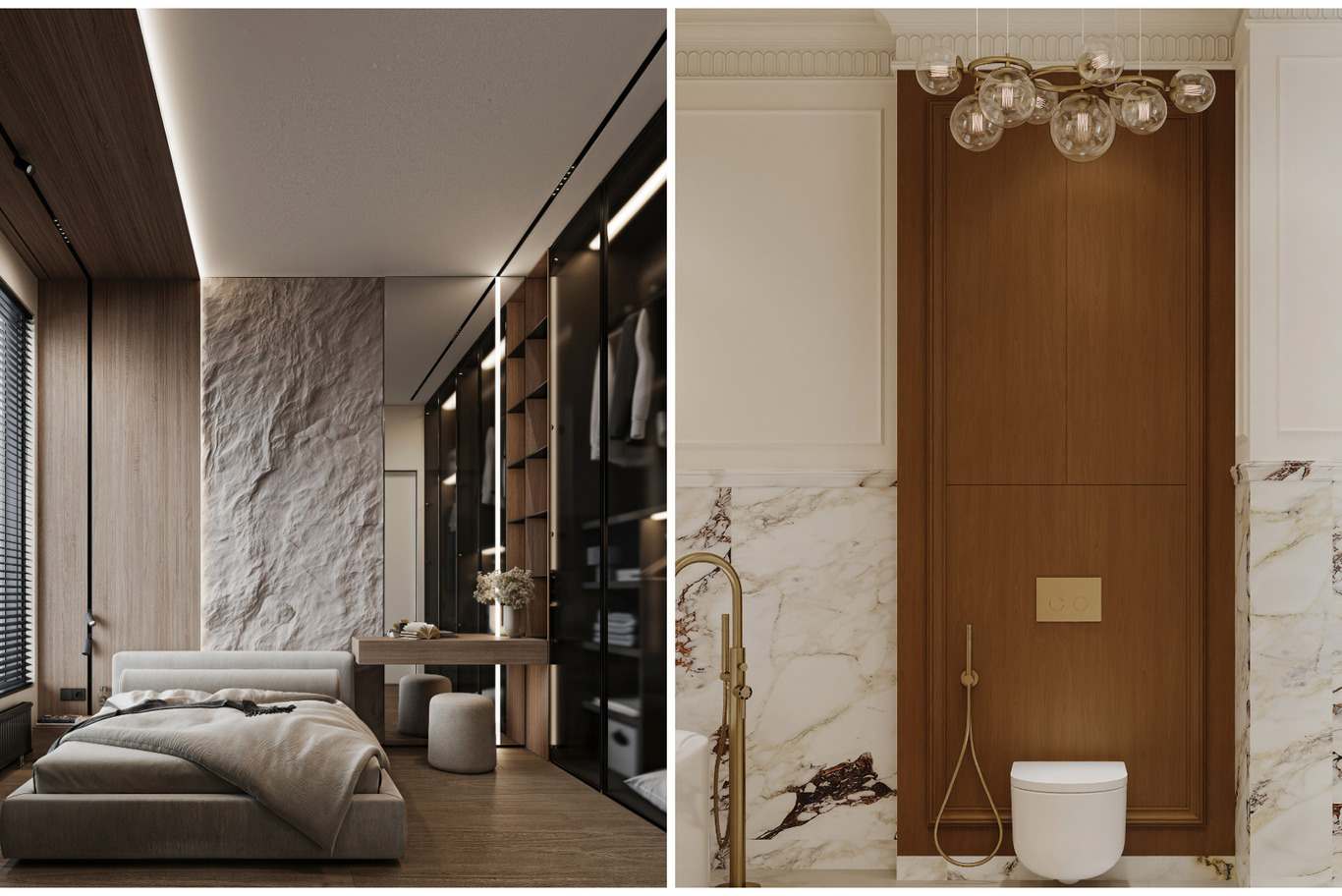
Sample boards come first. Before ordering, the contractor presents physical samples of every finish (stone, timber veneer, lacquer colours, fabrics, metal finishes and hardware) for the owner's written approval. Approved samples stay on site as the reference that delivered materials are checked against.
Mock-ups follow for critical details. A section of wall panelling, a single wardrobe door with its hardware, or one bathroom finished to full specification lets the owner and designer approve the real result before the detail is repeated across the home. Mock-ups catch issues that drawings miss, such as a lacquer sheen that reads too glossy under the actual lighting, or a grout colour that shifts the tone of a stone.
Inspection and test plans set the checkpoints during construction. MEP first-fix is inspected and pressure-tested before walls close. Waterproofing in bathrooms and wet areas is flood-tested, typically for 24 to 48 hours, before a single tile goes down. Setting-out for stone and tile is checked against the drawings so that joints align with doors, niches and fixtures. Electrical circuits are tested and labelled at the distribution board.
Ask each company for an example of its inspection checklist and for photographs of mock-ups from a recent project. A company that documents quality at each stage can show you exactly how it prevents problems, instead of promising to fix them later.
The Luxury Trades: Joinery, Stone, Gypsum and Gilding
Luxury fit-out depends on specialist craft that ordinary contracting checklists overlook. The skill of the joiners, stone masons and gypsum craftsmen decides whether a home feels bespoke or merely expensive.
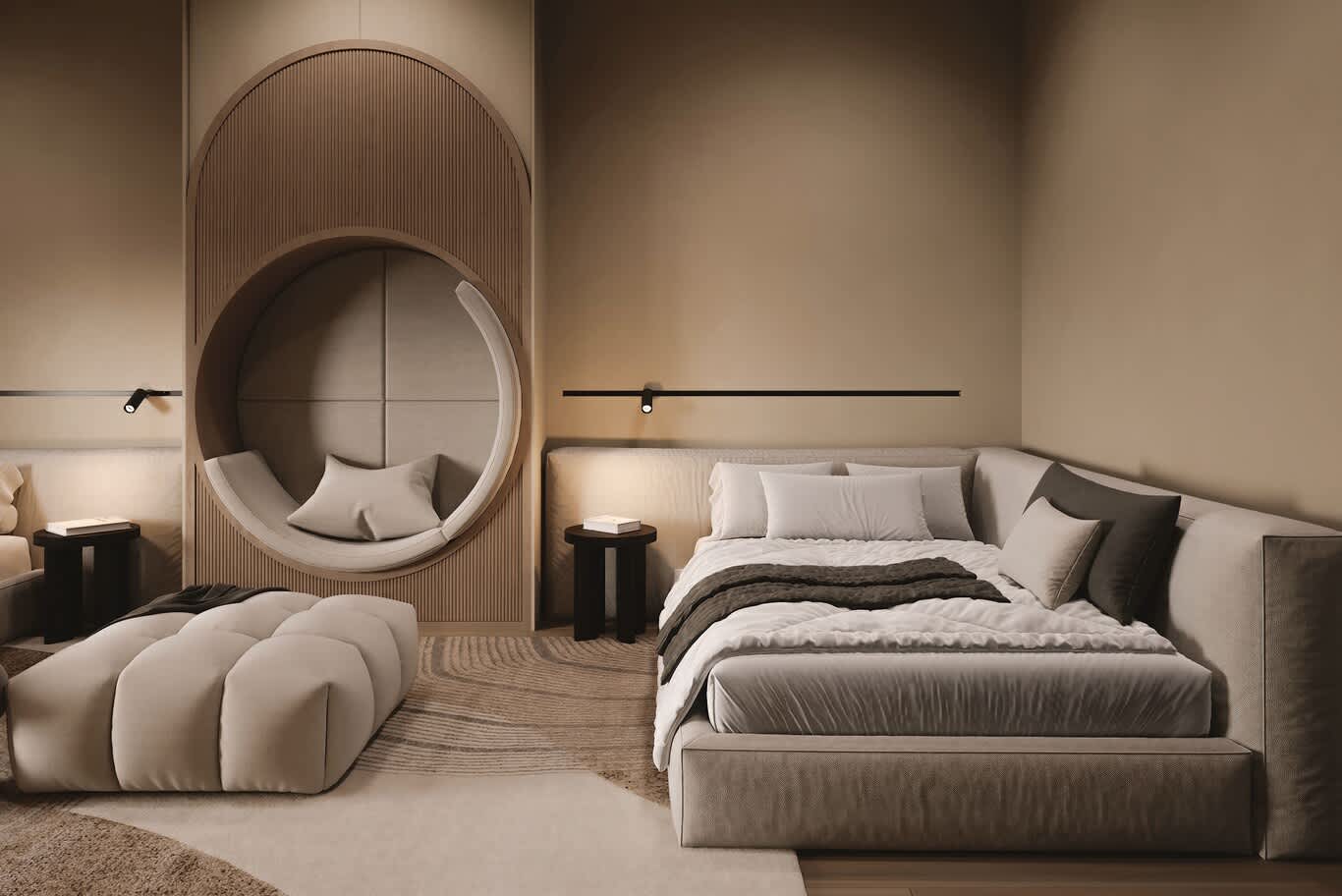
Joinery carries much of a luxury interior: wardrobes, dressing rooms, wall panelling, kitchens, vanities, doors and bespoke furniture. A strong workshop sequence-matches veneer across a set of doors so the grain flows from leaf to leaf, and finishes lacquer in a dust-controlled spray booth over several coats. It builds carcasses on stable cores that resist movement in air-conditioned rooms, and fits hardware engineered for decades of use.
Stone demands careful selection and craft. Book-matched Calacatta or Statuario requires slabs from a single block, templated on site and cut so the veins mirror across each joint. Floors need precise levelling, consistent joints and a sealing regime suited to each room. Feature walls need structural fixings and coordination with lighting and MEP.
Gypsum and gilding belong to classical and palace interiors: carved cornices, ceiling roses, panel mouldings and gold leaf applied by hand. The walk-in closet at the first Signature villa we designed in Dubai Hills shows that craft at close range. The custom cabinetry is carved and finished in light cream with gold-leaf embellishment and cushioned panels, and arranged around a marble-topped central island.
Ask each company whether it runs its own workshops or relies on outside makers. Then visit, study finished samples of each craft, and ask to see a completed room where all of them come together.
Snagging, Handover and the Defects Liability Period
Handover marks the formal end of construction and the start of the owner's protection period, and it should follow a clear process.
Snagging begins with a joint walk-through by the owner, the designer and the contractor. Every defect goes on a written list with photographs, locations and agreed deadlines. Typical snags include paint touch-ups, misaligned doors, loose hardware, silicone gaps, scratched surfaces and lighting that departs from the approved scenes. Each item should be closed out and signed off before practical completion is certified.
The handover file should include:
● As-built drawings showing every concealed pipe, cable and access panel
● Warranties for joinery, stone, sanitaryware and MEP equipment
● Operation and maintenance manuals for lighting controls, air conditioning and appliances
● The authority completion certificates
The defects liability period, typically twelve months in Dubai, begins at handover. During that time the contractor is contractually obliged to return and repair defects that appear during normal use, such as a cracked tile, a leaking joint, a failing hinge or a peeling finish. The contract should specify response times for urgent and routine defects and name a contact for callbacks. The final half of the retention is released once the period ends and every reported defect is resolved.
Owners who plan the handover carefully move into a home that works from the first day, with full documentation for every system behind the walls.
Red Flags That Should End the Conversation
Some warning signs appear early and rarely improve once work begins:
● Missing credentials: no registration or classification details on request, or a trade licence whose activities cover design only
● A one-page lump-sum quote: no BOQ, no brand list, and a price far below the other tenders
● Large advance payments requested before any work starts, unsecured by a bank guarantee
● Unnamed subcontractors, or reluctance to say which trades the company's own staff will carry out
● Render-only portfolios, with no finished projects to visit and no photographs of completed work
● Insurance gaps: missing certificates, or cover that expires before the planned completion date
● Pressure tactics: a push to sign quickly, or resistance to milestone payments, retention and a written variation procedure
A single red flag deserves a direct question. Several together usually mean the company is shifting its risk onto the owner. Measured against what the leading firms deliver in each sector, from palaces to penthouses to restaurants, those gaps become easy to spot.
Choosing With Confidence
The strongest fit-out companies in Dubai share a clear profile:
● Credentials: the right contracting licence, a registration and classification that match your project, and engineers holding the required competency certificates.
● Transparency: named subcontractors, every approval managed for you, and an itemised BOQ with specified brands.
● Contract terms: acceptance of milestone payments and retention, and full insurance cover.
● Site and craft: safe, well-documented sites, and craftsmen whose joinery, stone and gypsum hold up to close inspection.
● Aftercare: a complete handover file, and a company that stands behind its work through the defects liability period.
Owners who check those points before signing spend a few weeks on due diligence and gain months of calm on site. They also end up with rooms that match the drawings, finished by people who understood exactly what they were building.
Frequently Asked Questions
What does a fit-out company do in Dubai?
A fit-out company turns a structurally complete space into a finished, usable interior. Its work covers demolition and partitions, ceilings, MEP installation, flooring, wet areas, joinery, stone, lighting, finishes and final handover. Design-and-build companies also produce the concept and technical drawings, while build-only contractors work from drawings the owner supplies.
How do I check whether a fit-out contractor is licensed and registered?
Ask for the trade licence and check that its activities include fit-out contracting, and that the legal name matches the quotation and contract. Then ask for the company's registration and classification in Dubai Municipality's Contractor Register, and confirm the classification covers your project's size and type. Owners are prohibited from engaging contractors who are unregistered or unclassified.
Do I need approval for a villa or apartment fit-out in Dubai?
Almost every fit-out needs an approval of some kind. Structural, MEP, fire safety and exterior changes need a permit from the relevant authority: Dubai Municipality, Trakhees or the Dubai Development Authority, depending on location. Civil Defence and DEWA review their own areas. Master communities and residential towers also issue their own NOCs before work can start, even for lighter interior scopes.
How long does a fit-out take in Dubai?
The timeline depends on scope, property size and approvals. A villa's design phase typically runs four to eight weeks, and an interior-only NOC usually takes two to four weeks. Site works follow, ranging from a few months for an apartment to considerably longer for a large villa or palace. Our Dubai Hills villa fit-out, for example, was delivered in four months.
What is the difference between design and build and build-only fit-out?
In build-only fit-out, the owner appoints a designer separately and tenders completed drawings to contractors. In design-and-build fit-out, one company handles both design and construction under a single contract. Design and build gives owners one point of accountability and resolves buildability questions during design, while build only suits owners who already hold a complete, detailed drawing package.
How much retention should an owner hold on a fit-out contract?
Market practice in the UAE typically holds 10 per cent of each payment as retention. Half is usually released at practical completion, and the balance at the end of the defects liability period. The exact terms are set in each contract, so owners should confirm them before signing.
What is a defects liability period?
A defects liability period is the time after handover, typically twelve months in Dubai, during which the contractor must return and repair defects that appear during normal use, at no extra cost. The contract should state response times for urgent and routine defects and name a contact for callbacks.
Can a fit-out company subcontract parts of the work?
Yes. Subcontracting is common for specialist trades such as MEP, stone or glazing, but under Dubai's contracting law subcontractors require prior approval and must themselves be registered. Owners should ask the company to name every subcontractor in advance and confirm which trades its own staff will carry out.
Should I choose the cheapest fit-out quote?
The lowest price is often the least complete scope. Compare quotes line by line for exclusions, provisional sums, brand lists and measured quantities before deciding. A slightly higher quote that includes approvals, testing, site protection and specified materials frequently costs less by the end of the project.
Start Your Fit-Out With Algedra
Algedra carries out villa, penthouse, apartment, palace and commercial fit-outs across Dubai with its own engineers and site teams, from design and approvals through to handover and aftercare.
Arrange a consultation with our team to discuss your property and your fit-out plans.
FREE CONSULTATION
TELL US ABOUT YOUR PROJECT
WE WOULD LOVE TO HEAR FROM YOU
Feel free to reach us via this contact form and one of our Design Consultants will get back to you at earliest.
OUR BRANCHES
UAE - DUBAI
+971 52 8111106 | hello@algedra.ae
TURKEY - ISTANBUL
+90 533 701 89 71 | info@algedra.com.tr
Leading Interior Design and Decor Company in Dubai and Abu Dhabi.
Algedra is a reputable, internationally recognized, and one of the most successful interior design companies in Dubai, and Abu Dhabi, which specializes in delivering interior design, architectural, and creative space planning projects throughout GCC, MENA, North Africa, Turkey and Russia.
Algedra is a one-stop solution for all your residential interior design and fit-out needs. We have successfully completed numerous villa interior and exterior design projects, where we integrated quality and originality to deliver interior masterpieces.
ALGEDRA, Interior Design Company in Dubai, is specialized in providing elegant and stunning interior design services for both residential and commercial projects. We turn our clients' dreams into reality, trans- lating their tastes and needs into beautiful and functional spaces.
Since the day we were founded, we have designed and built many branded residences, resorts, hotels, multi-purpose social spaces, and palace designs with different functions and concepts by following the ever-changing design trends over the world.
A key element of our work is a fusion of different cultures and designs, combining Greek, Italian, Eastern and Western influences with British innovation.
As a team of highly qualified interior designers and engineers, Algedra offers complete architectural services from mall design to corporate office design as well as the exterior design of any project based on customers' needs.
Our customers include leading names, we have completed diverse projects in hospitality, landscape, commercial, and residential designs. These projects contain cafes, restaurants, gym, villas, family sitting rooms, bedrooms, kitchens; all showcasing our company's exquisite details and high-end designs.
Residential Interior Design in Dubai
Algedra's interior designers and architects have an important mission: building villas, houses, apartments, condos, and anywhere else where you reside that will fulfill your needs while being structurally safe and sound.
Architectural Designs
There are so many details that go into designing an architectural design project. Every step of the project has been carefully considered for safety and daily comfort by Algedra's experts.
Commercial Design
Conceptualizing spaces for business, to elevate style, and to increase functionality to help enhance the bottom line of a company is vital, as well as employee comfort and interior design too. Our commercial interior designers translate client's concept in ways that are efficient, attractive and provide professional workspaces.
Fit-out Projects
Algedra Interiors delivering high-quality tailored fit-out projects that transform your villas, palaces and commercial spaces.
We're a passionate team of interior designers, architects and engineers. Every day we help clients to solve interior design problems and create engaging spaces!
Wherever you are in Kuwait, Saudi Arabia, Azerbaijan, Qatar, Morocco, Algeria, Tunisia, Libya, Egypt; don't hesitate, contact us to find out more about why we are one of the best interior design companies in Dubai and Abu Dhabi!