Home Page | Blog | Landscaping vs Gardening: The Key Differences for Your Outdoor Space
Landscaping vs Gardening: The Key Differences for Your Outdoor Space
10/2/2026
Stand at the back door of a newly built villa and the plot in front of you is a blank sheet of compacted sand and rubble. Turning it into a place for morning coffee, children's games and evening gatherings takes two distinct skills. One decides where the terrace, pool, pergola and paths go and how water drains away from them; the other chooses, plants and nurtures everything that grows.
The first is landscaping, the second is gardening, and the two are often confused. Understanding the difference between landscaping and gardening helps you brief the right professional at the right moment, set a realistic budget and plan an outdoor space that matures beautifully. The fifteen points below explain where each discipline begins, where they overlap and how they work together.
1. Landscaping Plans the Entire Outdoor Plot
Landscaping is the design and construction of the whole outdoor space. A landscape architect studies the plot's levels, orientation, soil and drainage, then draws a master plan that fixes the position of the pool, terraces, pergolas, paths, boundary walls, planting beds and lighting. The plan also routes the services hidden below ground: irrigation mains, drainage channels, electrical conduits and pool plumbing.
Good landscapes start with that buried framework, and it pays to understand the irrigation and lighting infrastructure behind every planted bed before choosing a single plant.
A full-service landscape design company produces the master plan, construction drawings, planting schedule and lighting layout as one coordinated package, then supervises the contractors who build it.
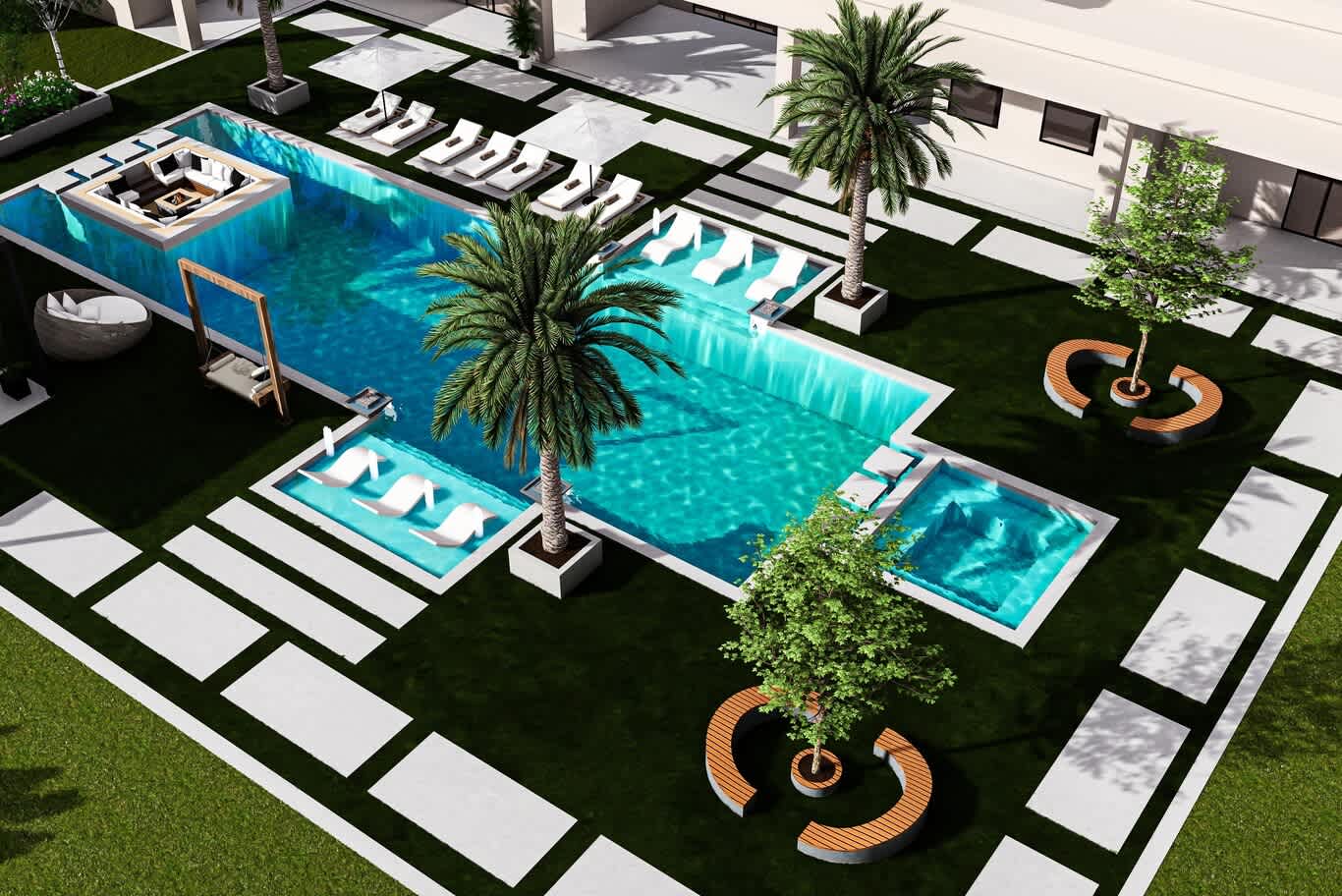
An aerial master plan in practice: a long pool with in-water loungers and a sunken seating island, a spa, palm planters, curved timber benches around trees and large stepping-stone pavers set into the lawn.
2. Gardening Tends the Living Layer
Gardening is the cultivation and care of plants. A gardener chooses, plants, waters, feeds, prunes and replaces flowers, shrubs, trees, herbs and vegetables, in beds or in pots, and keeps them healthy through the seasons. Gardening is ongoing; it starts when the landscape is built and continues for as long as the garden exists.
Many homeowners love doing part of this work themselves, from deadheading roses to raising herbs on a kitchen terrace, and there is real reward in the pleasures of hands-on gardening alongside professional care.
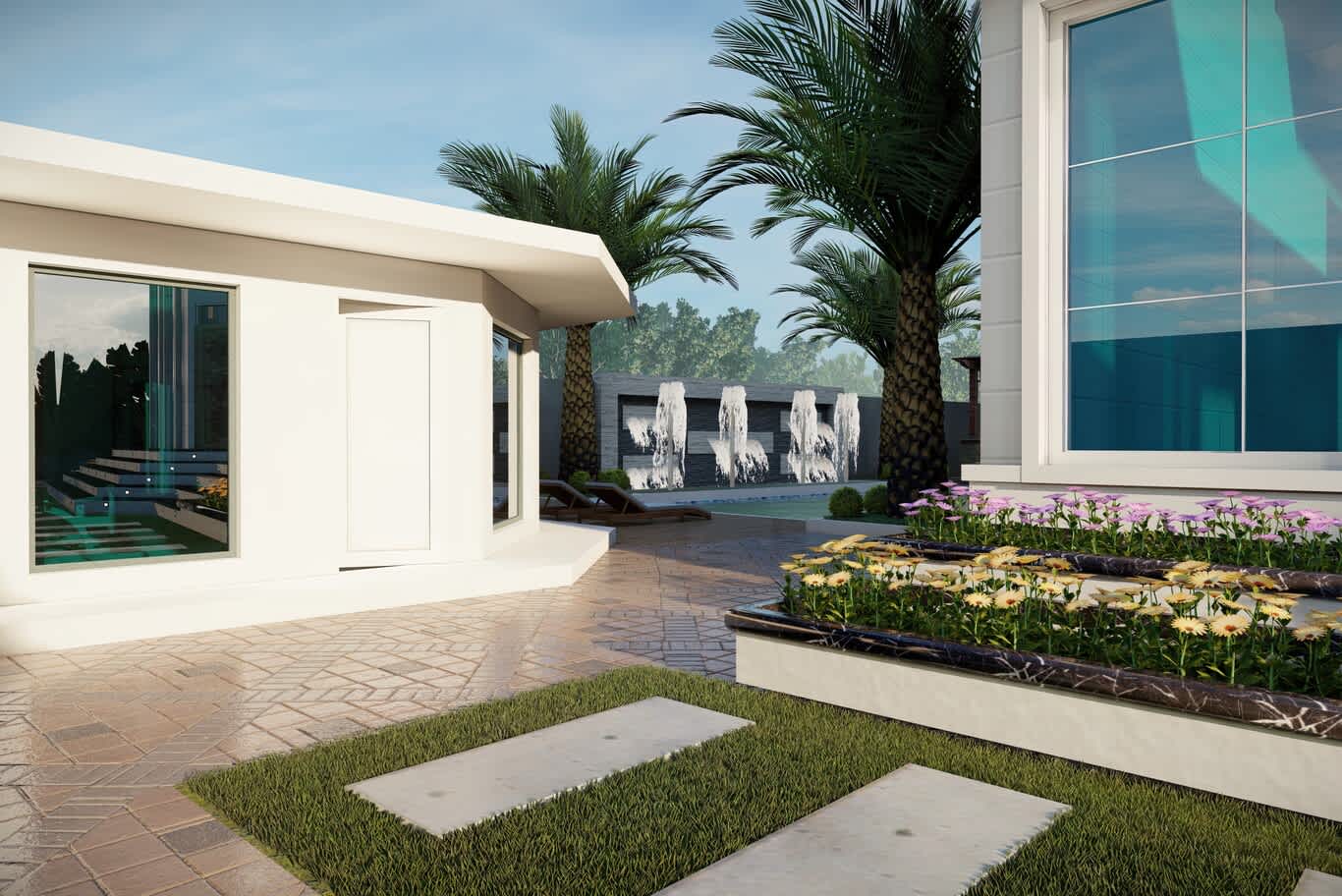
Raised flower beds edged in dark veined marble overflow with pink and yellow daisies beside the house, while stepping stones cross the lawn toward a cascading water wall and palm-lined pool.
3. Hardscape Is Pure Landscaping Work
Hardscape covers every built, non-living element of the garden: paving, decks, steps, retaining walls, boundary walls, planters, edging, pergolas and outdoor kitchens.
Choosing these materials calls for knowledge of loads, drainage falls, slip resistance and heat. Light-coloured porcelain and honed limestone stay cooler underfoot than dark stone; textured granite pavers grip well around pools; thermally modified ash and ipe decking resist warping in strong sun.
Boundary walls deserve the same thought. Rendered blockwork with recessed light columns, stone cladding or slatted timber screens set the character of the garden from the first glance, and a villa and palace landscape design treats walls, gates and lighting as part of one composition.
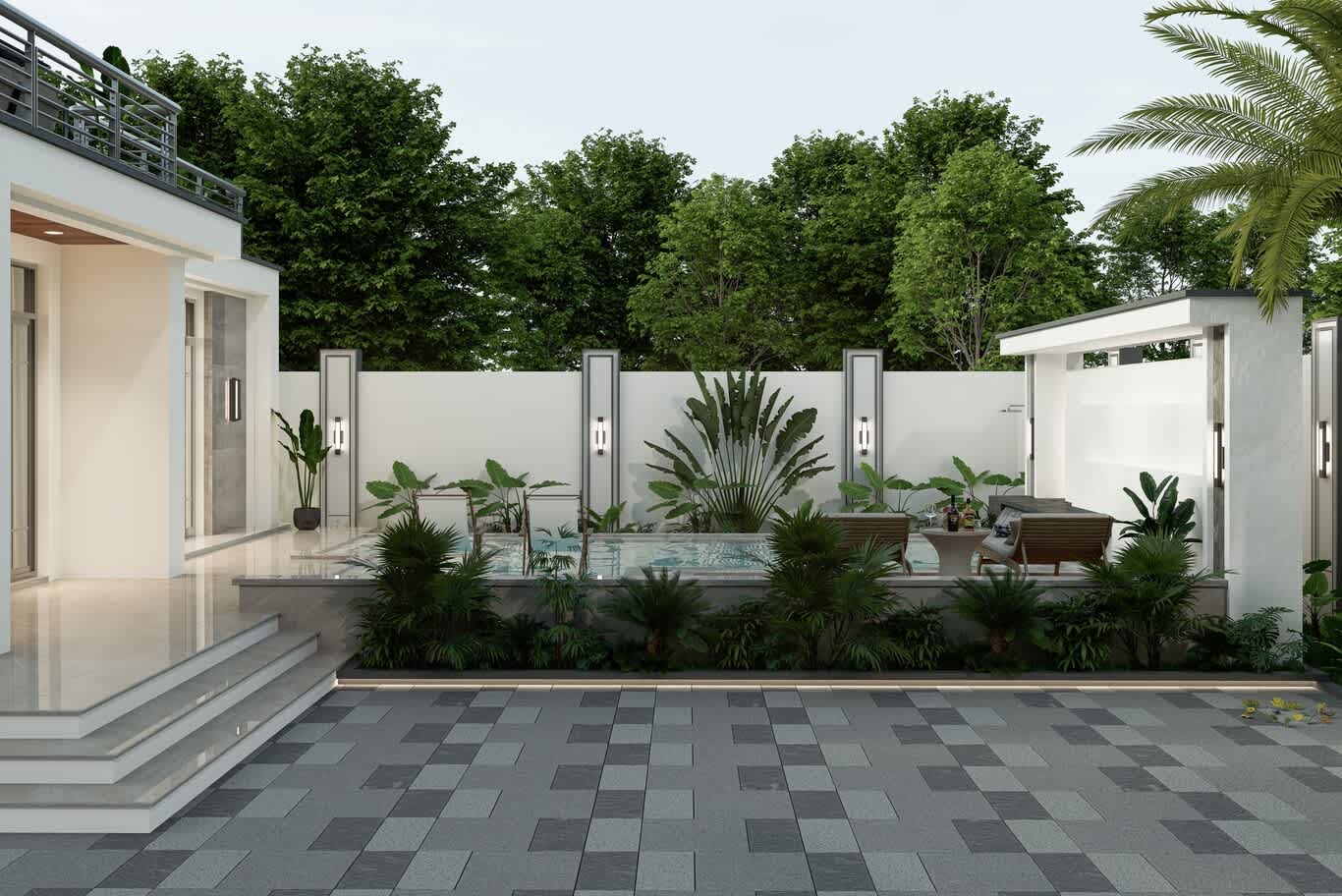
Two-tone grey granite pavers in a checkerboard pattern lead to a raised pool terrace, framed by a rendered boundary wall with vertical light columns, broad steps in polished stone and lush tropical planting.
4. Planting Design Bridges Both Disciplines
Planting is the point at which landscaping and gardening meet. The landscape architect designs the planting plan, choosing species, sizes and spacing for shade, privacy, colour and water efficiency; the gardener then establishes and maintains it. A three-layer scheme suits hot climates well: canopy trees for shade, a middle storey of flowering shrubs, and groundcover or gravel at the base.
Tall columnar conifers or clipped hedges along a boundary build a living privacy screen, while clipped box or pittosporum domes bring rhythm to a lawn. Planning ahead also helps owners steer clear of common planting mistakes that leave a garden looking tired after a single season.
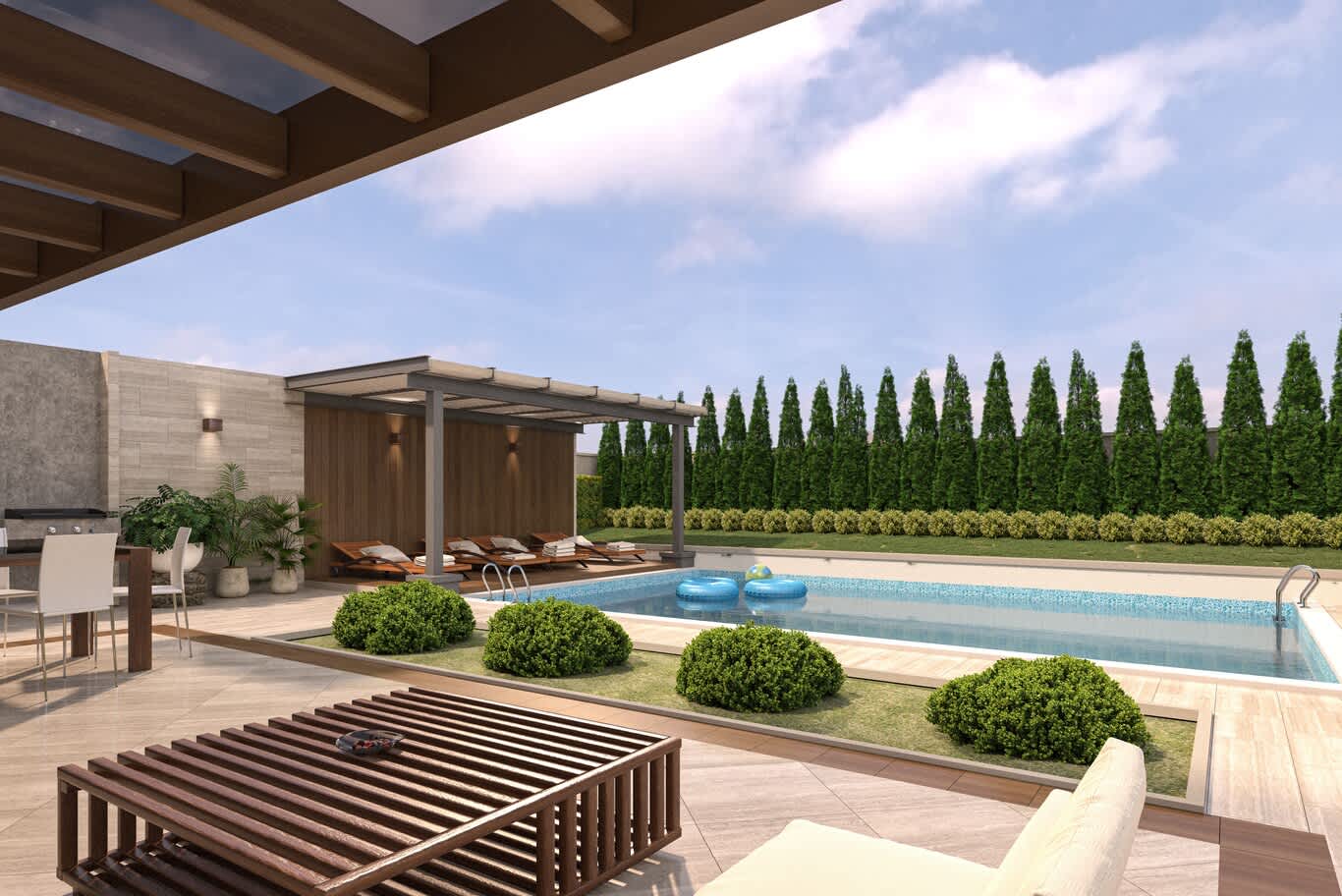
A row of tall columnar cypresses forms a green privacy wall behind a pool, while clipped shrub domes punctuate a lawn bed beside a covered terrace with a timber pergola and outdoor kitchen.
5. Pools and Water Features Need Landscape Engineering
A swimming pool sits firmly on the landscaping side. Its shell, waterproofing, filtration, balance tank and plant room must be designed alongside the terrace levels and drainage, and features such as cascading water walls need their own pumps, weirs and lighting. In hot climates a pool chiller keeps the water inviting through the summer months.
The planting around a pool matters too: shrubs with small leaves and little litter keep skimmers clear, and a swimming pool and garden design plans the poolside planting, decking and shade together with the water itself.
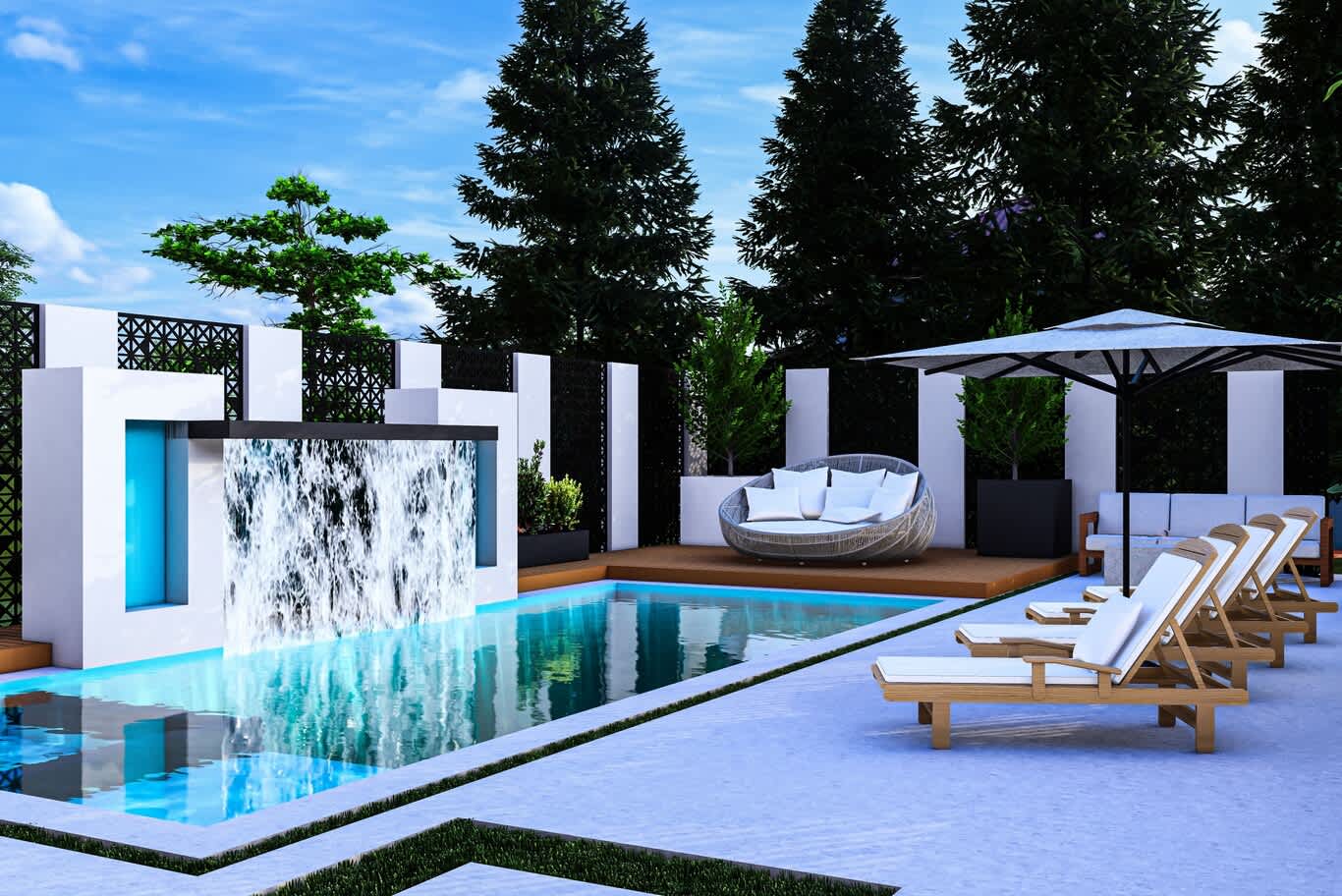
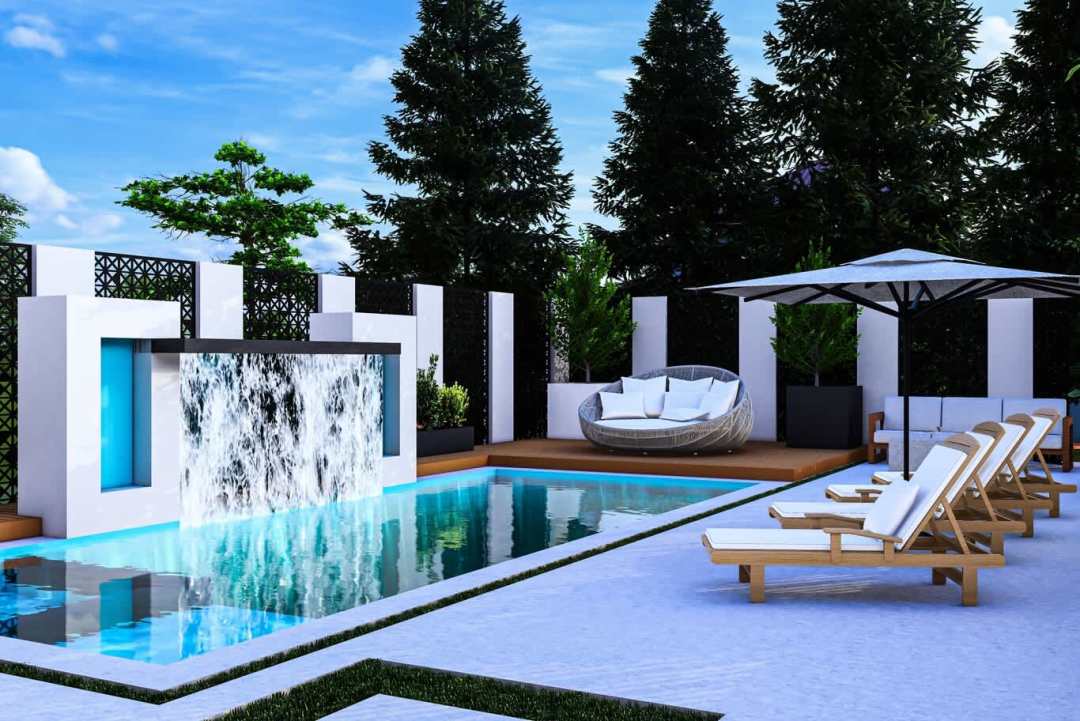
A cascading water wall pours into a lit pool framed by white rendered pillars and black laser-cut screens, with teak loungers, a parasol and a woven daybed on a timber deck.
6. Pergolas and Shade Structures Shape Outdoor Rooms
Shade turns an exposed garden into a usable one. Pergolas, gazebos, cabanas and shade sails all belong to landscaping, since each needs foundations, structural sizing and wind calculations. Timber pergolas in iroko, teak or thermally modified pine bring warmth; powder-coated aluminium louvres open and close with the sun; laser-cut screens in timber or corten steel filter light into patterns across the deck.
Geometric screens inspired by mashrabiya give a pergola privacy on the sides while letting breezes pass through, and climbing jasmine or bougainvillea trained over the roof adds a gardener's finishing layer.
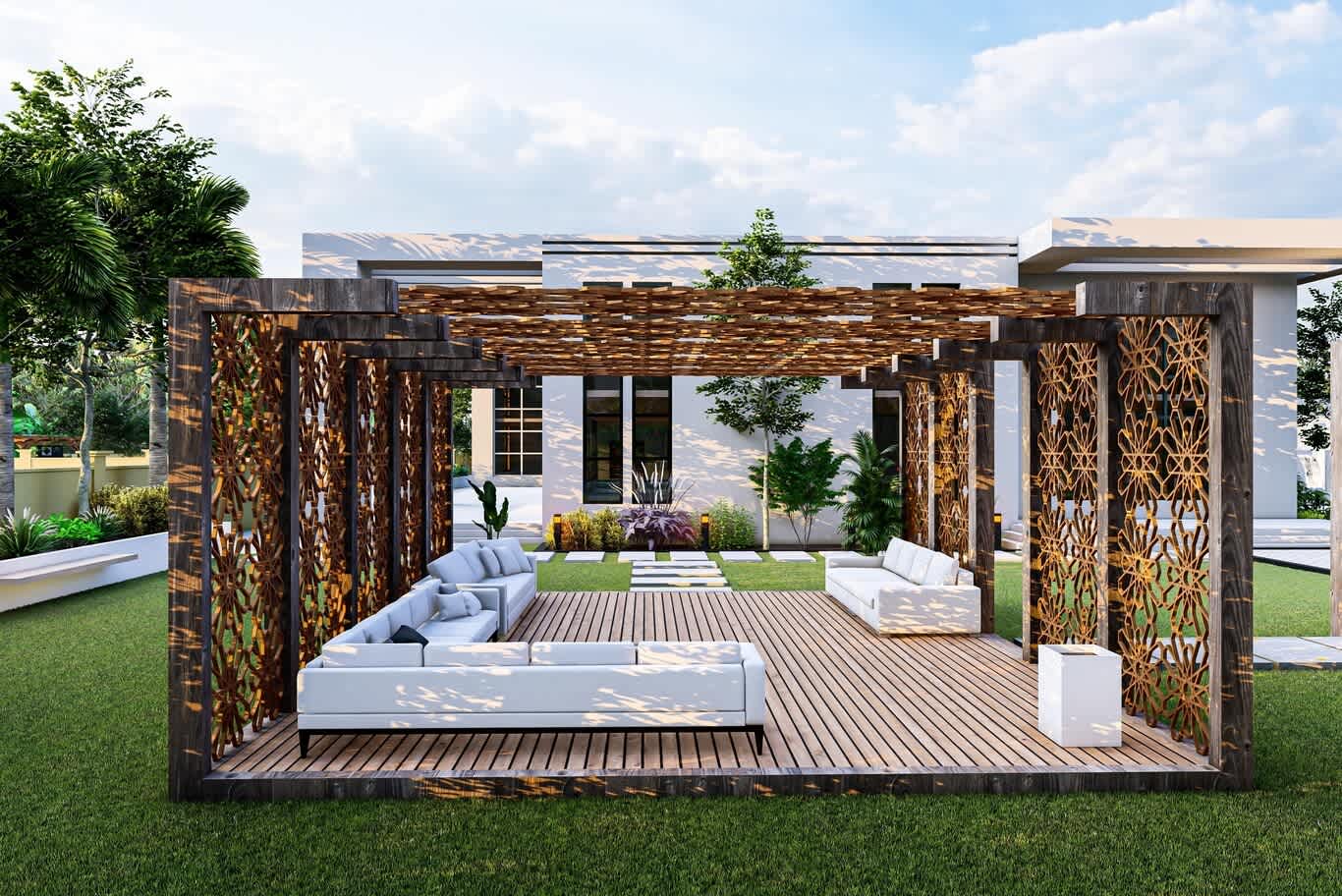
A dark timber pergola with geometric laser-cut side screens casts patterned shade over a deck furnished with white outdoor sofas, set on a lawn in front of a low contemporary villa.
7. Sunken Lounges and Outdoor Living Spaces
Outdoor living rooms are among the most requested landscape features. A sunken lounge, set 40 to 60 centimetres below the lawn, shelters seating from the wind, creates a natural sense of enclosure and keeps the view open from the house. Built-in timber benches with weatherproof cushions in solution-dyed acrylic fabric, a central gas fire table and low-level LED strips make it usable long after sunset.
On larger plots, several outdoor rooms can be linked by paths and planting, each with its own purpose, and luxury estate landscape design plans that sequence across the whole grounds.
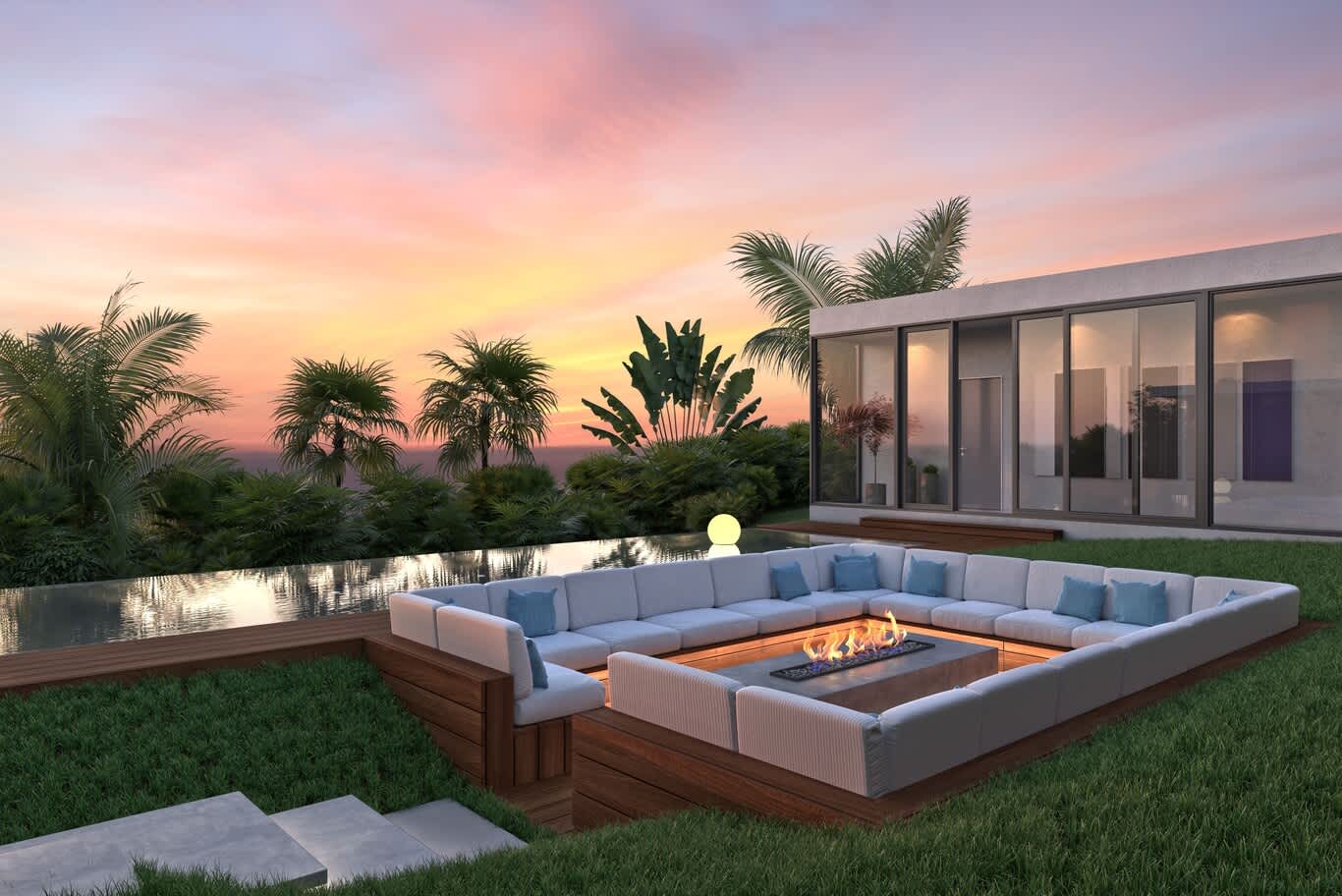
A sunken lounge wraps a long gas fire table with deep cushioned seating, lit from below, beside an infinity-edge pool glowing at sunset against a backdrop of palms and banana plants.
8. Focal Points: Sculpture, Moon Gates and Entrance Courts
Every memorable landscape has a few deliberate focal points: a sculpture at the end of a path, a circular moon gate framing a view, a specimen tree lit at night. Placing them is landscape design, since each point depends on sightlines from the house, the arrival route and the paths. Large-format stone paving, black pebble beds and a single flowering tree create a calm entrance court with a gallery-like feel.
Confident gardens sometimes break a few garden design rules, mixing sculpture, water and unexpected planting to make the entrance unforgettable.
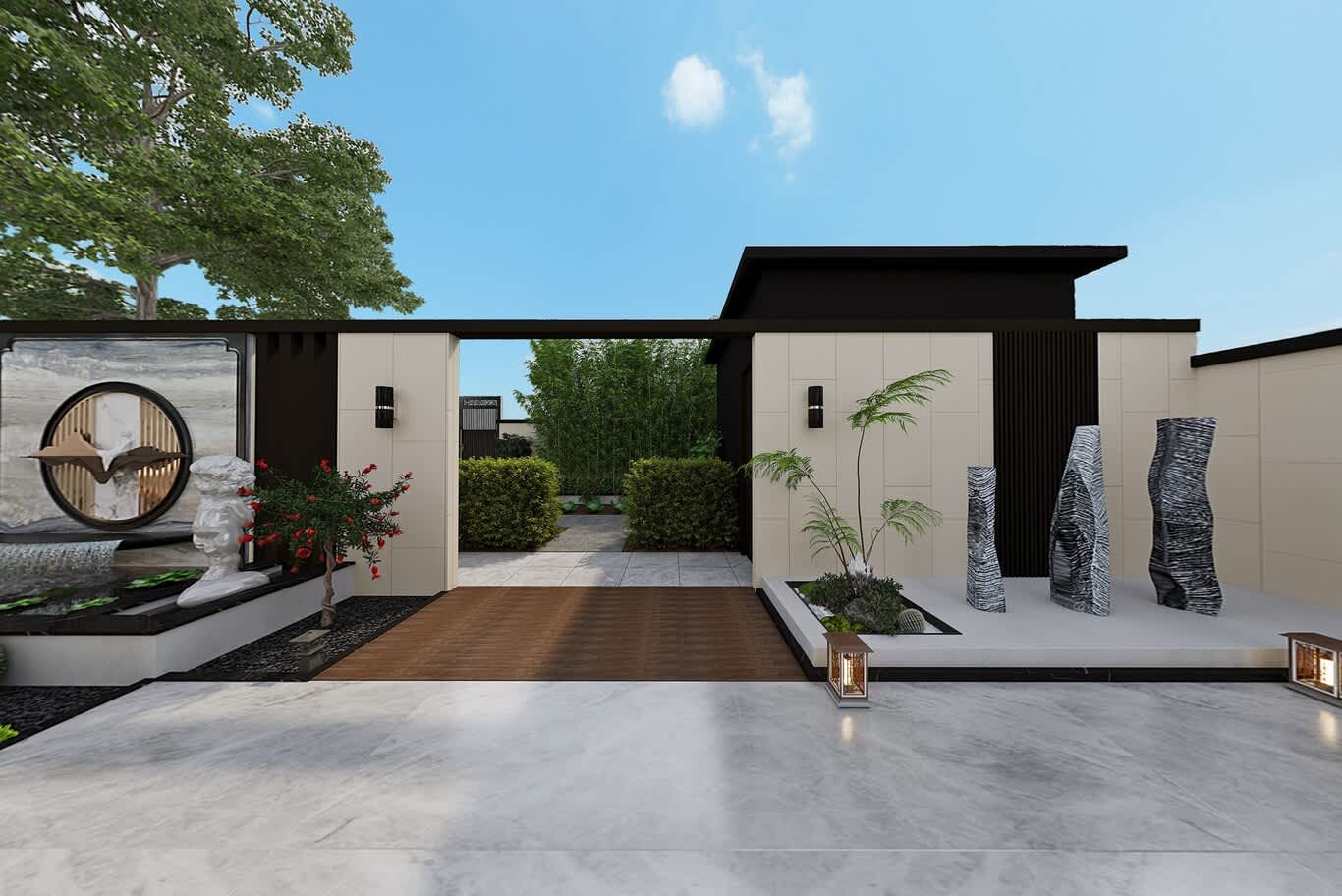
An entrance court of pale marble paving leads through a framed opening to a hedged garden, flanked by tall striped stone sculptures, a moon-gate water feature with a bird sculpture and lantern lights.
9. Fountains and Fire Features for Evening Gatherings
Water and fire draw people together. A circular overflow fountain in honed marble or terrazzo, with a sphere at its centre, brings sound and movement to a lawn; a sunken fire pit with built-in benches under a timber pergola becomes the evening majlis of the garden. Both need gas, water and electrical supplies planned by the landscape architect before paving goes down.
Plant fragrant flowers such as lavender, salvia and gardenia close to seating areas, so each gathering carries a gentle scent as the evening cools.
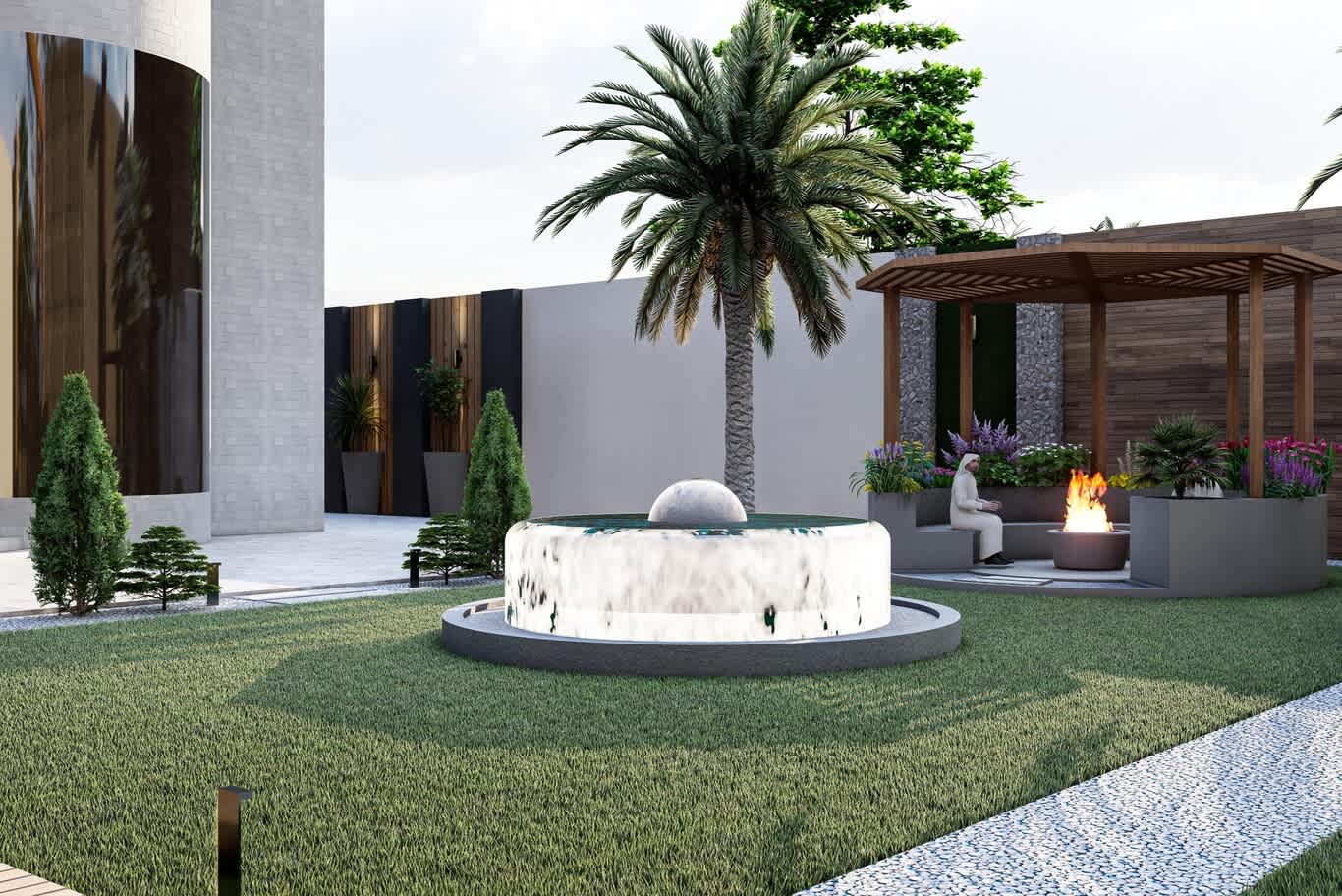
A round overflow fountain with a stone sphere sits on a manicured lawn near a date palm, while a seated guest relaxes by a fire pit under a timber pergola edged with flowering planters.
10. Landscape Lighting and Smart Irrigation
Lighting and irrigation are the hidden systems of landscaping. A lighting plan layers uplights on trees, low bollards along paths, underwater lights in the pool and soft glowing spheres or wall washers on terraces, typically in warm white around 2700K to 3000K. Drip irrigation with moisture sensors and zone controllers delivers water to each bed only when needed.
Both can run from a phone through smart landscape design, with timers, weather data and lighting scenes for dinners, pool evenings or quiet nights.
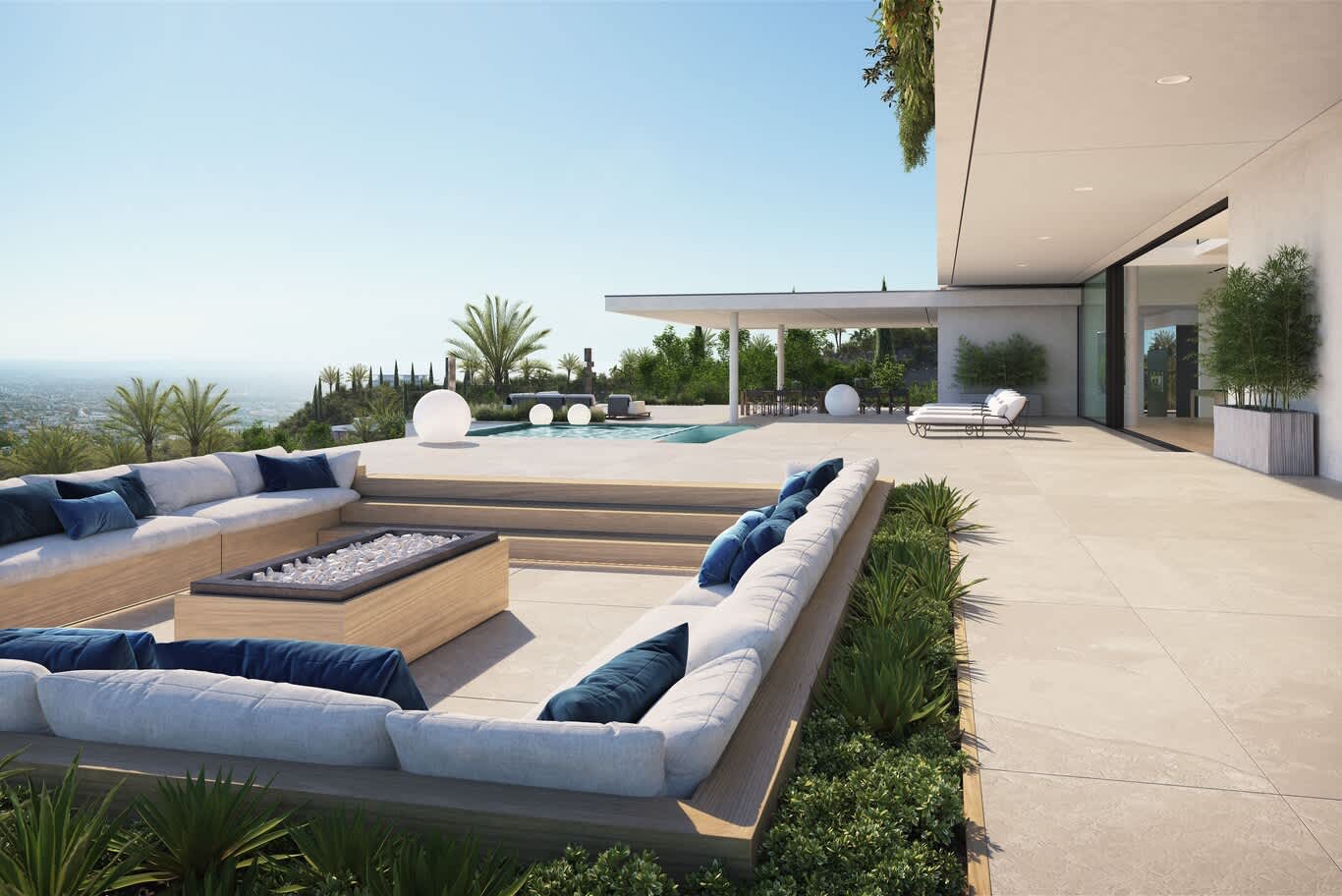
A hilltop terrace of large-format stone tiles features a sunken lounge with a pebble fire table, glowing globe lights by the pool and a deep overhang shading floor-to-ceiling glazing.
11. Lawns, Turf and Stepping-Stone Paths
Lawns sit across both disciplines. Choosing the turf, grading the ground, laying the soil profile and installing pop-up sprinklers is landscaping; mowing, feeding, aerating and overseeding is gardening. Warm-season grasses such as paspalum and zoysia tolerate heat and salinity well, while high-quality artificial turf suits shaded corners, play areas and plots with strict water limits.
Large-format stepping stones set flush into the lawn create paths that feel light and natural, and a 5 to 8 centimetre grass joint between each slab keeps the rhythm comfortable for an adult stride.
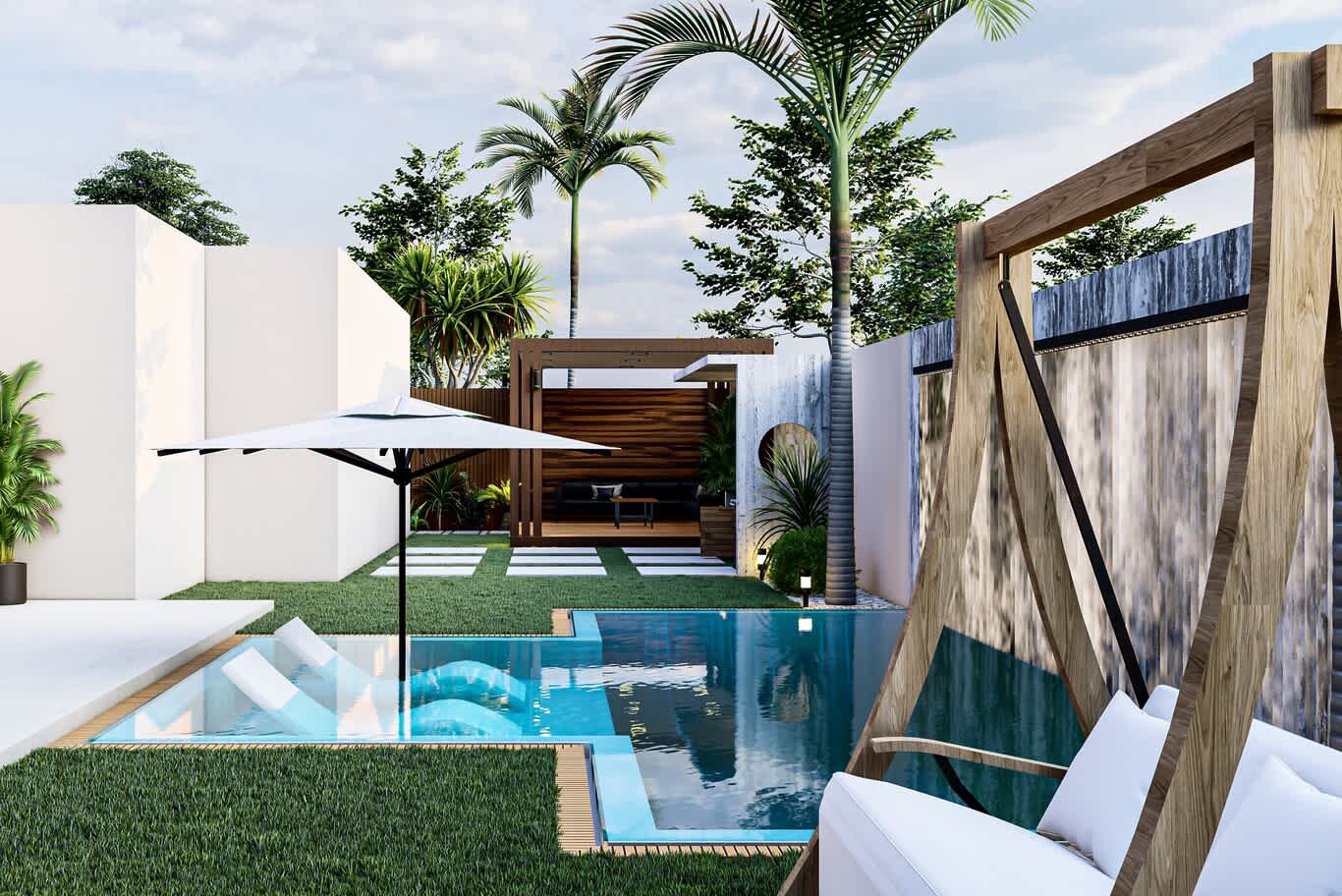
Stepping-stone pavers cross a lawn toward a slatted timber cabana, beside a pool with in-water loungers, a white parasol, palms and a wooden swing seat in the foreground.
12. Rooftop and Terrace Gardens
Rooftop gardens bring landscape thinking to upper floors. Structural loads, waterproofing membranes, root barriers, drainage cells and lightweight growing media all need engineering before a single plant arrives. Corten or powder-coated steel planters, timber decking on adjustable pedestals and slatted privacy screens create a lush terrace while keeping weight under control.
Wind is the main challenge at height, so planting favours sturdy multi-stem trees, grasses and evergreen shrubs, and a specialist rooftop garden design accounts for exposure, weight and irrigation together.
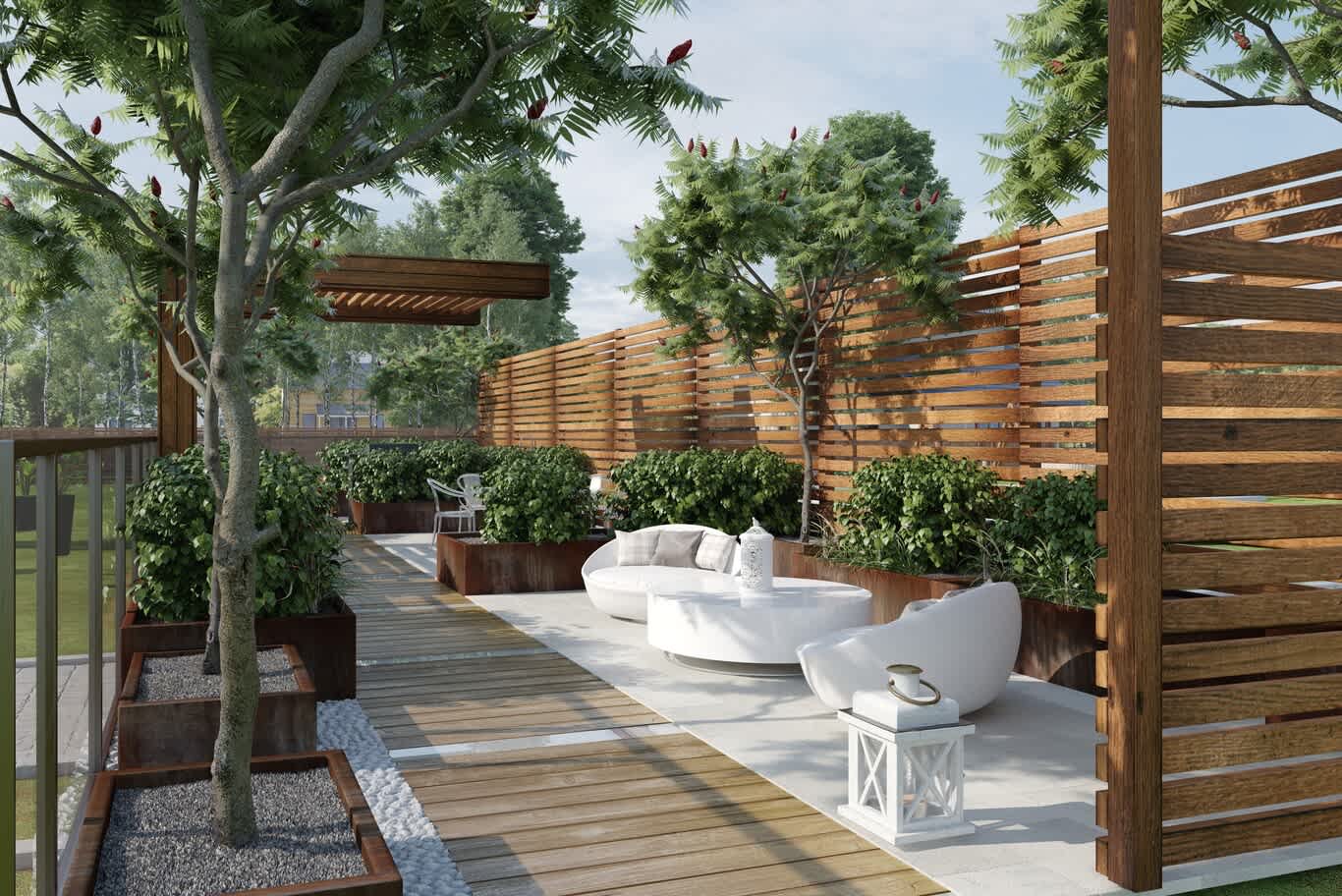
A rooftop terrace with timber decking, corten planters and multi-stem trees leads past a glass balustrade to a lounge of white sculptural seating, screened by horizontal timber slats and a pergola.
13. Family Play Areas Within the Garden
A well-planned play area keeps children safe and happy while blending into the wider garden. Landscaping sets the location in view of the house, specifies impact-absorbing surfaces such as rubber mulch or artificial turf over shock pads, and anchors swings, slides and climbing frames into concrete footings. Gardening softens the zone with robust, non-toxic planting such as lavender, rosemary and ornamental grasses.
Soft wall washers and garden spheres extend play into the evening, and shade from a nearby tree or sail keeps surfaces cool on bright afternoons.
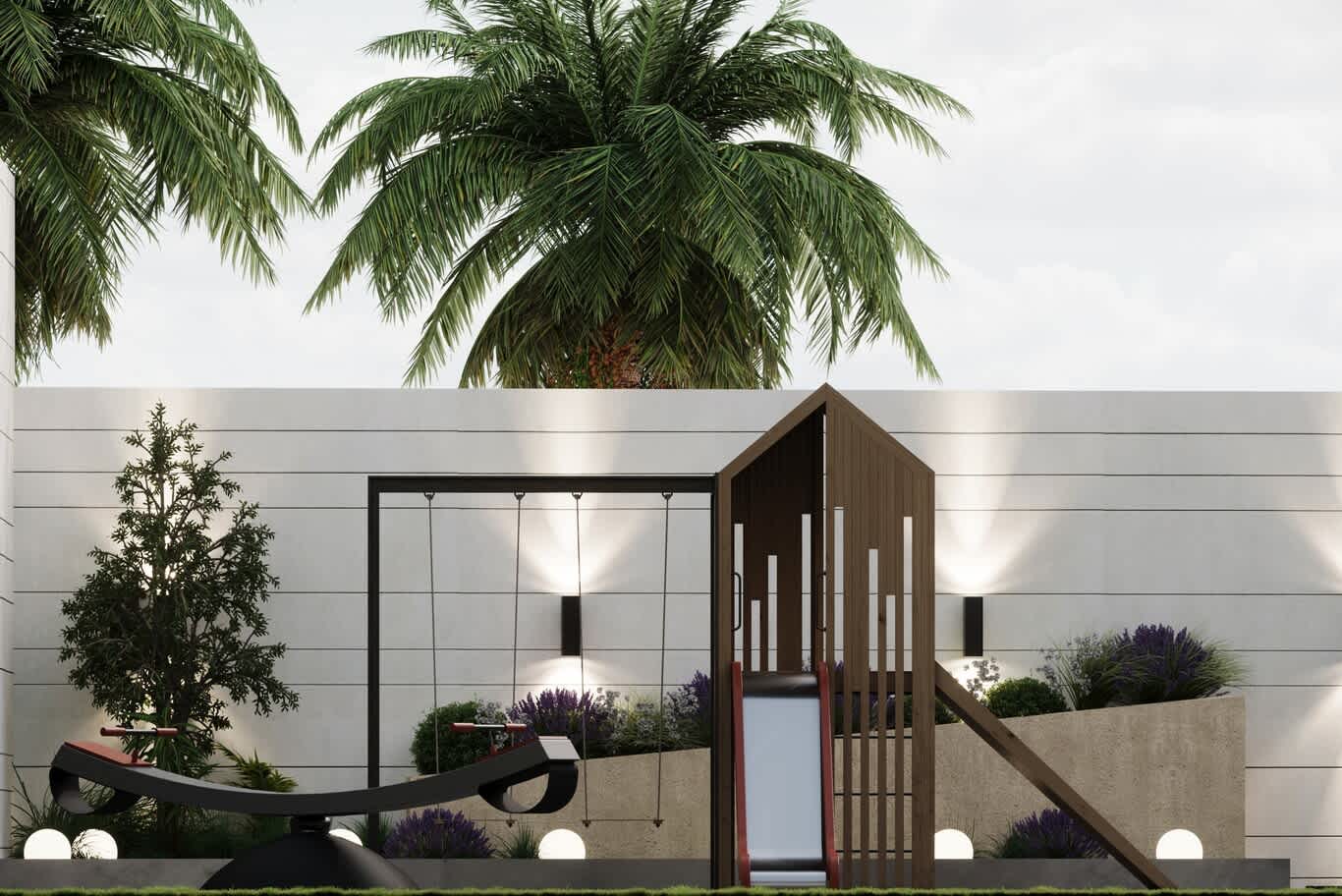
A play corner with a timber slide house, a black steel swing frame and a sculptural seesaw sits against a rendered wall with warm wall washers, lavender planters and glowing garden spheres.
14. Garden Styles Set the Direction
Style is decided at the landscape stage, since it drives every material and plant choice. Modern minimalist gardens rely on concrete frames, clean lines, gravel and a few sculptural trees; Zen-inspired schemes use raked gravel, boulders and clipped pines; resort gardens layer palms, pools and cabanas; Arabic gardens centre on water channels, courtyards and shade; Mediterranean gardens favour olive trees, lavender and terracotta.
Families weighing a direction can browse privacy planting and palm-led garden schemes for ideas that suit their plot and climate.
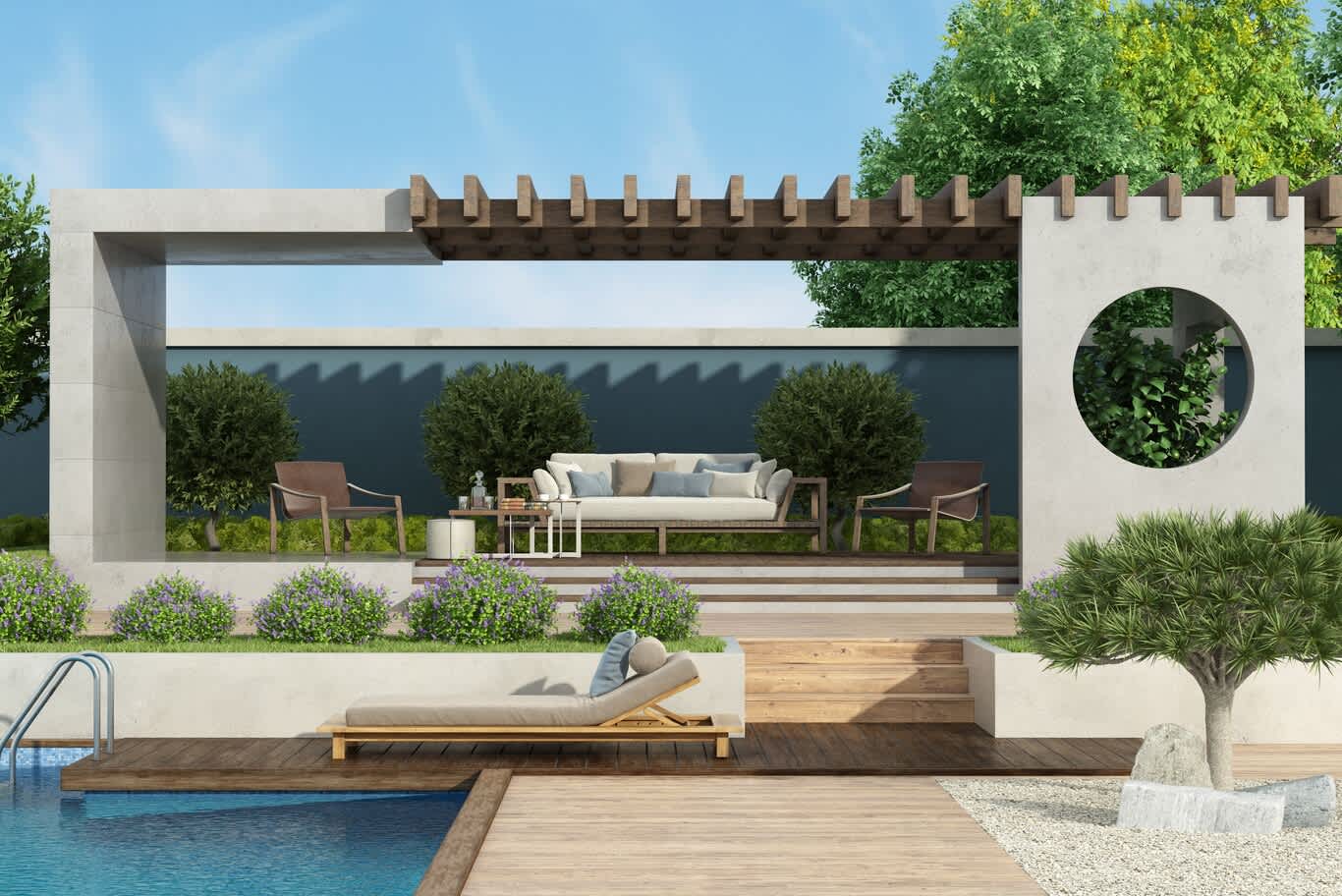
A minimalist concrete frame with a timber pergola and a circular cut-out window shelters an outdoor lounge, above a timber deck, pool, gravel bed, boulders and a cloud-pruned pine.
15. Maintenance: Who Looks After What
Once the landscape is built, care shifts to gardening. Weekly visits cover pruning, mowing, weeding, fertilising and checking irrigation; seasonal work includes replanting annuals, mulching beds and shaping hedges. The landscape contractor handles the structure: resealing stone and decking, servicing pumps and filters, replacing lighting drivers and recalibrating irrigation controllers.
A clear maintenance schedule from the landscape architect, listing each plant's water and pruning needs, gives the gardener a guide from the first day and keeps the garden looking as intended for years.
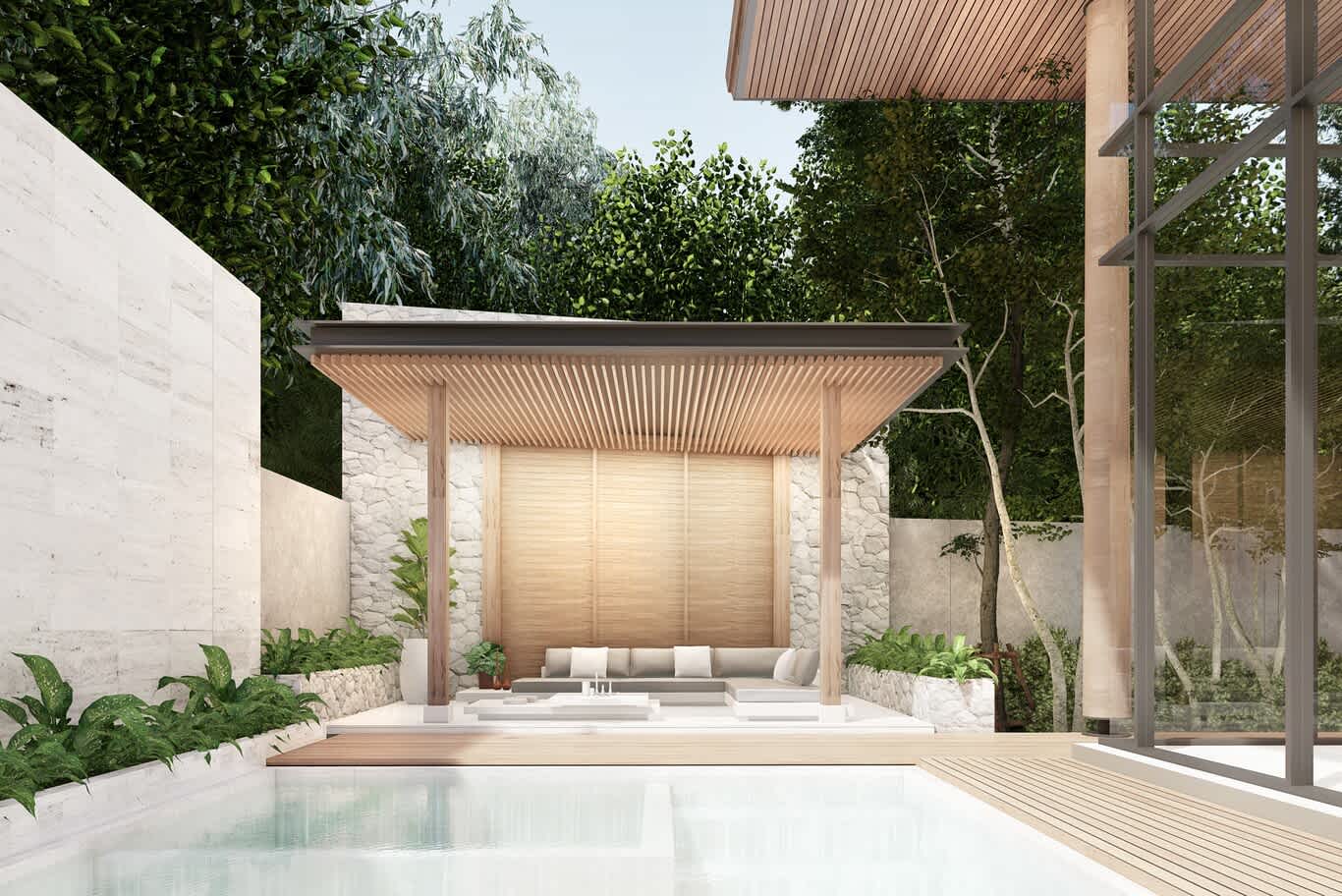
A travertine-walled courtyard frames a cabana with a slatted timber roof and stone side walls, its white sofa facing a pale pool bordered by tropical planting and timber decking.
Frequently Asked Questions About Landscaping and Gardening
What is the main difference between landscaping and gardening?
Landscaping designs and builds the whole outdoor space, including paving, walls, pools, structures, lighting and irrigation. Gardening focuses on growing and caring for plants within that space, from planting and watering to pruning and feeding.
Should I hire a landscape architect or a gardener first?
Start with a landscape architect when you are building or reshaping a garden, since levels, drainage, services and structures must be fixed before planting. Bring in a gardener once the landscape is built, to establish and maintain the plants.
Is planting part of landscaping or gardening?
Both. The landscape architect designs the planting plan and selects species, sizes and spacing, while the gardener plants, establishes and maintains them over the years.
What are hardscape and softscape?
Hardscape covers built elements such as paving, decks, walls, steps, pergolas and pools. Softscape covers the living elements: trees, shrubs, flowers, groundcover and lawn.
How much maintenance does a landscaped garden need?
Most gardens need a weekly gardening visit for mowing, pruning and checking irrigation, plus seasonal work on planting, mulching and hedge shaping. Pools, pumps, lighting and decking need periodic servicing by the landscape contractor.
Can a small garden or terrace be landscaped?
Yes. Courtyards, side gardens and rooftop terraces benefit greatly from a landscape plan, since careful choices of paving, planters, lighting and compact trees make a small space feel generous and easy to care for.
Start Planning Your Garden With Our Landscape Architects
A garden that works beautifully begins with a plan that brings structure and planting together. Complete our consultation form with your plot size, a few photos and the activities you picture there, from poolside lunches to children's play, and our landscape architects will come back with first ideas and next steps.
FREE CONSULTATION
TELL US ABOUT YOUR PROJECT
WE WOULD LOVE TO HEAR FROM YOU
Feel free to reach us via this contact form and one of our Design Consultants will get back to you at earliest.
OUR BRANCHES
UAE - DUBAI
+971 52 8111106 | hello@algedra.ae
TURKEY - ISTANBUL
+90 533 701 89 71 | info@algedra.com.tr
Leading Interior Design and Decor Company in Dubai and Abu Dhabi.
Algedra is a reputable, internationally recognized, and one of the most successful interior design companies in Dubai, and Abu Dhabi, which specializes in delivering interior design, architectural, and creative space planning projects throughout GCC, MENA, North Africa, Turkey and Russia.
Algedra is a one-stop solution for all your residential interior design and fit-out needs. We have successfully completed numerous villa interior and exterior design projects, where we integrated quality and originality to deliver interior masterpieces.
ALGEDRA, Interior Design Company in Dubai, is specialized in providing elegant and stunning interior design services for both residential and commercial projects. We turn our clients' dreams into reality, trans- lating their tastes and needs into beautiful and functional spaces.
Since the day we were founded, we have designed and built many branded residences, resorts, hotels, multi-purpose social spaces, and palace designs with different functions and concepts by following the ever-changing design trends over the world.
A key element of our work is a fusion of different cultures and designs, combining Greek, Italian, Eastern and Western influences with British innovation.
As a team of highly qualified interior designers and engineers, Algedra offers complete architectural services from mall design to corporate office design as well as the exterior design of any project based on customers' needs.
Our customers include leading names, we have completed diverse projects in hospitality, landscape, commercial, and residential designs. These projects contain cafes, restaurants, gym, villas, family sitting rooms, bedrooms, kitchens; all showcasing our company's exquisite details and high-end designs.
Residential Interior Design in Dubai
Algedra's interior designers and architects have an important mission: building villas, houses, apartments, condos, and anywhere else where you reside that will fulfill your needs while being structurally safe and sound.
Architectural Designs
There are so many details that go into designing an architectural design project. Every step of the project has been carefully considered for safety and daily comfort by Algedra's experts.
Commercial Design
Conceptualizing spaces for business, to elevate style, and to increase functionality to help enhance the bottom line of a company is vital, as well as employee comfort and interior design too. Our commercial interior designers translate client's concept in ways that are efficient, attractive and provide professional workspaces.
Fit-out Projects
Algedra Interiors delivering high-quality tailored fit-out projects that transform your villas, palaces and commercial spaces.
We're a passionate team of interior designers, architects and engineers. Every day we help clients to solve interior design problems and create engaging spaces!
Wherever you are in Kuwait, Saudi Arabia, Azerbaijan, Qatar, Morocco, Algeria, Tunisia, Libya, Egypt; don't hesitate, contact us to find out more about why we are one of the best interior design companies in Dubai and Abu Dhabi!